
LPM 1.0 transforms single photos into interactive digital characters for real-time seamless conversation
Anuttacon’s LPM 1.0 transforms static images into responsive digital performers, enabling seamless, emotionally nuanced real-time dialogue with unprecedented stability.
April 13, 2026
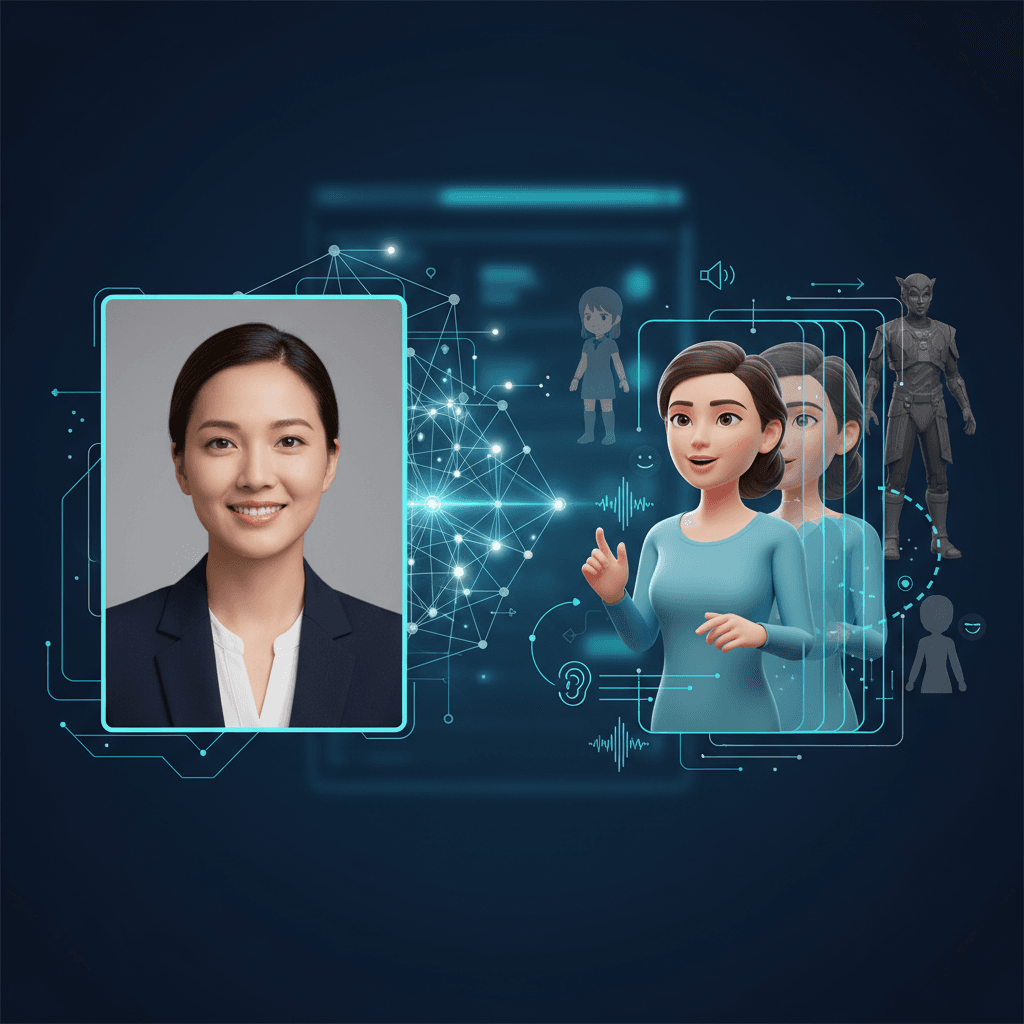
The field of generative artificial intelligence has reached a significant milestone with the unveiling of LPM 1.0, a Large Performance Model capable of transforming a single static image into a fully realized, interactive digital character in real time.[1][2][3] Developed by the AI research firm Anuttacon, founded by Mihoyo co-founder Cai Haoyu, this model represents a shift from simple talking-head animations toward what researchers call a comprehensive performance engine.[1] By processing a single photograph, the model generates high-fidelity video featuring synchronized lip-syncing, nuanced facial expressions, and reactive body language that remains visually stable for sessions lasting 45 minutes or longer.[1][4][3] Unlike previous video generation models that often required intensive offline rendering or struggled with identity drift over time, LPM 1.0 operates with a latency of approximately 0.35 seconds, making it one of the first systems capable of supporting truly seamless, full-duplex human-AI conversations.[1]
At the technical core of LPM 1.0 is a 17-billion-parameter Diffusion Transformer architecture, which has been meticulously optimized to solve what researchers describe as the performance trilemma: the inherent difficulty in achieving high expressive quality, real-time inference speeds, and long-horizon identity stability simultaneously.[1] Most existing avatar models are limited to short bursts of animation, often losing the character’s original likeness or becoming visually distorted after just a few seconds.[1] LPM 1.0 overcomes these limitations through a co-designed pipeline that begins with a massive dataset of 31 million high-quality video clips.[1] These clips were filtered and processed to teach the model not just how humans speak, but how they listen, react, and emote.[1] The system uses a technique called multi-granularity identity conditioning, where the model is provided with global appearance references and facial expression exemplars.[4][5][1] This ensures the AI does not have to hallucinate details like teeth, specific wrinkles, or profile geometry from scratch, leading to a much higher degree of visual fidelity and consistency across various viewing angles and emotional states.[1][5]
The efficiency of the model is largely attributed to a sophisticated distillation process.[1] The researchers first trained a heavy Base LPM and then distilled its capabilities into a causal streaming generator known as the Online LPM.[3][6][1] This was achieved through Distribution Matching Distillation, which compresses the complex diffusion process into just two steps, drastically reducing the computational overhead required to generate each frame.[1] Furthermore, the architecture employs a unique interleaved audio injection system.[1][7] In this setup, the model processes speaking-related audio in even-numbered layers and listening-related audio in odd-numbered layers.[1][7] This structural separation allows the AI to distinguish between the fast, rhythmic movements required for speech and the slower, more subtle micro-expressions used during silent listening.[1] This distinction is vital for creating a character that feels alive and socially present rather than a robotic loop, as it enables the avatar to nod, shift its gaze, and show signs of hesitation or agreement while the user is still speaking.[1]
Beyond its technical specifications, the versatility of LPM 1.0 is a standout feature for the broader AI industry.[1] The model demonstrates impressive zero-shot generalization, meaning it can animate a wide array of visual styles without needing fine-tuning or domain-specific training.[3][5][4][1] During testing, the researchers successfully generated lifelike performances from photorealistic human portraits, 2D anime characters, 3D game assets, and even non-humanoid creatures.[1] This flexibility suggests that the model could serve as a universal visual engine for a variety of digital platforms.[1] In the gaming sector, it offers the potential for non-player characters to engage in unscripted, emotionally resonant dialogue with players.[1][3] In the realm of virtual assistance, it provides a face for large language models like ChatGPT, allowing for a more naturalistic interface where the AI can provide visual cues that reinforce its verbal responses.[1][3] The ability to maintain identity for extended durations—documented in demonstrations lasting up to 45 minutes—is particularly relevant for virtual streamers and digital educators who require high-quality visual presence for the duration of a broadcast or a lesson.[1]
The emergence of such powerful real-time video generation technology also brings the industry's ethical challenges into sharper focus.[1] While the researchers at Anuttacon have emphasized that LPM 1.0 is currently a research project intended for academic exchange and positive applications—such as enhancing accessibility and educational equity—the potential for misuse in creating deepfakes and misinformation is undeniable.[1] To address these concerns, the team has expressed a commitment to advancing forgery detection techniques and has implemented strict filtering in their training data to ensure the model focuses on generating visual affective performance for virtual characters rather than impersonating real individuals without consent. However, as the gap between AI-generated characters and reality continues to close, the demand for robust watermarking and authentication standards will only increase.[1] The stability and realism of LPM 1.0 serve as a reminder that the industry is rapidly moving toward a future where digital interactions are indistinguishable from face-to-face communication, necessitating a proactive approach to safety and digital identity protection.[1]
In conclusion, LPM 1.0 represents a definitive leap forward in the quest to create digital beings that can participate in the social "dance" of human conversation.[1] By addressing the performance trilemma and achieving real-time streaming capabilities with near-perfect identity preservation, the model sets a new benchmark for what is possible in generative video.[1] While it remains a research endeavor for the time being, its implications for the future of entertainment, customer service, and human-computer interaction are profound.[1] The ability to generate 45 minutes of stable, responsive video from a single image suggests that the era of the static digital avatar is ending, replaced by a new generation of expressive, interactive performers that can listen and react as effectively as they speak.[1] As this technology continues to mature, it will undoubtedly reshape the landscape of the digital world, making our interactions with machines feel significantly more human.[1]