
KiloClaw launches enterprise platform to govern autonomous agents and eliminate shadow AI risks
Centralizing autonomous agent governance allows enterprises to secure shadow AI while maintaining the productivity gains of employee-led innovation.
April 2, 2026
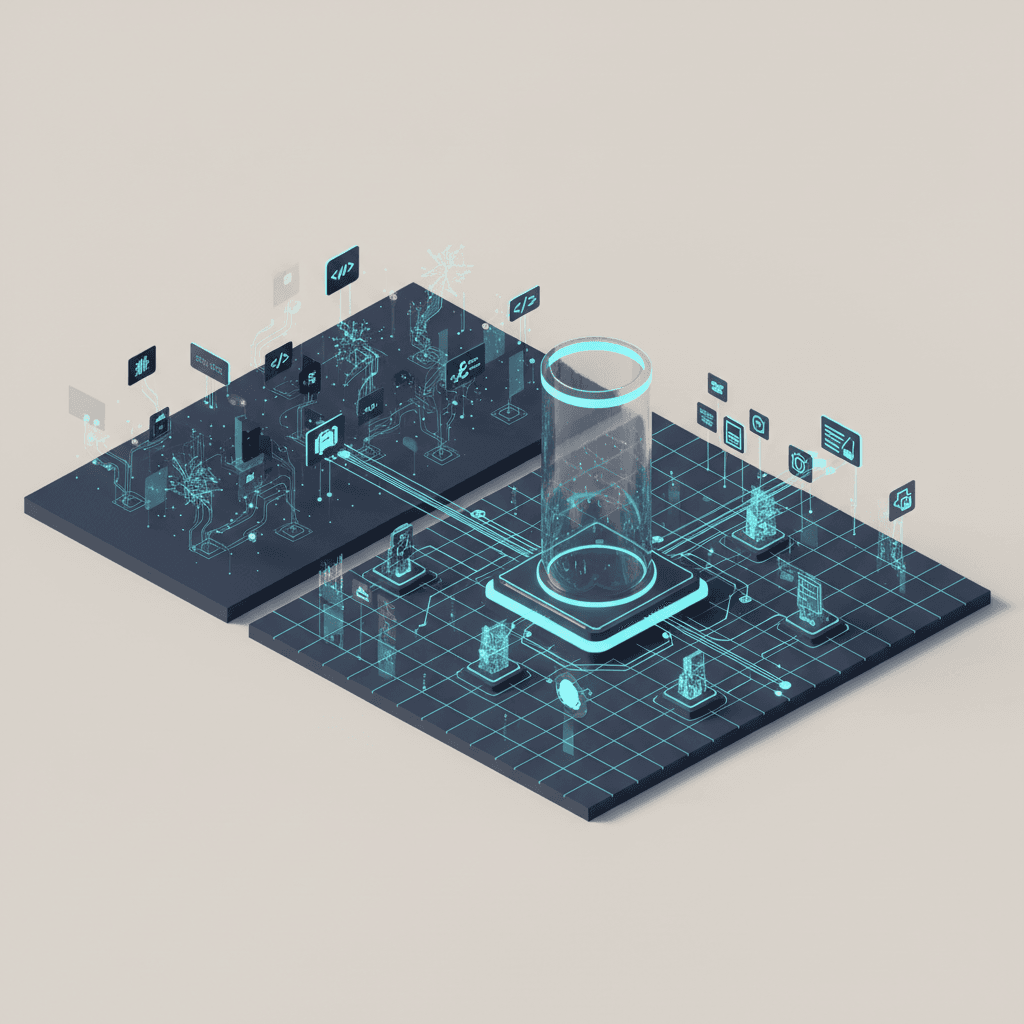
The rapid evolution of generative artificial intelligence has moved beyond simple chat interfaces and into the realm of autonomous agents, leading to a new and complex governance challenge for the modern enterprise.[1][2][3][4] While corporate leaders spent the previous year focused on securing large language models and formalizing vendor agreements, a decentralized movement of developers and knowledge workers has quietly taken root.[5] This phenomenon, increasingly characterized as shadow AI or the Bring Your Own AI trend, involves employees bypassing official procurement channels to deploy autonomous agents on personal infrastructure.[5][1] These agents are often tasked with automating daily workflows, but they do so by operating in unregulated external environments, frequently outside the visibility of IT and security departments.[6][5] The launch of KiloClaw for Organizations represents a pivotal attempt to formalize this unsanctioned layer of intelligence, providing a centralized platform designed to govern autonomous actors without stifling the productivity gains they offer.[5]
The primary driver behind the rise of shadow AI is the significant friction between institutional security protocols and the individual drive for efficiency. In many organizations, software engineers and data analysts have begun utilizing open-source frameworks to build agents that can parse error logs, reconcile spreadsheets, or manage complex project timelines across multiple platforms. Because these tools are often difficult to deploy within traditional corporate environments, employees frequently host them on private virtual private servers or personal local machines. These agents are granted expansive permissions, including shell access, browser control, and API credentials for corporate Slack channels, Jira boards, and private code repositories. Unlike traditional shadow IT, which typically involved the unauthorized use of fixed software-as-a-service applications, shadow AI involves non-deterministic actors capable of making independent decisions and moving data through unmonitored information flows.[7][4] This shift from unsanctioned technology to unsanctioned intelligence creates a blind spot where proprietary data can be exfiltrated and intellectual property can be leaked without a verifiable audit trail.
KiloClaw addresses these vulnerabilities by offering an enterprise-grade control plane built upon the popular open-source OpenClaw framework. By providing a managed, one-click deployment environment, the platform effectively eliminates the DevOps overhead that often drives developers toward insecure self-hosting. The technical architecture allows organizations to run autonomous agents in a sandboxed, multi-tenant environment while maintaining the flexibility to connect to more than 500 distinct AI models through a unified gateway. This vendor-neutral approach ensures that as the AI landscape evolves, enterprises can switch between different frontier and open-weight models without reconfiguring their entire automation infrastructure. Furthermore, the platform supports integrations with over 50 communication and productivity tools, enabling agents to operate where teams already communicate, such as Microsoft Teams, Signal, and Matrix, while remaining under the purview of corporate oversight.
A core component of the KiloClaw governance strategy is the introduction of a bot account model for identity and access management.[1] Treating autonomous agents as distinct identities within the organization allows security teams to apply the same rigor to AI actors as they do to human employees. The platform integrates directly with existing identity providers through Single Sign-On and OpenID Connect, alongside System for Cross-domain Identity Management provisioning to automate the user and agent lifecycle. This ensures that when a team member leaves the company, their associated autonomous agents and access permissions are revoked simultaneously. To further mitigate the risk of credential leakage, the system incorporates dedicated secrets management, including integrations with platforms like 1Password.[1] This prevents agents from handling sensitive API keys in plain text, a common failure point in self-hosted deployments. By centralizing these controls, IT leaders can establish baseline templates that define exactly what data external models can process and what actions an agent is permitted to take, effectively limiting the potential blast radius of an unpredictable or misconfigured model.
The transition toward managed agent governance highlights a broader shift in the artificial intelligence industry, moving away from centralized pilot programs toward a more fragmented, employee-driven adoption model.[3] Research indicates that a majority of knowledge workers are already using some form of unauthorized AI to enhance their productivity, often without formal training in data security or compliance obligations.[8] For organizations operating in highly regulated sectors, such as government contracting or financial services, the lack of visibility into these agents is no longer a sustainable risk. The ability to provide an audit-ready environment with real-time behavioral monitoring is becoming a prerequisite for the continued use of agentic workflows.[7] By incorporating these tools into continuous integration and deployment pipelines, businesses can automate security checks and permission provisioning, removing the friction that encourages employees to seek workarounds.
As autonomous agents become a permanent fixture in the workplace, the challenge for the enterprise will be to balance the speed of innovation with the necessity of architectural oversight. The emergence of governance frameworks like KiloClaw suggests that the era of experimentation is giving way to an era of operationalization, where the focus is on the reliability, security, and accountability of AI systems. For the modern Chief Information Officer, the goal is not to implement blanket bans on custom-built automation, but to construct a sanctioned environment where innovation can be tracked and secured. By providing the infrastructure to manage the lifecycle of autonomous agents, enterprises can finally close the gap between the rapid adoption of AI tools and the institutional requirements for data protection and regulatory compliance. The focus on identity-first controls and centralized management signifies a maturing market that recognizes AI agents as powerful, non-deterministic actors that must be integrated into the existing fabric of corporate security rather than left to operate in the shadows.