
Google Unveils Compact Coralboard to Run Generative AI Models Entirely On-Device
Google's compact Coralboard runs the Gemma 3 model locally, delivering secure, low-latency generative AI directly to edge devices.
May 28, 2026
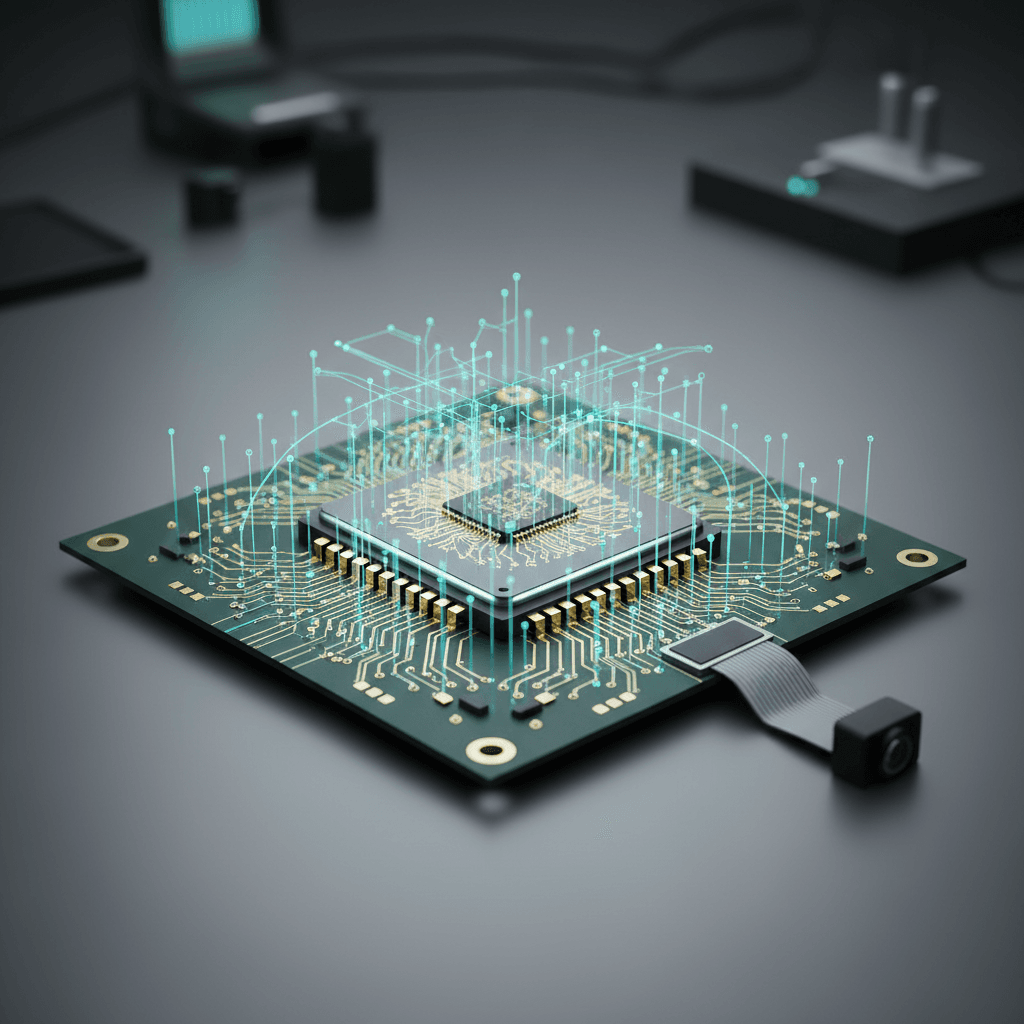
Google has taken a significant step toward making generative artificial intelligence ubiquitous by unveiling the Coralboard, a highly compact development board designed to execute advanced AI models entirely on-device[1][2]. Showcased at the Google I/O conference[3], the new hardware platform represents a powerful collaboration between Google Research and Synaptics[3], marking a highly anticipated return of the Coral brand to the forefront of edge computing[1][2]. Unlike traditional single-board computers that rely heavily on cloud servers to handle complex artificial intelligence tasks[1][2], this new board is engineered to host and run Google's lightweight Gemma 3 270M model locally[1][3]. By packaging on-device machine learning capabilities into a small, energy-efficient form factor, Google aims to democratize access to edge AI, enabling developers to build smarter, faster, and highly private applications without the latency or costs associated with cloud infrastructure[1][4][2].
At the heart of the Coralboard is a sophisticated hardware architecture tailored specifically for neural network acceleration[1]. The device is powered by the Synaptics Astra SL2619 System-on-Chip, which features an integrated Coral Neural Processing Unit capable of delivering 1 TOPS of computing power[1][2]. While 1 TOPS of computing power may seem modest compared to the massive performance scales of data-center graphics processing units, the board's software stack is meticulously optimized to maximize every ounce of silicon efficiency[1]. Utilizing the open-source, machine learning intermediate representation-based Synaptics Torq toolchain[3], the board can map complex attention matrices directly onto the hardware's multiply-accumulate blocks, which are the fundamental arithmetic units performing neural network operations[1]. Backed by 2 gigabytes of random-access memory[1][5] and running the lightweight Yocto Linux operating system[6], this hardware-software synergy allows the platform to achieve sub-second latencies and highly coherent responses during active inference, setting a new benchmark for low-power edge performance[1].
The computational efficiency of the Coralboard is heavily supported by the architectural breakthroughs of the Gemma 3 270M model[1]. As the smallest offering in the Gemma 3 family developed by Google DeepMind, this model boasts 270 million parameters[1][7]. To fit within the constraints of a low-cost, compact edge device, the model is compressed using aggressive 4-bit quantization techniques, which reduces its overall memory footprint to a mere 200 megabytes[1]. This allows the model to reside comfortably within the board's onboard memory while retaining surprising capabilities in language understanding, reasoning, and context processing[1][8]. By employing highly sophisticated design choices like hybrid attention patterns, where sliding window attention is alternated with global attention layers, the Gemma 3 architecture minimizes memory cache requirements without compromising the model's overall intelligence[7]. This synergy between extreme model compression and targeted silicon design demonstrates that sophisticated language capabilities no longer require massive server farms[1][7].
To facilitate rapid prototyping and real-world deployment, the hardware is offered as part of a comprehensive developer kit that includes several specialized accessories[5]. The Google I/O Edition kit features the main board alongside a custom Sensor HAT accessory board, which expands the physical capabilities of the system by adding a high-definition camera module connected via a flex ribbon cable, two onboard microphones, a piezo buzzer for audio output, and several programmable light-emitting diode indicators[5]. During live demonstrations, Google and Synaptics showcased the board executing diverse tasks completely offline, including real-time speech translation and voice-controlled natural language commands capable of adjusting physical hardware components[9]. In an impressive display of multimodal generation, the developers also demonstrated a system that converts real-time visual inputs and ambient sounds into synthetic music using the Google Lyria Realtime engine[9][10]. With integrated industrial-standard expansion slots, including mikroBUS, Qwiic, and high-speed audio connectors, the board is poised to integrate seamlessly into a wide array of smart-home appliances, robotics, and industrial automation systems[5][6].
The release of this new edge computing platform has profound implications for the broader artificial intelligence industry, signaling a decisive shift from centralized cloud computing to decentralized edge infrastructure[2]. For years, the deployment of generative models has been bottlenecked by high bandwidth requirements, ongoing subscription costs, and significant processing latencies that made real-time local responses difficult. By showing that a state-of-the-art language model can run reliably on a low-cost, microcontroller-sized board[1], Google is challenging the industry assumption that meaningful generative AI requires massive power consumption and cloud connectivity. This development is particularly vital for industries where data privacy and reliability are paramount, such as healthcare, secure smart homes, and defense. Because all data processing happens locally, sensitive vocal inputs, images, and user commands never leave the physical device, removing the vulnerabilities associated with transmitting data over the internet and ensuring continuous operation even in remote, offline environments[1][4][2].
Ultimately, the collaboration between Google Research and Synaptics to deliver the Coralboard reflects a maturing AI ecosystem that is transitioning from theoretical scaling to practical, everyday integration[3]. By bridging the gap between high-performance software modeling and efficient, specialized silicon, the platform establishes a blueprint for the next generation of intelligent, physical devices[3][2]. As developers begin to explore the capabilities of the Gemma 3 270M model on this compact hardware[3], the barrier to creating responsive, localized AI experiences will continue to fall. The new Coralboard is not merely a specialized tool for hobbyists, but a foundational stepping stone toward a world where highly capable, conversational, and multimodal intelligence is quietly and securely integrated into the physical objects that surround us.