
Google Cloud launches autonomous AI system to detect and patch cyber threats in minutes
Google's new AI Threat Defense platform combats machine-speed cyberattacks by automatically detecting and patching vulnerabilities in minutes.
May 28, 2026
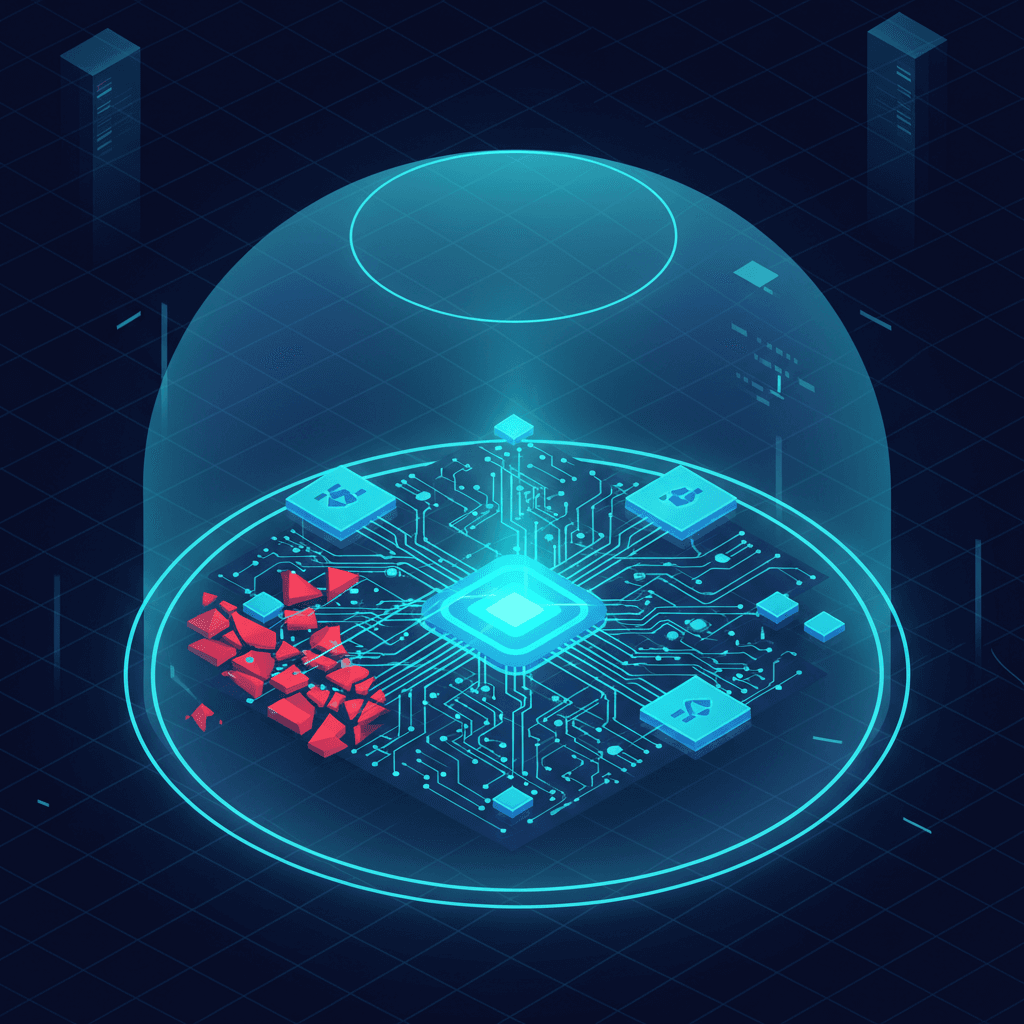
In an era where artificial intelligence has radically compressed the timeline of cyber warfare, security teams are finding themselves severely outmatched by automated, machine-speed adversaries[1][2]. Recognizing that the window between a vulnerability being discovered and actively exploited has plummeted from several weeks to just a matter of hours, Google Cloud has unveiled its most ambitious defense initiative yet[1][3]. Named Google AI Threat Defense, the newly launched platform is an always-on, autonomous cybersecurity system designed to continuously monitor networks, detect vulnerabilities, and automatically deploy patches within minutes[1][4]. By shifting security operations from manual, human-driven processes to proactive, automated remediation, the company aims to fundamentally alter the power dynamics of modern digital defense, effectively turning the defensive capabilities of artificial intelligence against offensive threat actors[1][5].
At the heart of Google AI Threat Defense is a highly sophisticated consolidation of internal artificial intelligence research and premier enterprise security acquisitions[2][6]. The platform functions by merging the reasoning power of the Gemini family of frontier models with the advanced risk-prioritization engine of Wiz, a major cloud security firm whose acquisition Google recently finalized[7][8]. This is paired with CodeMender, an autonomous code-fixing agent developed by Google DeepMind, and backed by the frontline incident response intelligence of Mandiant, the cybersecurity firm Google acquired to spearhead its threat-hunting capabilities[6][5]. Together, these technologies transition security operations from a fragmented collection of point solutions into a singular, closed-loop system[3]. Instead of overwhelming security analysts with thousands of low-priority alerts, the system uses the contextual understanding of Wiz to pinpoint which exposures are truly reachable and dangerous, allowing Gemini and Mandiant’s operational playbooks to quickly orchestrate a targeted response[2][9].
To systematically address security loopholes, Google AI Threat Defense is built around a rigorous four-stage framework consisting of preparing, scanning, remediating, and monitoring[4][10]. During the preparation stage, the platform maps an organization's entire digital footprint, scanning cloud infrastructure, application programming interfaces, identities, and runtime environments to identify sensitive assets[2][9]. Once mapped, automated penetration-testing agents simulate real-world cyberattacks to evaluate whether these assets can actually be breached[6][10]. When scanning, Google employs a unique multi-model strategy that leverages multiple artificial intelligence systems simultaneously[6][10]. Because no single AI model is capable of catching every class of vulnerability, lighter and more cost-effective models are deployed to conduct broad, continuous sweeps of the infrastructure, while expensive frontier models are reserved for deep-dive analyses of critical interfaces, customer-facing services, and binary logic[6][10].
The true paradigm shift occurs in the remediation phase, where the platform actively steps into the developer’s workflow to eliminate vulnerability queues entirely[5][3]. Utilizing the capabilities of CodeMender, the platform can bypass traditional developer backlogs by generating verified code fixes directly inside integrated development environments or command line interfaces at build time[5][3]. CodeMender not only patches newly discovered bugs but is also capable of refactoring legacy, high-risk codebases into modern, memory-safe programming languages[6]. Crucially, the platform automatically generates tests to verify that the proposed patches do not compromise system functionality[6][5]. To ensure operational integrity and regulatory compliance, the platform maintains absolute transparency by tagging every modification, keeping a clear audit trail of which specific AI model authored each patch[6][5].
The launch of this platform has profound implications for both the artificial intelligence and cybersecurity industries. Historically, security has been the last major enterprise function reliant on manual human oversight to approve and apply changes[3]. Google’s transition to fully autonomous, closed-loop remediation signals that the era of human-gated cybersecurity is ending, placing significant pressure on independent, point-solution security vendors as cloud hyperscalers increasingly bundle comprehensive, deep security frameworks directly into their cloud contracts[3]. To accelerate the enterprise adoption of this autonomous model, Google has teamed up with key launch partners, including major consulting and technology firms like Accenture, Deloitte, Netenrich, PwC, and TENEX.AI[8]. However, this shift is not without its challenges[3]. Allowing autonomous agents to modify production code brings inherent operational risks, raising complex legal and regulatory questions regarding liability when an automated patch inadvertently disrupts critical downstream business applications[3][8].
Ultimately, Google Cloud’s rollout of AI Threat Defense represents a necessary evolution in the ongoing digital arms race. As attackers increasingly weaponize artificial intelligence to scan for software flaws and deploy exploits with unprecedented speed, traditional defensive strategies are no longer viable[1][2]. By establishing an autonomous defense system that works at the same machine speed as the threats it combats, Google is helping enterprises narrow their exposure window to mere minutes[1][5]. As the technology matures, autonomous, self-healing codebases will likely transition from a cutting-edge luxury to a baseline operational requirement, fundamentally reshaping how organizations defend their intellectual property, sensitive data, and digital infrastructure from the sophisticated cyberthreats of tomorrow.