
Google Transforms Flow Into a Professional AI Production Suite with Advanced Creative Controls
Google’s revamped production suite transforms generative AI into a professional ecosystem offering advanced cinematic control and character consistency
February 25, 2026
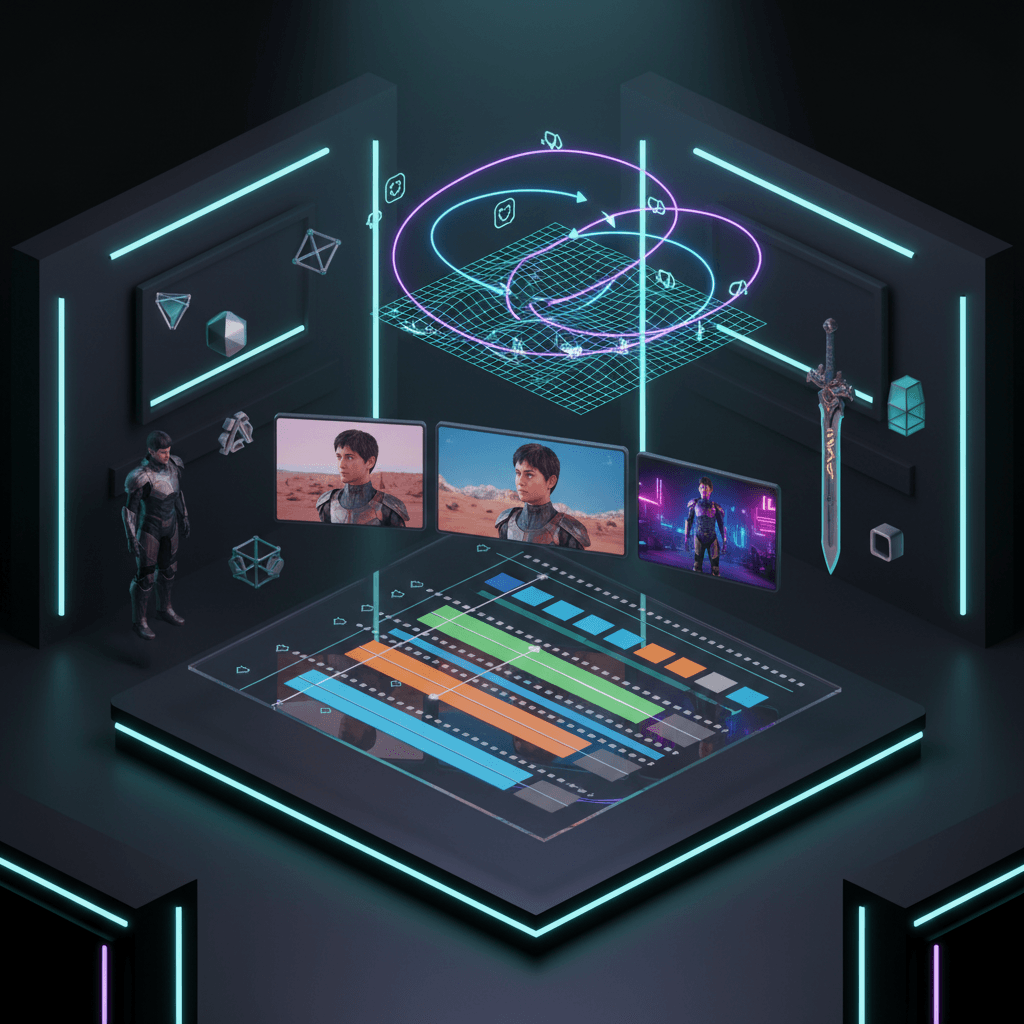
In a major play to consolidate its lead in the generative media space, Google has officially relaunched its AI creative studio, Flow, transforming it from an experimental project into a sophisticated, all-in-one production suite. This overhaul signifies a strategic shift for the company, moving beyond simple text-to-media generation toward a comprehensive workspace that mimics the professional pipelines of traditional film and design studios. By integrating its most advanced foundation models—including the newly debuted Veo 3.1 for video and Imagen 4 for high-fidelity imagery—Google is positioning Flow as the central hub for the next generation of digital storytellers, from independent creators to enterprise marketing teams.
The cornerstone of this relaunch is the transition of Flow into a structured creative environment where users no longer rely on singular, isolated prompts.[1] Instead, the platform introduces a "Scenebuilder" tool, which serves as a non-linear timeline for organizing AI-generated assets.[2] This interface allows creators to stitch together multiple eight-second clips, maintain character consistency across scenes, and refine visual styles with granular control. One of the most significant additions is the "Ingredients to Video" feature, an asset management system that enables users to tag specific characters, props, or environments. By defining these "ingredients" upfront, the underlying Gemini 3.1 reasoning engine can ensure that a protagonist’s appearance remains identical across different camera angles and lighting conditions, solving one of the most persistent "flicker" and consistency issues in AI video production.
Technically, the new Flow is powered by a multi-model architecture that leverages different AI engines for specific creative tasks.[2][3] While Veo 3.1 handles the heavy lifting of temporal consistency and cinematic motion, a specialized model known as Nano Banana Pro has been introduced to give users unprecedented control over technical cinematography.[2] This model allows for "doodle-based" prompting, where creators can draw directly onto an image to indicate camera trajectories, lighting shifts, or object movements. Furthermore, the integration of Imagen 4 brings advanced text rendering to the studio, allowing for the generation of realistic signage, labels, and graphic elements within video frames—a feat that has historically challenged generative models. This synergy of models allows Flow to offer features like "temporal expansion," which can intelligently extend a clip by predicting subsequent frames, and "object insertion," which allows users to add or remove elements from a rendered scene with minimal artifacting.
The relaunch also marks a pivot toward deep ecosystem integration, making Flow a native component of the Google Workspace and YouTube environments. For business users, this means the ability to generate animated slides, promotional hero videos, and internal training modules directly within Google Slides or Vids. This native accessibility removes the friction of switching between disparate AI tools and professional editing software. On the YouTube side, creators gain access to tools that can automatically adapt long-form content into vertical, short-form videos with synchronized audio and background scores. To further democratize access, Google has implemented a tiered credit system. A basic free tier offers users 100 monthly credits with 50 daily refreshes, while the AI Pro and AI Ultra tiers provide higher-resolution upscaling to 4K and priority access to experimental features like "Project Mariner," an agentic AI designed to automate repetitive web-based research and asset gathering.
From a competitive standpoint, the relaunch of Flow is a direct challenge to established players like Adobe, Canva, and OpenAI. While Adobe Firefly has long been the industry standard for commercially safe, integrated AI editing, Google is betting that its superior data ecosystem and the sheer scale of its Workspace user base will provide a decisive advantage. Unlike OpenAI’s Sora, which has largely focused on high-end cinematic output, Flow is built for the "prosumer" and the business professional who require a functional, end-to-end workflow rather than just a standalone generator. By providing tools for both high-end filmmaking and everyday content creation, Google is attempting to own the entire creative stack, from the initial brainstorming phase handled by Gemini to the final 4K export in Flow.
The industry implications of this relaunch are profound, as it signals the end of the "magic trick" era of AI. As users become more sophisticated, the novelty of a single prompt generating a video is fading, replaced by a demand for precision, editability, and reliability. Google’s focus on control mechanisms—such as keyframing, asset tagging, and timeline editing—suggests that the future of AI in the creative arts is not about replacing the artist, but about providing a much more powerful and efficient set of brushes. However, this move also raises questions about the future of traditional stock media and low-level editing roles, as the barriers to producing high-quality, customized video content continue to collapse.
As Flow begins its global rollout, the platform’s success will likely depend on how well it balances its vast technical capabilities with a user experience that remains accessible to non-experts. The inclusion of "Flow TV," a community gallery where users can inspect the prompts and logic behind successful videos, indicates that Google is also focused on building an educational community around these new tools. By lowering the cost of entry for cinematic production and integrating these tools into the apps millions already use every day, Google is not just relaunching a product; it is attempting to redefine the very nature of visual communication in the AI era. Whether Flow becomes the dominant platform for the creator economy or serves as a sophisticated utility for the enterprise, its relaunch confirms that the transition from generative experiments to professional-grade creative ecosystems is now fully underway.