
Google Photos launches 'Me Meme,' bringing powerful generative AI to the masses.
This personalized meme generator accelerates mainstream AI adoption, forcing a look at platform ethics.
January 23, 2026
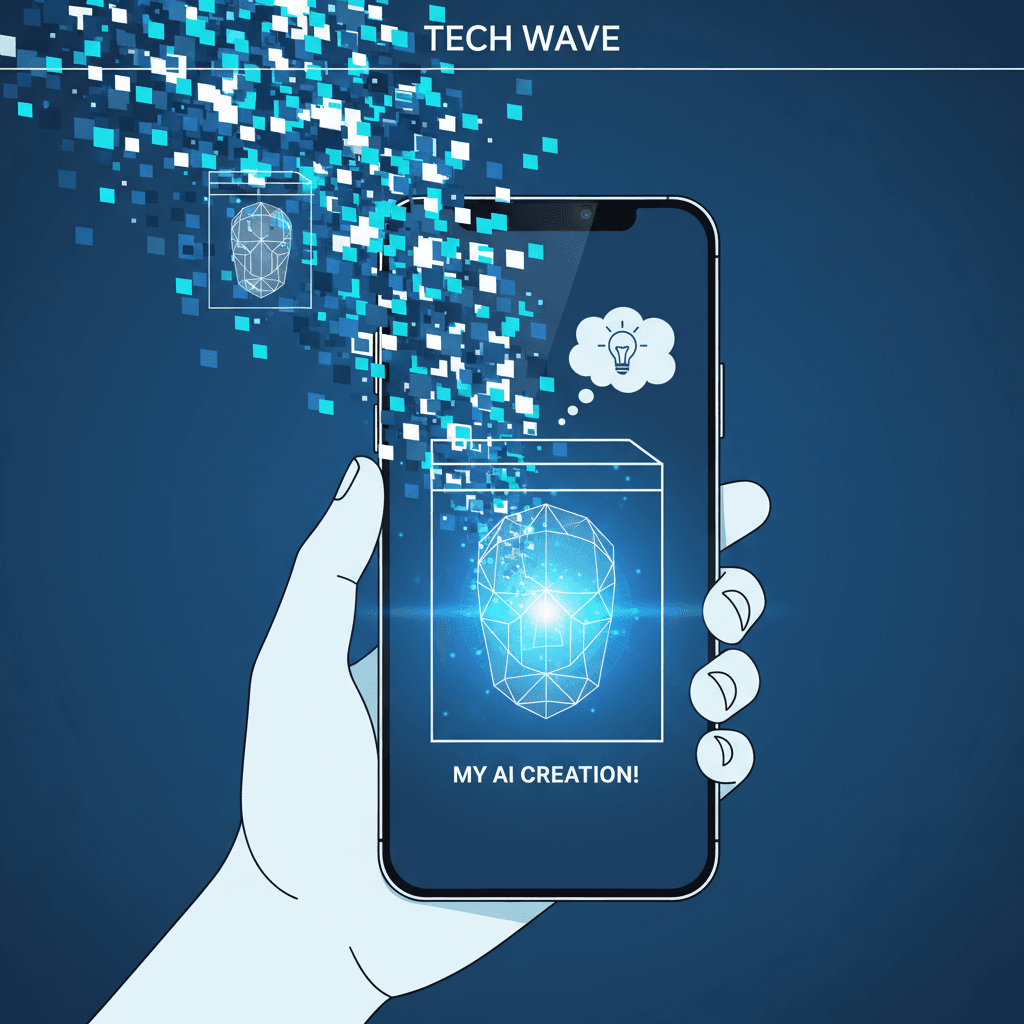
The introduction of the ‘Me Meme’ feature into Google Photos marks a significant inflection point in the mainstream adoption of generative artificial intelligence for personal content creation. Embedded directly within the application, the new tool drastically lowers the barrier to entry for AI-generated personalized media by offering preset templates and guided image selection, transforming users’ personal photo libraries into a factory for shareable content. This move positions Google Photos not merely as a cloud storage utility but as a key player in the burgeoning social and creative AI space, forcing a closer look at the technology's application, market strategy, and ethical boundaries.
At its core, the ‘Me Meme’ feature is a demonstration of advanced image generation technology tailored for mass-market consumption. The process, currently rolling out as an experimental feature for users in the United States, is designed for simplicity: a user selects a popular meme template, such as the widely known 'This is fine' template that was among the first spotted, and then chooses a clear, front-facing reference photo—ideally a well-lit selfie—from their backed-up photo library. The system then employs a generative AI model, with some reports suggesting it utilizes Gemini’s AI, to composite the user’s face into the template’s context[1][2][3][4][5]. The critical technical detail is the use of advanced image processing to ensure the resulting meme looks "natural rather than pasted," a process that involves automatically detecting facial features, adjusting lighting, and matching colors to the background of the template[1]. Since this intensive image manipulation occurs on cloud servers, having the reference photo backed up to Google Photos is a prerequisite for generating the content[1][2]. The entire experience is housed within the application’s Create tab, alongside other modern AI-powered tools like Cinematic Photos and highlight video functions, signalling Google’s commitment to making its photo platform an interactive hub for media creation[6][7]. The feature is available on both Android and iOS, highlighting a platform-agnostic strategy for broad reach[3].
From a business standpoint, ‘Me Meme’ represents a strategic effort to evolve Google Photos from a passive archival tool into an active content engine, thereby increasing user engagement and dependency on the Google ecosystem. This approach pits the application directly against a growing field of creative editing rivals, including dedicated video and photo editing applications like CapCut and Adobe Express, as well as social media functionalities like Snapchat Cameos, which also offer personalized image generation[1]. Google’s primary advantage lies in the direct integration with the user’s existing and vast photo library. By leveraging its deep photo organization capabilities, Google Photos can automatically suggest the most suitable reference photos for a given template, removing a key step from the creation process and providing an unmatched level of convenience[1]. The integration of these generative AI tools across Google’s product suite, from Gboard to visual editing in Photos, reflects a larger corporate push to infuse AI capabilities into every layer of the user experience. This strategy aims to solidify its position in the competitive digital landscape by offering a seamless, one-stop-shop for storing, editing, and sharing personal media.
While the feature is positioned as a fun, low-stakes entertainment tool, its underlying technology of personalized generative imagery carries significant implications for the broader AI industry, particularly concerning ethics and digital authenticity. The ability to realistically insert a person’s face into various contexts, even humorous ones, is a form of shallow- or deep-fake technology, which immediately raises concerns about consent and potential misuse[8]. The industry is grappling with how to implement sufficient technical and societal guardrails for increasingly powerful AI systems, a concern voiced by AI pioneers who have warned that the sector is "too unconstrained"[9]. The recent public backlash against other AI tools, such as X's Grok, for their ability to nonconsensually manipulate pictures of real people, underscores the urgent need for stringent content policies and safety measures for any tool that uses personal likenesses[9][8]. In anticipation of these issues, Google has explored using digital watermarks, such as DeepMind’s SynthID, to ensure authenticity and prevent the misuse of AI-generated content, though the application of this to ‘Me Meme’ has not been confirmed[1]. Furthermore, critics have noted a subtle but significant cultural implication: the mass production of "perfect" or over-polished AI-generated memes risks removing the deliberate, low-resolution, and imperfect aesthetic that gives traditional, grassroots memes their authentic cultural significance and relatability[10].
In summary, the ‘Me Meme’ feature is more than a novelty; it is a critical case study in how a major technology platform is democratizing powerful generative AI for everyday users. By making personalized image creation accessible with just a few taps, Google Photos is accelerating the integration of AI into consumer social culture. The commercial success of the tool will be contingent not only on its ease of use but also on the company’s ability to navigate the complex ethical landscape. As Google encourages users to create and share AI-generated versions of themselves, the company faces the dual challenge of capitalizing on the demand for personalized content while ensuring the ethical and responsible deployment of technology that can easily blur the line between fun and fabrication. Its performance in balancing utility with robust safeguards will serve as a bellwether for the future of user-facing generative AI across the tech industry.