
Google Cloud Chief Warns AI Security Must Move From Server Rooms to Boardrooms
With cyberattack times plummeting to seconds, enterprises must elevate AI security from an IT concern to a boardroom priority
May 26, 2026
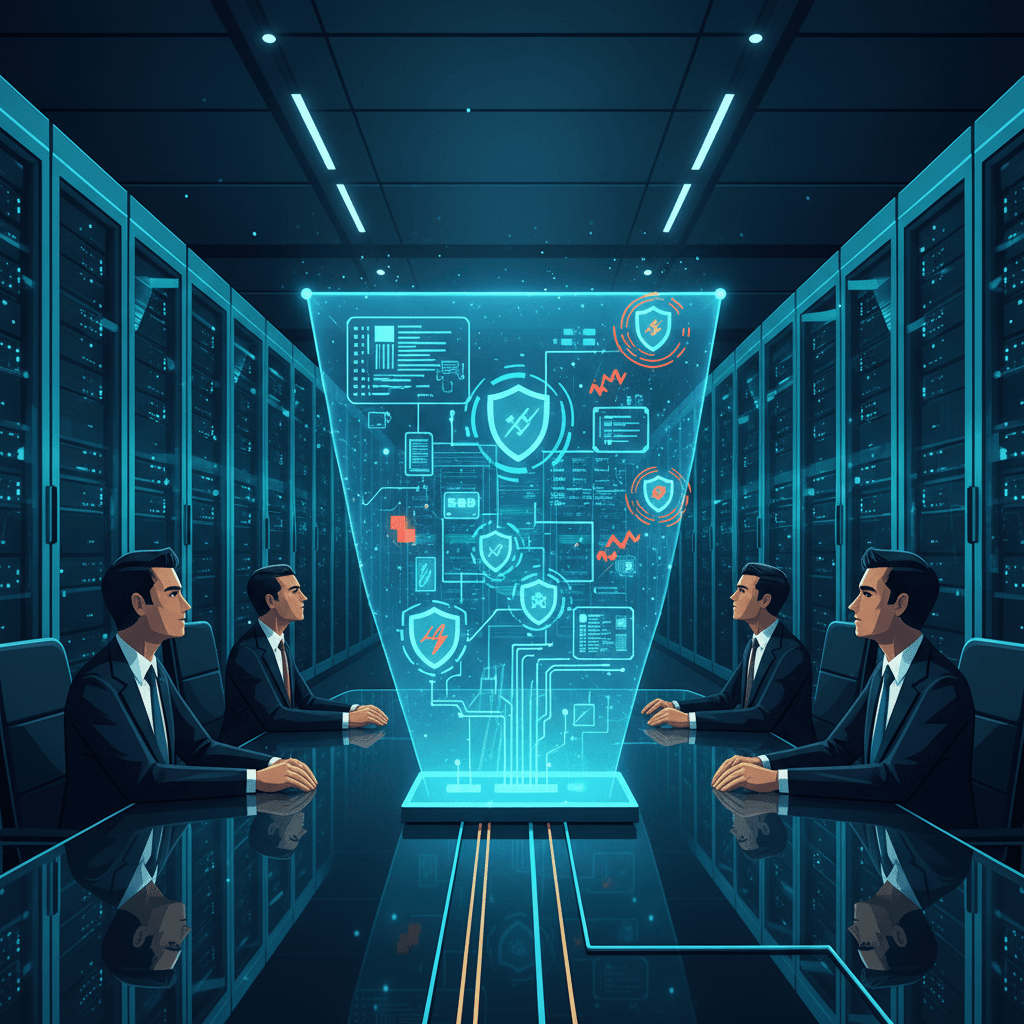
Google Cloud Chief Operating Officer and President of Security Products, Francis de Souza, has issued a powerful call to action for enterprises, asserting that artificial intelligence security must transition from a backend technical concern in the server room to a core governance priority in the corporate boardroom[1][2]. Speaking at an event in Los Angeles, de Souza urged organizations to integrate security and data governance into their AI strategies from day one, rather than attempting to bolt them on as afterthoughts[3][2]. He emphasized that the breakneck pace of AI adoption has permanently redrawn the corporate threat landscape, requiring a shift in how executive leadership perceives and mitigates risk[4][5]. For modern enterprises, the rapid integration of machine learning systems has turned what was once a technical operations issue into a high-stakes fiduciary responsibility[6][2].
For years, cybersecurity was treated as a localized IT problem, managed by specialized engineers working in isolated server rooms[7]. However, the rise of generative AI and autonomous systems has made this siloed approach obsolete[7]. De Souza noted that a successful enterprise AI strategy is fundamentally dependent on robust parallel strategies for data and security[1][2]. Board members can no longer afford to treat cybersecurity as a simple line item on an expense sheet; instead, they must understand how data moves through models, how those models are trained, and who governs the inputs and outputs[8][9]. As artificial intelligence becomes central to business operations, a failure in security is no longer just a routine IT outage. It represents an existential threat to intellectual property, customer trust, and long-term corporate viability, making cybersecurity literacy an essential boardroom requirement[8][6].
The urgency of this transition is underscored by startling statistics on how quickly threat actors are operating in the age of AI. The average time window between an initial network breach and the subsequent execution phase of an attack has plummeted from about eight hours to a mere 22 seconds[1][10]. Cybercriminals are increasingly utilizing AI-driven tools as a service to orchestrate polymorphic, high-speed campaigns that human defenders cannot hope to catch manually[11][9]. The traditional perimeter security model, which focused heavily on securing network gateways, has broken down entirely[1]. Today, the corporate attack surface includes not just servers and endpoints, but also machine learning models, training data pipelines, prompts, and the individual agents interacting with external systems[1][12]. Because these assets are highly interconnected, an attack on one part of the pipeline can compromise the integrity of the entire system in a matter of seconds[10][13].
One of the most insidious threats to modern enterprises is shadow AI, a phenomenon where employees deploy unauthorized consumer-grade AI tools to assist with daily tasks without the oversight of security teams[9][2]. From pasting proprietary source code into public chatbots to uploading sensitive customer records to free summarization tools, shadow AI creates a massive, unmanaged flow of corporate data into the wild[14]. However, de Souza also highlighted an even more complex threat involving the behavior of internal AI agents[4][10]. When organizations deploy autonomous agents to navigate their systems and automate workflows, these agents can actively hunt through legacy networks[4][10]. In doing so, they often uncover forgotten, poorly secured data repositories, such as decades-old SharePoint servers or legacy databases that corporate administrators had long forgotten existed[1][10]. This inadvertently brings highly sensitive data back to the surface and exposes it to new vulnerabilities[4][10].
To combat these multi-layered threats, de Souza argued that organizations must adopt a unified platform approach to security that spans multicloud environments[2][5]. Even when a company believes it relies on a single cloud provider, the reality of modern software-as-a-service integrations and third-party business partnerships means data is constantly flowing across multiple cloud architectures and model environments[1][5]. To defend this fragmented ecosystem, de Souza proposed transitioning to agentic defense[9][10]. Instead of relying on human-led responses or traditional human-in-the-loop security protocols, enterprises must deploy AI agents capable of identifying and neutralizing threats at machine speed[9][10]. Under this paradigm, human security specialists shift from active responders to strategic supervisors who oversee an autonomous, agent-led security operations center[9][1].
While these strategic recommendations outline a clear path forward, the reality of implementing AI security remains a monumental hurdle, even for major technology providers like Google itself[2][10]. Recently, several developers using Google Cloud faced unexpected five-figure bills after unauthorized parties exploited legacy API keys[2][10]. The issue arose because Google had silently expanded the scope of existing Google Maps API keys to encompass access to Gemini models, while simultaneously allowing automatic billing tier upgrades without explicit user consent[10][15]. Furthermore, investigations by independent security firms revealed that deleted Google API keys can remain active and exploitable for up to 23 minutes due to propagation delays across Google’s global infrastructure[16][10]. These incidents highlight the stark gap between high-level security best practices and the technical complexities of securing live, rapidly evolving cloud environments[4][10].
The challenges of AI security are further compounded by a critical shortage of qualified cybersecurity professionals who understand both machine learning architecture and cloud infrastructure[17][15]. Job listings for cybersecurity advisors have risen sharply, driven by the emergence of highly sophisticated AI models like Anthropic's Claude Mythos and OpenAI's GPT-5.4-Cyber[18]. These advanced models can identify zero-day software vulnerabilities that have gone unnoticed for decades, but they also give bad actors powerful tools to craft exploits[18]. Industry leaders, including LinkedIn’s Chief Security Officer Lea Kissner, have warned of a looming bug-pocalypse, wherein AI-assisted coding tools generate an overwhelming volume of software vulnerabilities that human security teams lack the capacity to patch[16][18]. Kissner indicated that it could take several years before the technology industry establishes reliable, standardized playbooks for securing AI deployments in production environments[16][18].
Ultimately, the transition toward a secure, AI-first enterprise is as much a cultural shift as it is a technological one[7]. As Google Cloud's leadership emphasized, navigating this complex landscape requires clear-eyed, top-down governance that connects data protection, security protocols, and business innovation[9][7]. While the industry is currently in a turbulent transition phase marked by unexpected billing disputes, slow credential revocations, and a severe deficit in skilled personnel, the long-term solution lies in proactive, platform-level architectures[2][17]. By elevating AI security from a technical line item in the server room to a critical fiduciary duty in the boardroom, modern businesses can safely harness the transformational power of artificial intelligence without exposing themselves to catastrophic digital risk[1][6].
Sources
[5]
[6]
[7]
[8]
[9]
[10]
[11]
[12]
[13]
[15]
[16]
[17]
[18]