
Google AI Studio enables creators to build full-stack multiplayer applications through simple voice commands
Google AI Studio uses voice-driven agents to automate backend architecture, turning high-level intent into complex, production-ready software.
March 19, 2026
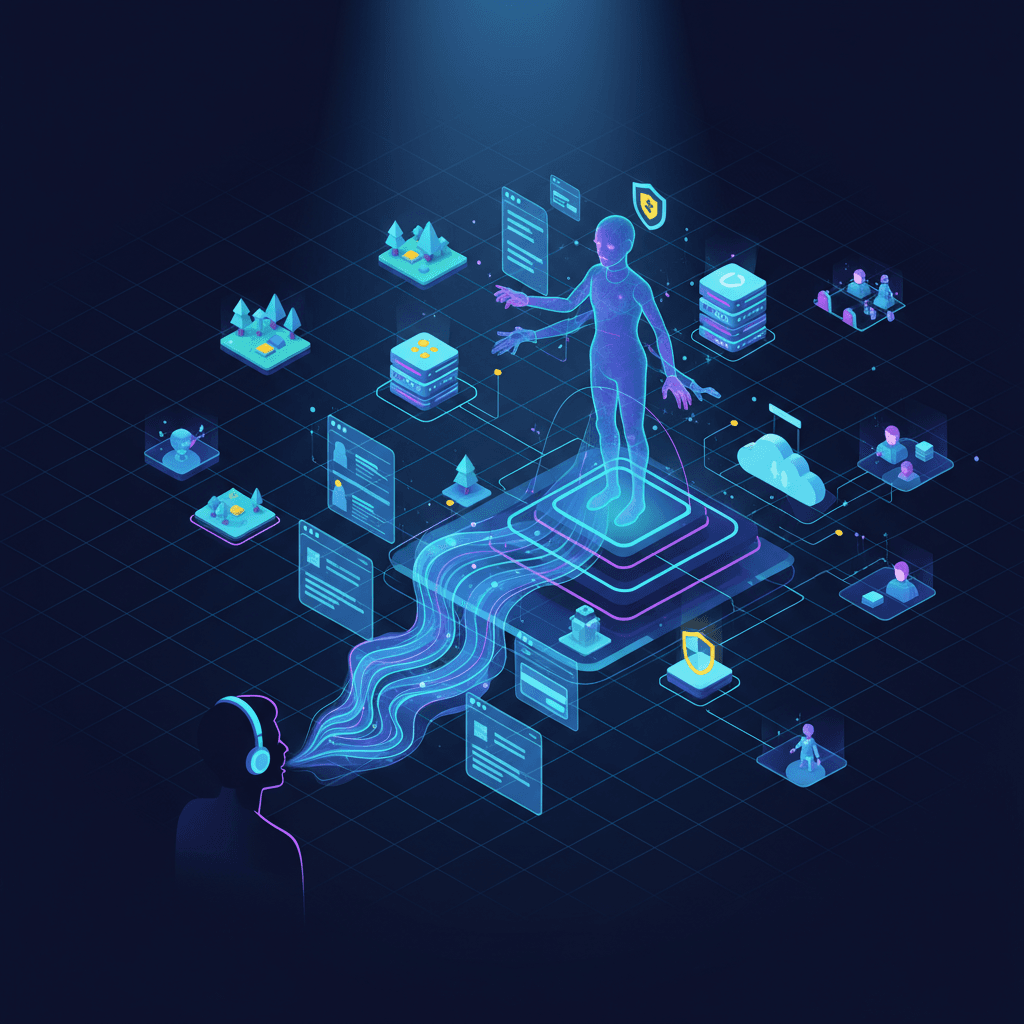
The landscape of software engineering has reached a pivotal inflection point with the latest evolution of Google AI Studio.[1][2] What began as a sandbox for testing large language models has transformed into an end-to-end development engine capable of generating complex, real-time multiplayer applications through the power of voice and high-level intent. This transition marks the formalization of vibe coding as a legitimate technical paradigm, moving it from a developer meme into a functional reality where the barriers between human imagination and production-ready software are nearly non-existent.[1] By automating the most arduous aspects of backend architecture, database management, and network synchronization, the platform is effectively commoditizing the technical stack, allowing creators to focus entirely on the logic and experience of their digital products rather than the underlying infrastructure.
At the heart of this advancement is the introduction of a sophisticated coding agent known as Antigravity, which powers the new build mode within the environment.[3][4][5] Unlike previous iterations of AI assistants that merely provided code snippets or static front-end designs, this new agent handles the systemic heavy lifting of full-stack deployment. It is now capable of orchestrating massive multiplayer experiences, such as retro-style first-person shooters or collaborative workspaces, directly from a natural language prompt. For example, a user can describe a competitive laser tag game with real-time leaderboards and AI-controlled bots, and the system will not only generate the visual assets and gameplay logic but also configure the server-side architecture necessary to synchronize multiple users in a shared digital space. This capability relies on an integrated Node.js runtime and advanced state management, allowing for the kind of low-latency interaction that was previously the sole domain of experienced game studios and network engineers.
The technical sophistication of these generated apps is further enhanced by the proactive nature of the AI agent in managing backend requirements. When a user describes a feature that requires persistent data—such as a user profile, a high-score list, or a transaction history—the system automatically detects the need for a database. It then provisions and configures cloud-based storage solutions like Firestore and sets up secure user authentication frameworks, such as Sign-in with Google, without the user having to write a single line of boilerplate code or navigate complex cloud consoles. This seamless integration extends to the commercial layer of application development through a dedicated secrets management system. Developers can now securely store sensitive API credentials for services like Stripe or other payment processors, enabling the AI to build fully functional, revenue-generating platforms. By bridging the gap between a visual prototype and a deployed service with a functioning economy, the platform has effectively shortened the development lifecycle from weeks to minutes.
The interface for this new era of development has shifted from the keyboard to the voice, fundamentally changing the iterative loop of creation. In the build mode, developers can use speech-to-text commands to articulate complex logic or request specific aesthetic changes. This multimodal approach is supported by an annotation feature that allows users to highlight specific parts of a generated interface and describe desired modifications in plain language.[3][2] If a button needs to be more prominent or a game mechanic feels unbalanced, the developer simply speaks the change into existence. The AI interprets these "vibes" or high-level goals and translates them into precise code modifications across the entire project structure. This fluid, conversational workflow eliminates the friction of the traditional write-compile-test cycle, turning software creation into a process more akin to live performance or artistic direction.[2]
For the broader AI and technology industry, these developments represent a significant escalation in the race to dominate the developer tool market.[6] By leveraging its vast ecosystem of cloud infrastructure and the reasoning capabilities of its latest Gemini models, Google is providing a vertically integrated experience that challenges established integrated development environments and independent AI coding assistants. This shift has profound implications for the democratization of software, as individuals without formal computer science backgrounds can now build and launch sophisticated, global-scale applications. However, it also prompts a reevaluation of the role of the professional developer. As the execution of standard technical patterns becomes automated, the value of human labor is shifting toward architectural oversight, creative vision, and the ability to steer AI agents through increasingly complex logic.[7] The era of manual boilerplate is coming to an end, giving way to an age where the primary constraint on innovation is the clarity of the creator's intent.
The rise of real-time multiplayer generation in Google AI Studio also signals a new trajectory for the gaming industry, specifically the emergence of what experts are calling living games. These are environments where AI-driven systems not only build the world but also allow it to evolve based on player interaction in real time.[8] Because the development platform can now handle persistent state and autonomous agent behavior within a game, developers can create worlds that feel responsive and sentient.[8][9] The ability to spawn these complex systems via simple voice commands suggests a future where the distinction between a player and a developer becomes blurred. Users may soon find themselves not just playing a game, but "vibe coding" their own custom levels and mechanics on the fly, sharing them instantly with a global audience through one-click deployment to serverless cloud environments.
Ultimately, the move toward full-stack, real-time application building within an AI-native environment marks the beginning of an era where software is no longer a static product but a dynamic extension of human thought. The integration of databases, authentication, and payment rails into a single prompt-driven workflow is a testament to the speed at which generative AI is maturing. As the technical hurdles of software development continue to fall away, the industry must grapple with a new reality where the ability to conceptualize a "vibe" is as valuable as the ability to write a function. This transformation is not just about making coding faster; it is about redefining the very nature of digital creation, enabling a new class of creators to build the next generation of the internet with nothing more than their voice and a vision.
Sources
[1]
[2]
[3]
[4]
[6]
[7]
[8]
[9]