
Deeptune raises $43 million to build simulated workplaces for training autonomous AI agents
Deeptune is building digital training grounds to help AI agents master complex office workflows through interactive software simulations.
March 19, 2026
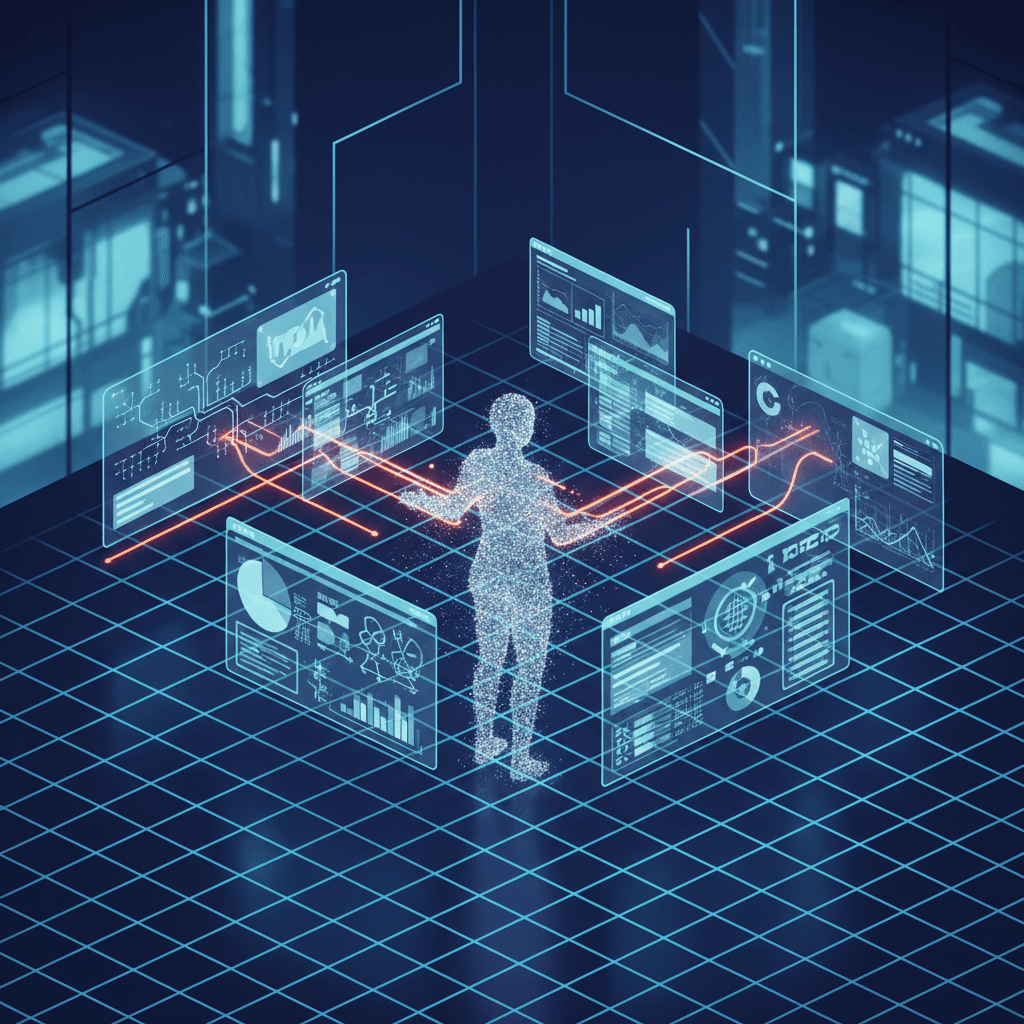
The artificial intelligence industry is currently undergoing a fundamental transition from models that process information to agents that execute actions.[1] While the previous era of development focused on large language models capable of generating human-like text, the next frontier is defined by agentic AI—autonomous systems designed to navigate complex digital environments and complete multi-step professional tasks. This shift has created an urgent demand for a new kind of training infrastructure.[1] Rather than simply reading the entire internet, the next generation of AI must learn by doing. Addressing this need, the startup Deeptune recently announced it has raised $43 million in a Series A funding round led by Andreessen Horowitz to build what it describes as simulated workplaces for AI agents.[2]
The core premise of Deeptune’s technology is that the current method of training AI models has reached a point of diminishing returns. Most contemporary models are trained on static datasets consisting of text, code, and images scraped from the web. While this allows a model to understand the nuances of language or the syntax of a programming language, it does not provide the interactive experience necessary to master the messy, unpredictable workflows of a modern office. Deeptune approaches this problem by building high-fidelity digital replicas of professional environments, which the company calls training gyms. In these simulations, AI agents are placed into sandbox versions of popular software tools like Salesforce, Slack, and Zendesk. Here, they can practice complex operations—such as reconciling an enterprise resource planning system with a series of invoices or managing a multi-channel customer service escalation—without the risk of corrupting real-world company data.
This approach draws a direct parallel to the way pilots use flight simulators.[3][1] Just as a pilot logs thousands of hours in a virtual cockpit to prepare for rare emergencies and complex maneuvers, Deeptune’s simulated workplaces allow AI agents to experience the equivalent of several lifetimes of professional work in a compressed timeframe. By interacting with these software replicas, models can receive immediate feedback on their actions.[4][5] If an agent clicks the wrong button in a simulated CRM or fails to follow a specific security protocol, the system records the error and allows the agent to iterate until the task is mastered. This feedback loop is essential for reducing the hallucinations and logic errors that have historically prevented AI from being trusted with high-stakes autonomous work.
The significance of this investment from Andreessen Horowitz reflects a broader strategic pivot within the venture capital community. As the market for foundational models becomes increasingly crowded and capital-intensive, investors are looking toward the infrastructure and tooling layer that will enable these models to be deployed effectively within the enterprise. Marco Mascorro, a partner at Andreessen Horowitz, has noted that the industry is moving toward a world where AI models learn through interaction rather than solely through human-curated data.[3] This interaction-based learning is viewed as the only viable path to achieving the level of reliability required for agents to function as digital coworkers. Deeptune’s rapid growth—reportedly reaching a seven-figure annual recurring revenue within its first six months of operation—underscores the intense appetite among frontier AI labs for this specific type of training data.
The founding team behind Deeptune brings a pedigree that suggests a deep understanding of the data-labeling and enterprise-software bottlenecks that have plagued AI development. With experience at companies like Scale AI, Glean, and Palantir, the team is building for a future where the bottleneck is no longer the size of the model, but the quality of the environment in which it is trained. This is particularly relevant as the industry nears what researchers call the data wall—the point at which there is no more high-quality, human-generated text available on the public internet to feed into larger models. Synthetic data generated within Deeptune’s simulations provides a sustainable way to continue scaling model capabilities by creating novel, task-oriented scenarios that do not exist in the current training sets.
From an industry-wide perspective, the emergence of simulated workplaces addresses a major trust gap in corporate AI adoption. Most enterprises are currently hesitant to grant AI agents full access to their live production systems due to concerns about security, data integrity, and unpredictability. By providing a standardized, simulated environment, Deeptune offers a testing ground where companies can vet an agent’s performance before deployment. These environments can be customized to reflect the specific tech stacks of different industries, creating specialized training grounds for virtual accountants, lawyers, or software engineers. According to market projections, the global market for this type of advanced AI training is expected to grow from roughly $11.6 billion in 2025 to over $90 billion by the mid-2030s, highlighting the massive economic potential of the simulation-as-a-service model.
The technical challenge of building these simulations is non-trivial. It requires more than just a visual replica of a software interface; it requires a deep functional model of how software behaves, how databases respond to queries, and how different applications communicate with one another. Deeptune’s ability to build hundreds of these environments for leading AI labs suggests they have developed a scalable way to digitize office workflows.[1] This enables the training of agents that are not just reactive—answering questions when prompted—but proactive, capable of identifying a task that needs to be done and executing it across multiple platforms.
As AI agents become more prevalent, the definition of the workplace itself may begin to shift. If a significant portion of the workforce consists of autonomous agents trained in high-fidelity simulations, the design of software may eventually prioritize machine readability over human intuition. However, in the near term, Deeptune’s focus remains on bridging the gap between current AI capabilities and the requirements of the modern professional. By providing the digital equivalent of an apprenticeship, the company is attempting to ground artificial intelligence in the practical realities of the office.
Ultimately, the success of Deeptune and the $43 million bet by its investors hinges on the belief that the path to general artificial intelligence lies in the mastery of tools. If intelligence is defined not just by what a model knows, but by what it can accomplish, then the simulators being built today are the classrooms of tomorrow. The move toward simulated workplaces represents a maturation of the AI field, shifting the focus from the pursuit of raw scale to the pursuit of functional, reliable utility in the real economy. As these training gyms become more sophisticated, the distinction between a human employee using a tool and an AI agent operating within a simulation will continue to blur, ushering in an era where the digital workplace is as much a site for learning as it is for production.