
Gates and OpenAI Launch $50 Million AI Initiative to Revolutionize African Healthcare.
$50 Million partnership deploys AI to strengthen primary healthcare systems overwhelmed by staff shortages and aid cuts.
January 22, 2026
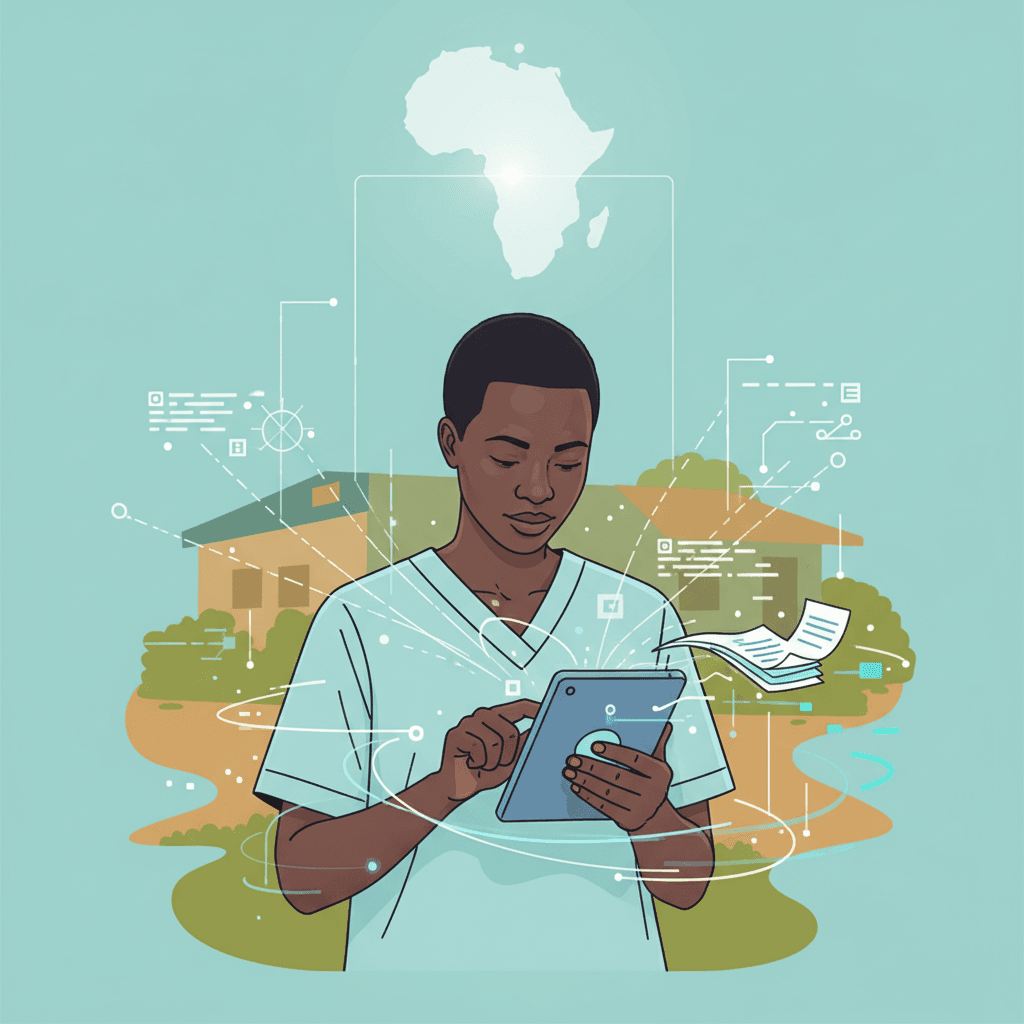
The Bill and Melinda Gates Foundation has partnered with artificial intelligence powerhouse OpenAI to deploy sophisticated AI tools across Africa’s primary healthcare systems, an ambitious initiative that pivots the technology’s role from a frontier innovation to an essential lifeline for under-resourced communities. Driven by a joint commitment of $50 million in funding, technology, and technical expertise, the partnership signals a profound shift in global health philanthropy, explicitly viewing AI not as a medical breakthrough in its own right, but as a critical means to sustain and enhance basic service delivery under growing strain. The project, officially dubbed Horizon1000, is a multi-year effort designed to inject modern efficiency and clinical support into frontline care, beginning its initial rollout in Rwanda with the aim of reaching 1,000 primary health clinics and their surrounding communities across several African nations.[1][2][3][4][5]
The urgency of this intervention is underscored by a chronic and deteriorating health crisis across the continent. Primary healthcare systems in many parts of Africa are caught in a pincer movement of rising demand, persistent staff shortages, and recent reductions in international aid budgets. The severe deficit of healthcare professionals in sub-Saharan Africa alone is estimated at nearly six million workers, a gap that foundation leadership contends cannot be closed through training alone.[1][6][7] The strain of these shortages is evident in countries like Rwanda, where the patient-doctor ratio is alarmingly low, and the existing workforce is routinely overloaded. Compounding this challenge, the philanthropic move arrives amid cuts to international aid that, according to foundation analysis, have contributed to a recorded rise in preventable child deaths, the first such setback in decades.[6][7] In this context of structural vulnerability, the Gates Foundation is positioning AI as a pragmatic, capacity-extending solution, capable of augmenting the human health worker and reducing the administrative burden that slows down care.[1][3][4]
The AI-enabled tools being piloted through Horizon1000 are highly focused on improving the efficiency and quality of primary care for existing staff. The partnership’s core mandate is to deploy decision support systems for community health workers, who serve as the crucial, high-volume frontline of medical access in rural areas. These generative AI systems are being engineered to assist with vital, time-consuming tasks such as patient intake, initial triage, follow-up scheduling, and managing referrals to higher-level facilities. A key function involves drastically reducing the volume of paperwork currently demanded of clinicians, thereby freeing up time for direct patient interaction. Furthermore, the technology is intended to provide immediate access to trusted medical information and clinical guidelines, translated and optimized for local languages, a feature that can enhance the quality of care provided by less specialized workers. Crucially, the partners emphasize that the technology is designed to serve as an augmentation layer, supporting and strengthening human clinicians rather than replacing them.[1][4][5][8]
For the AI industry, the Horizon1000 initiative represents a significant inflection point, signaling a deliberate turn toward using large language models and machine learning to address global social inequities. As one of OpenAI's first major philanthropic endeavors, the project moves the company’s powerful technology beyond the typical focus on high-income markets and toward solving what its CEO has called "generational challenges." The involvement of a leading commercial AI firm in this capacity demonstrates a widening recognition within the industry of a societal obligation to ensure AI evolves into a "societal marvel," not merely a scientific one. This move is further underlined by the Gates Foundation's open approach, noting that it is also collaborating with other major AI developers, such as Anthropic, to explore diverse instant health intelligence platforms that can feed into national health planning systems for better resource allocation. This collaborative model indicates an industry-wide push to leverage competitive AI development for philanthropic outcomes, setting a precedent for how major technology platforms might engage in global development.[9][10][2][4][5]
Despite the ambitious vision and significant investment, the deployment of such advanced AI systems in an African context is not without substantial structural and ethical hurdles. Existing challenges include significant infrastructural disparities, particularly in reliable electricity and internet connectivity, which are vital for running sophisticated AI models. Concerns about data governance, privacy, and security are also paramount, as the initiative handles sensitive health data from vulnerable populations. Additionally, the risk of algorithmic bias looms large, requiring models to be meticulously trained on locally relevant data to ensure accuracy and avoid perpetuating existing health inequities. Scholars and analysts have consistently pointed to the need for African-led innovation and development to mitigate the potential for 'digital colonialism'—where the technology solution, and its underlying control, remains entirely foreign. For the Horizon1000 initiative to achieve its goal of not just maintaining, but *revolutionizing* primary care, the partnership must navigate these complexities, ensuring the AI tools are not just technically proficient but also ethically sound, culturally appropriate, and seamlessly integrated into the public health infrastructure of its partner nations.[11][12][13] The ultimate success of this $50 million program will be measured less by the technology's complexity and more by its ability to demonstrably improve the efficiency of care and reverse the adverse trends in public health outcomes across the continent, thus establishing a replicable model for leveraging artificial intelligence in the service of global health equity.[1][3][5]
Sources
[1]
[4]
[6]
[7]
[8]
[9]
[10]
[11]
[12]
[13]