
Ex-OpenAI Architect Exposes Fundamental Flaw Blocking True AGI Breakthrough.
OpenAI Architect reveals current LLMs are "fragile" because they cannot learn from mistakes without catastrophic failure.
February 2, 2026
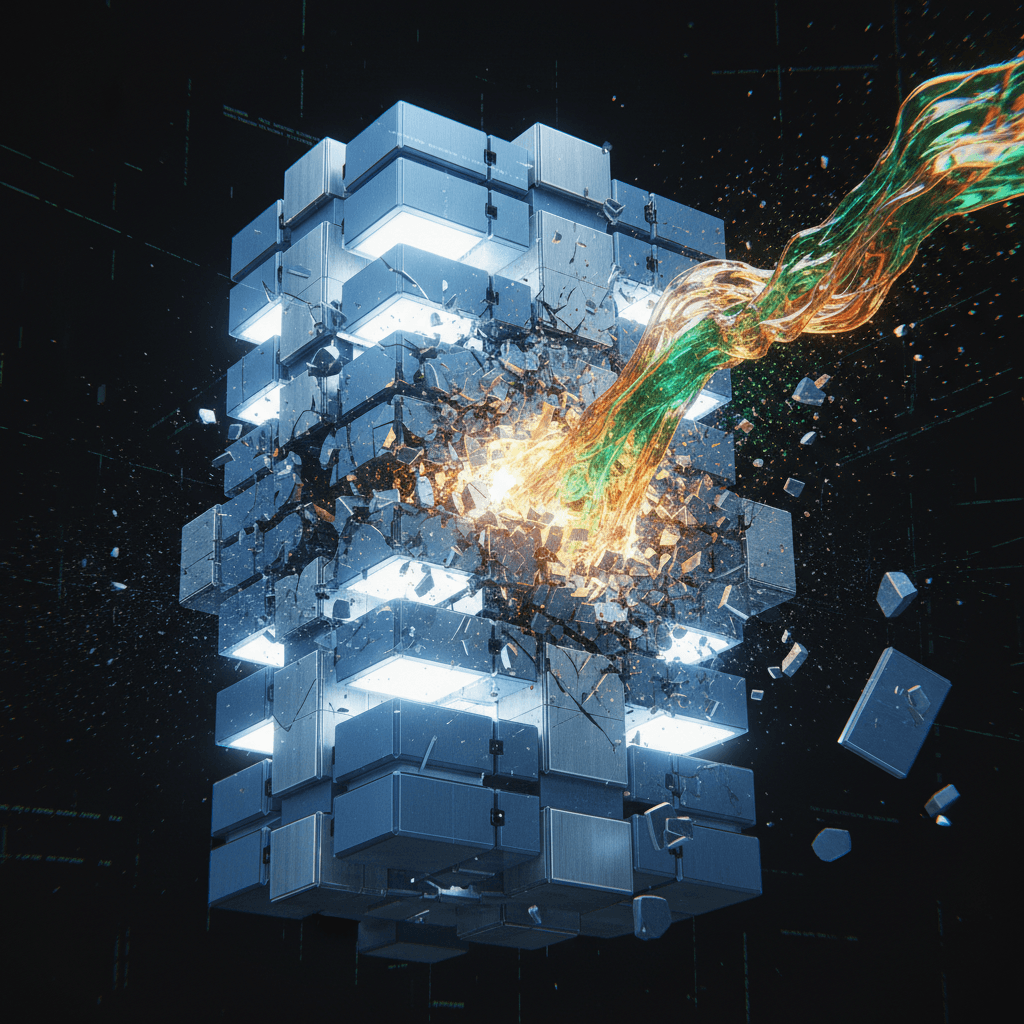
The current generation of advanced artificial intelligence models, including the most celebrated large language models, possess a fundamental and critical weakness that acts as a profound barrier to achieving true Artificial General Intelligence, according to a former top researcher at OpenAI. Jerry Tworek, an architect behind some of OpenAI’s most important reasoning systems, argues that these models are inherently "fragile" because they lack the ability to genuinely learn from their own mistakes and update their internal worldview without suffering catastrophic failure. His view, shared after his recent departure from the firm, challenges the prevailing industry belief that AGI is an inevitable result of simply scaling up existing Transformer architecture models.
Tworek’s critique centers on the core process by which today’s AI systems are constructed and fine-tuned, contrasting it sharply with the self-correcting nature of biological intelligence. He notes that the current paradigm, which relies heavily on massive pre-training followed by methods like reinforcement learning, yields "static models" that essentially "get what you train for"[1]. While these models, which Tworek helped develop, can perform astonishingly well on tasks within their training data distribution, they struggle significantly when confronted with entirely new, out-of-distribution problems or knowledge[1]. This limitation, in Tworek’s view, exposes a deep-seated fragility: the system cannot effectively update its internal knowledge and beliefs when it encounters a genuine error or failure[1]. In human learning, a mistake is an opportunity for robust, anti-fragile growth; in current AI models, a failed attempt at learning new information often risks the model collapsing or spiraling out of control[1].
The critical missing ingredient, according to the former OpenAI researcher, is a fundamental breakthrough in "continual learning"[1]. The models lack a mechanism to safely and incrementally integrate new data and correct past errors without succumbing to "catastrophic forgetting," a well-documented weakness in neural networks where learning new information causes the model to overwrite or corrupt previously learned knowledge. For Tworek, the current architecture’s inability to "break through difficulties and rescue itself from a 'stuck' state" disqualifies it from being considered true AGI[1]. True intelligence, he posits, must possess the innate capability to proactively identify its own problems, devise solutions, and seamlessly self-improve over time[1]. The current industry standard is to roll out a new, more powerful model—a process that requires massive retraining and compute power—rather than a single model that continuously evolves in deployment.
Tworek’s perspective carries considerable weight, given his role in the development of OpenAI’s advanced reasoning models, including the ‘o1’ and ‘o3’ series, and his contributions to the underlying technology of GitHub Copilot and the coding capabilities of GPT-4[2][3]. His personal decision to step away from the industry leader was motivated by a desire to pursue the very kind of "risky fundamental research" he believes is necessary to overcome this fragility, research that he felt was no longer possible in an environment increasingly focused on commercial metrics like user growth[4][3]. He suggests that the current AI industry, driven by intense competition and commercial interests, has become trapped in a technological rut, with all major labs developing "nearly identical technology" based on the same Transformer foundations[4]. This widespread focus on short-term optimization and incremental gains over experimental breakthroughs is, for him, a significant roadblock to the novel architectures required for continuous, anti-fragile learning[4].
The implications of this fundamental fragility extend beyond technical discussions, influencing the highly publicized timelines for AGI. While Tworek previously held an optimistic view that AGI could be reached by as early as 2029 through the scaling of reinforcement learning, his latest analysis has led him to slightly revise that optimistic timeline[4][1]. He suggests that achieving true AGI hinges on solving the continual learning problem, a challenge that may only be addressable after reaching a certain, extremely high threshold of scale, requiring immense computational resources currently held by only a handful of top labs[1]. This puts the onus back on researchers to explore multidimensional scaling, looking past the traditional route of simply increasing training data and compute power, which has become both scarce and prohibitively expensive[5].
The call for "fundamental robustness" in training processes represents a significant shift in focus for the AI community. It suggests that the next generation of AI systems cannot be merely larger, but must be architecturally different, possessing a built-in mechanism for error correction and belief updating that is currently absent. Without this capacity for self-repair and anti-fragile growth, the current AI models, despite their impressive capabilities, remain sophisticated tools rather than truly intelligent, autonomous entities. The industry, therefore, faces a crucial pivot point: continuing the current trajectory of optimizing existing architectures for short-term commercial returns, or pursuing the challenging, high-risk research into continuous learning that Tworek and others believe is the only viable path to AGI[4][1]. The former OpenAI researcher’s departure and subsequent analysis serves as a high-profile warning that the present course, while profitable, is insufficient for realizing the promise of general intelligence.