
DeepMind CEO predicts AGI will compress a century of industrial change into one decade
Google DeepMind CEO Demis Hassabis forecasts AGI within ten years, delivering an industrial revolution ten times faster than any before.
April 10, 2026
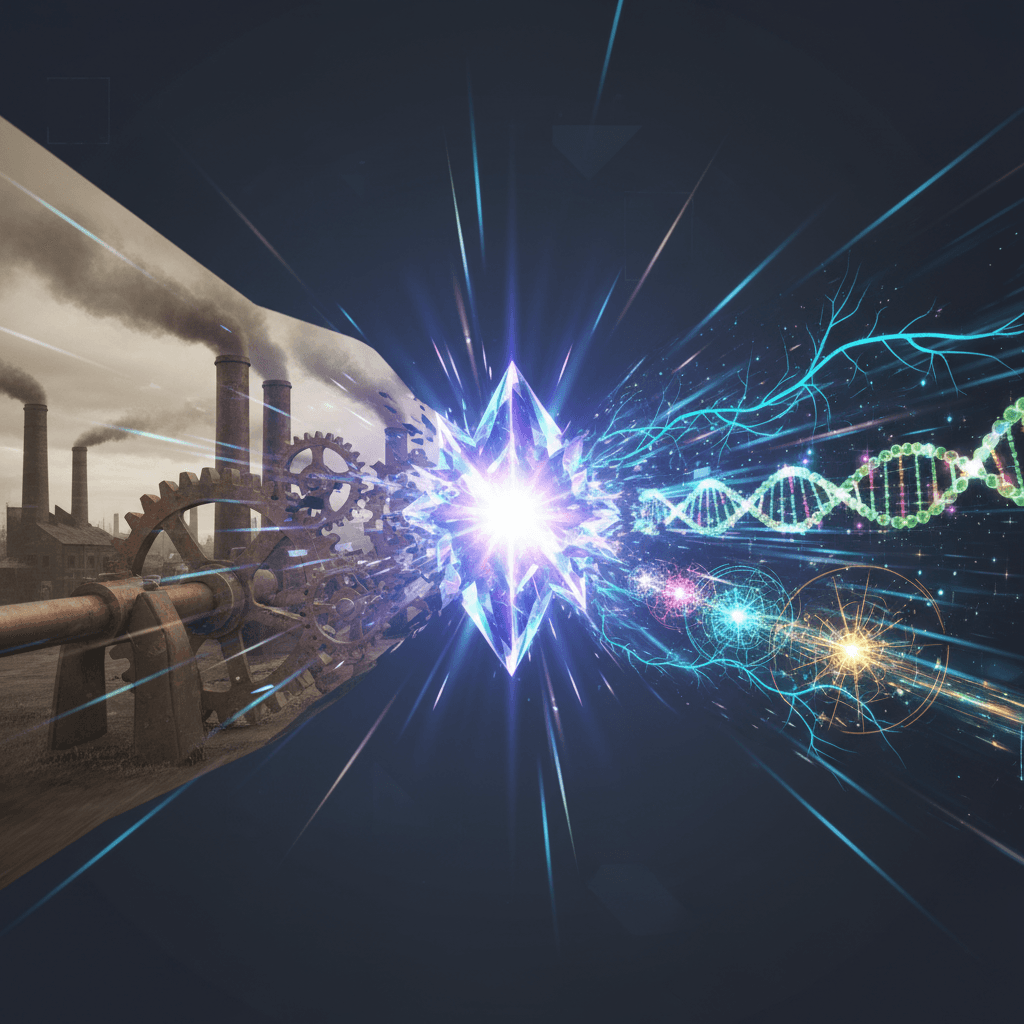
The landscape of human civilization is approaching a transformation so profound that it may dwarf every previous technological shift in history combined. This is the perspective of Demis Hassabis, the chief executive of Google DeepMind and a recent Nobel laureate, who has begun to articulate a vision of the near future that is as disruptive as it is accelerated.[1][2] According to Hassabis, the arrival of artificial general intelligence—a form of AI capable of performing any intellectual task a human can do—is no longer a distant or speculative milestone.[3][4][5][6][2][7] Instead, it is a looming reality that could arrive within the next five to ten years.[5][8][6] He frames this transition not merely as a new era of computing, but as a compressed version of the Industrial Revolution, operating at ten times the magnitude and ten times the velocity of the original.[6][2]
The original Industrial Revolution spanned roughly a century, fundamentally rewriting the rules of labor, health, and social organization while dramatically reducing child mortality and expanding the global population. Hassabis suggests that we are about to witness an equivalent level of structural change, but instead of unfolding over several generations, it will be packed into a single decade.[2] This "ten-ten" comparison serves as a warning to institutions that are currently calibrated for a much slower pace of change. In this view, the coming years will represent a threshold moment where the compounding nature of intelligence begins to solve previously intractable problems in physics, biology, and chemistry, leading to a state of radical abundance and a total reimagining of the global economy.
Despite the intensity of this prediction, Hassabis maintains a nuanced stance on the current state of the industry.[4][2][5][9] He identifies a central paradox where artificial intelligence is simultaneously overhyped in the short term and vastly underestimated in the long term. In the immediate horizon, he sees a surplus of noise—massive venture capital investments flowing into startups with few original ideas and "meme-like" speculation that mirrors previous bubbles in other tech sectors. This hype often obscures the genuine, steady scientific progress being made in the labs. While critics point to the current flaws of large language models as proof that artificial general intelligence is far off, Hassabis argues that these flaws are simply the remaining missing pieces of a puzzle that is rapidly being assembled.
The roadmap toward this superior form of intelligence involves moving beyond the "jagged intelligence" of today’s models.[5][6] Currently, advanced AI can solve complex mathematics or win silver medals in international Olympiads, yet it can simultaneously fail at basic logic or consistent reasoning across different contexts.[10] Hassabis points to several specific cognitive building blocks that must be integrated to bridge the gap to general intelligence: long-term memory, hierarchical planning, and consistent reasoning.[11][6] Today’s models are essentially world-class predictors of the next token in a sequence, but they lack the ability to form deep "world models" that allow for the kind of multi-step, strategic thinking required to navigate the physical world or manage long-term research projects. Solving these "root node" problems is the primary focus of current research efforts, which increasingly move away from raw scaling alone toward fundamental algorithmic innovation.[6]
A major pillar of this transition is the application of AI to the physical sciences, a field where Hassabis has already seen significant success. The development of AlphaFold, which predicted the structures of nearly all known proteins, is cited as the premier proof of concept for how AI can accelerate human progress. By solving a problem that would have taken human scientists centuries to complete manually, the system has already transformed biology and drug discovery. Hassabis views this as only the beginning. He envisions AI as the ultimate tool for discovery, capable of tackling "root node" challenges such as achieving viable nuclear fusion or discovering room-temperature superconductors. If AI can solve the problem of energy and material scarcity, it effectively unlocks the solutions to climate change, food insecurity, and poverty, leading to a post-scarcity world where the traditional concept of money and value may require a complete philosophical overhaul.
This vision of radical abundance is tempered by a call for extreme caution regarding the safety and governance of these systems. As the impact of intelligence begins to ripple through the economy at an unprecedented speed, the risk of dual-use applications—where a tool meant for medicine could be repurposed for harm—becomes a critical concern.[6] Hassabis has consistently advocated for international cooperation and the creation of oversight bodies modeled after the International Atomic Energy Agency. He suggests that because the benefits of general intelligence will be so vast, the competitive pressure among nations and companies to be the first to reach the goal could lead to a dangerous disregard for safety protocols. Ensuring that the technology remains aligned with human values and benefits the global population, rather than a few concentrated interests, is described as one of the most important challenges of the next decade.
The economic implications for the labor market are equally stark. Unlike previous technological revolutions that replaced physical labor with machines, the intelligence revolution targets cognitive labor. Hassabis acknowledges that while new types of jobs will undoubtedly emerge, the speed of the transition will make it difficult for education systems and labor policies to keep up. He suggests that society must begin discussing new frameworks for wealth distribution and the meaning of human contribution in an era where intelligence is no longer a human monopoly. The transition will likely be messy and disruptive, much like the original Industrial Revolution, but Hassabis argues that just as we would not wish to undo the progress of the past two centuries, we will eventually see this transition as a net positive for humanity’s long-term flourishing.[8]
In the final analysis, the prediction of a decade-long transition that matches a century of industrial change serves as a call to action for both the public and private sectors. The "engine room" of the modern world is shifting from hardware and energy to software and intelligence. If Hassabis is correct, we are living through the last few years of the "pre-AGI" era, a time that will soon be viewed as the quiet before a storm of innovation. The challenge for the coming decade will be to navigate this compressed revolution with enough foresight to mitigate the risks while ensuring that the "ten-fold" increase in productivity and discovery is shared equitably across the globe. The window for preparation is closing, and the arrival of a system that can exhibit the full spectrum of human cognitive capabilities may be much closer than the current cycle of hype suggests.[2][3]
Sources
[1]
[2]
[5]
[6]
[7]
[10]
[11]