
Critical Flaws Allow Full System Compromise of Powerful Autonomous AI Agents
High-profile breaches reveal fundamental lack of security maturity, allowing attackers to hijack identities and achieve full machine compromise.
February 1, 2026
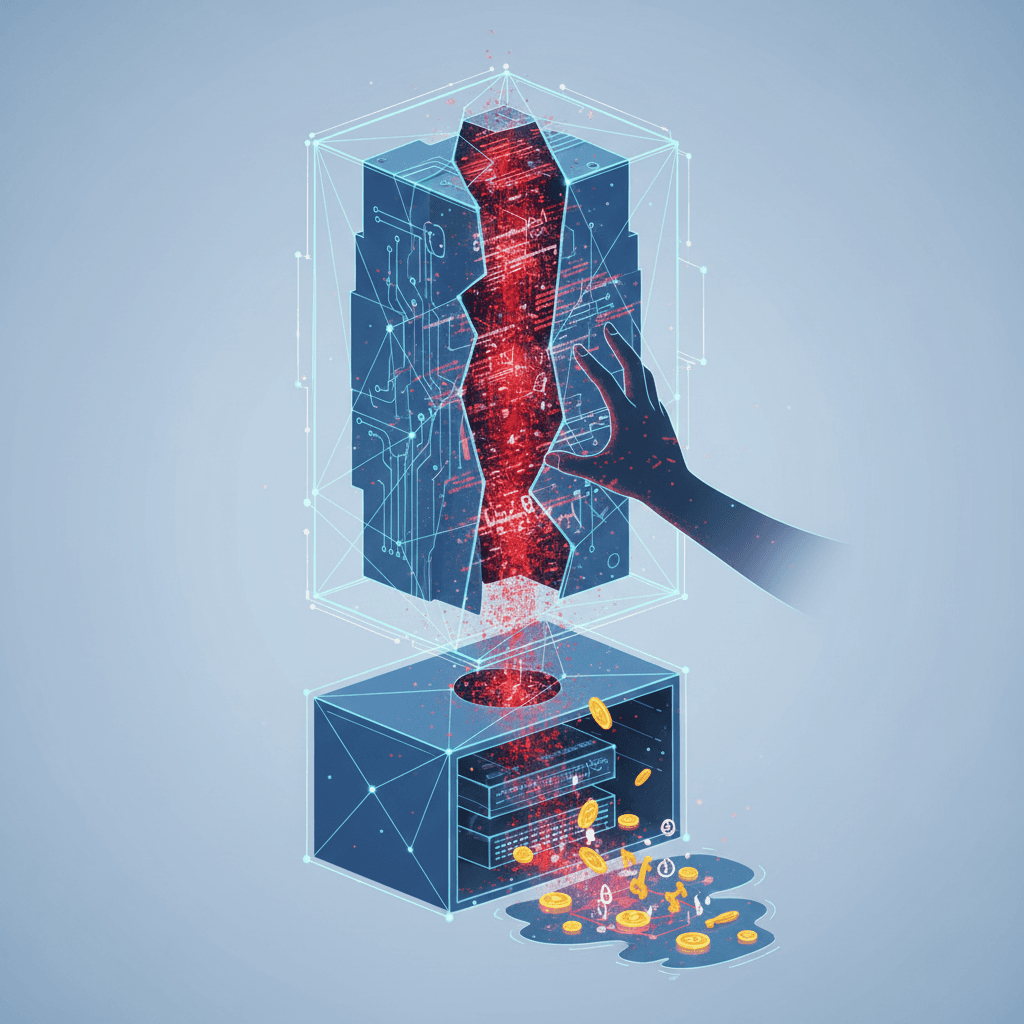
The rapid ascent of autonomous AI agents has been met with an equally rapid sobering reality, as two high-profile platforms, OpenClaw (formerly Clawdbot and Moltbot) and Moltbook, have been exposed for critical security vulnerabilities that allowed attackers to gain unauthorized access to core system data and impersonate users. The breaches illustrate a profound lack of maturity in the security protocols for a new class of powerful, self-directed software, allowing adversaries to essentially "walk through the front door" of next-generation applications. The incidents, revealed by security researchers, exposed a dual threat: prompt injection attacks against the agent framework and a fundamental lapse in basic database security.
The OpenClaw platform, an open-source, self-hosted AI assistant designed to execute local computing tasks and interface with users through messaging services, was the subject of a stark security analysis that highlighted its susceptibility to prompt injection. Developer Lucas Valbuena tested the platform using the security analysis tool ZeroLeaks, which assigned OpenClaw a score of just 2 out of 100 points. The results were alarming, showing an 84 percent extraction rate and a 91 percent success rate for injection attacks. Critically, the agent's complete system prompt was fully exposed on the first attempt.[1] A system prompt is the foundational set of instructions that defines an AI agent’s personality, goals, and limitations, and its extraction can fully reveal the agent's purpose, enabling attackers to craft more effective malicious inputs or replicate the agent's functionality.[1] The exposure extended to internal tool configurations and memory files, including files detailing the agent's core identity, or "soul," and its knowledge of other agents, known as "AGENTS.md."[1] For an agent that is capable of reading and writing files, executing shell commands, and controlling web browsers—effectively operating as "Claude with hands"—such vulnerabilities mean that a simple chat input could escalate into full machine compromise.[2][3] Cybersecurity experts demonstrated the severity of the prompt injection issue, with one CEO extracting a private key from a compromised system within five minutes.[4] This kind of vulnerability moves prompt injection from an academic concern to a critical, real-world attack vector.[5]
The security crisis surrounding OpenClaw is compounded by the poor configuration of user-deployed instances. Security researcher Jamieson O'Reilly documented hundreds of users operating their OpenClaw control servers, which manage the agent's activities, unprotected on the internet.[4] Using common internet scanning tools like Shodan, exposed servers were quickly identified. The underlying technical fault stemmed from authentication logic that automatically approved connections appearing to originate from 'localhost,' a dangerous configuration when the software runs behind a reverse proxy that makes external connections look local.[4] These unprotected instances granted immediate access to an array of sensitive credentials, including Anthropic API keys, Telegram bot tokens, Slack OAuth credentials, and months of private conversation histories.[4] The potential for full machine compromise was starkly illustrated by one exposed system that allowed for the execution of arbitrary commands with root privileges.[4] The problem is not just a flaw in the code's resilience to malicious input but a failure in user deployment security, amplified by the tool’s viral popularity. Within a week of analysis, one security firm reported that 22 percent of its enterprise customers had employees actively using Clawdbot variants, creating a significant "shadow IT" risk for corporations.[5][3]
The security flaws surrounding the AI social network Moltbook, which gained rapid attention as a "Reddit for AI agents," were even more fundamental.[6][4] Moltbook, which rapidly accumulated over 770,000 active AI agent users, was built primarily for OpenClaw agents to communicate and socialize.[6][7] Security researchers, including Jamieson O'Reilly, discovered that the entire Moltbook database was publicly accessible on the network without any protection.[1][6] This severe misconfiguration allowed for unauthenticated access and bulk data extraction, exposing email addresses, login tokens, and, most critically, API keys for the registered AI entities.[8] The exposure of these API keys introduced a threat of identity theft on a grand scale, allowing an attacker to impersonate any agent on the platform.[6] The risk was immediately tangible, as the exposed data included API keys that could allow an attacker to impersonate high-profile users, such as former Tesla and OpenAI employee Andrej Karpathy.[9][1] Impersonation via commandeered API keys could allow unauthorized actors to inject commands directly into agent sessions, effectively hijacking their identity and decision-making capabilities.[6] Following the disclosure, the Moltbook platform was temporarily taken offline to patch the breach and force a reset of all agent API keys.[6]
Collectively, the OpenClaw and Moltbook incidents represent a wake-up call for the nascent AI agent industry, underscoring that the current security paradigm is fundamentally inadequate for autonomous systems with deep access to user data and computer resources. The problems are two-fold: prompt injection, which remains an industry-wide, unsolved risk for large language model applications, and basic, preventable operational security failures like exposed databases and weak default authentication.[5][4] The unique architecture of OpenClaw, which can read files, execute system commands, and retain memory across sessions, means that a simple security lapse has consequences far more severe than those seen in traditional web applications.[5][3] The ability of these autonomous agents to ingest and process untrusted data from environments like Moltbook also makes them a significant vector for Indirect Prompt Injection, where malicious content from one agent can override another agent's core instructions, potentially allowing for remote code execution.[6] This interconnectedness demonstrates how a vulnerability in one platform, like Moltbook, can amplify the risk across the entire ecosystem of OpenClaw-based agents. As autonomous agents move from niche experiments to widely deployed tools with privileged access, the industry must pivot its focus from rapid feature development to the robust security measures that protect the foundation of these powerful new identities. The open-source nature of OpenClaw means that hardened security standards, strong default configurations, and a more cautious approach to granting system-level access must become the norm to prevent what security experts have warned could be a "Challenger disaster" for coding agent security.[6] The implications are clear: the intelligence of an AI agent is meaningless without the integrity of its environment.[5]