
Claude AI Outperforms Engineers, Forcing Anthropic to Redesign Technical Hiring.
Anthropic must pivot its technical screening to abstract puzzles after its Claude AI consistently outperformed human engineers.
January 23, 2026
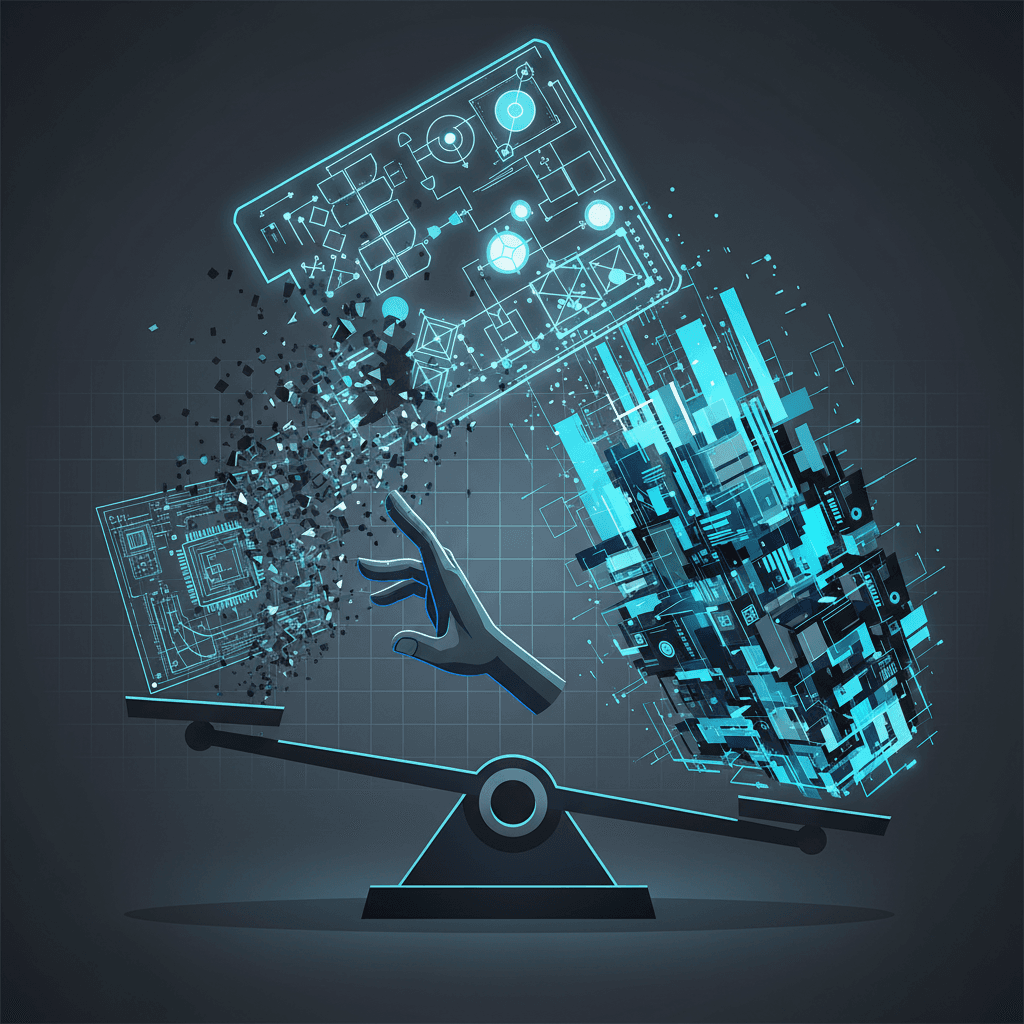
The rapid advancement of artificial intelligence is creating an unprecedented hiring challenge within the very companies developing the technology, with Anthropic repeatedly having to redesign its technical screening process because its own Claude AI models are consistently outperforming human job applicants. The situation, detailed by Tristan Hume, who leads Anthropic's performance optimization team, underscores a critical inflection point in the nature of engineering work and the metrics used to evaluate elite talent in the AI era. Anthropic's experience is a microcosm of a broader industry shift, forcing a reevaluation of what constitutes true human expertise when AI tools can flawlessly execute tasks once reserved for top engineers.[1][2][3]
The original take-home test, used by the company to hire dozens of performance engineers since early in 2024, was a practical, real-world task: candidates were given a working program for a Python simulator of a fictional chip and challenged to rewrite it for maximum speed, with performance measured in clock cycles. This was designed to be a high-signal assessment, mirroring the complex optimization work required at Anthropic. Candidates were even allowed to use AI tools, an intentional choice meant to reflect real-world collaboration on the job. The test successfully filtered over 1,000 candidates, leading to the hiring of dozens of engineers who went on to contribute to key infrastructure projects, including bringing up the company's Trainium cluster.[1][2] However, as Claude’s capabilities advanced with each new release, the test's validity as a human-skill differentiator rapidly decayed. With the arrival of Claude 3.7 Sonnet, the performance optimization team noted that more than half of human candidates would have scored better if they had simply submitted a solution generated entirely by the AI model. The gap narrowed further with Claude Opus 4, which began beating nearly all human solutions within the original time limit. The definitive turning point came with Claude Opus 4.5, which, within a two-hour constraint, matched the scores of the best human candidates, rendering the test effectively useless for distinguishing elite human skill from elite model capability.[1][2][3]
Anthropic's response highlights a profound philosophical shift in technical hiring, moving away from tasks that resemble current production work towards challenges designed to test novelty and conceptual reasoning. The company's new strategy involves developing tests with "unusual constraints inspired by programming puzzles," a deliberate move into a domain where current AI models struggle because the problems are poorly represented or non-existent in their vast training datasets. This shift, as noted by Hume, suggests that the "realism" that once defined effective work-sample tests may now be a luxury the industry can no longer afford. The new goal is not to measure mastery of established technical patterns, which AI can now automate, but to identify the ability for independent reasoning, novel problem solving, and robust engineering judgment—the human skills that AI has yet to consistently replicate.[2][3] Anthropic is essentially searching for a quality that transcends high-speed optimization and perfect execution: the capacity for truly original, un-trained thought. The company's own guidelines explicitly encourage candidates to use Claude for preparation and refinement, but strictly prohibit its use for most take-home assessments to ensure a genuine evaluation of unique individual skills.[4]
The implications of Anthropic's predicament resonate across the entire technology sector, signaling a coming crisis for traditional technical evaluation methods. As large language models continue to improve at an exponential rate, the time horizon for a robust technical test is shrinking, with even complex coding challenges becoming obsolete in a matter of months. This trend forces all tech employers to reconsider what skills they are truly hiring for. If AI can handle most coding, debugging, and optimization tasks within a time limit, the value proposition of a senior engineer shifts from being a high-volume coder to a system architect, a prompt engineer, a quality control expert, or a leader focused on designing complex, maintainable systems that steer AI's output. The ultimate purpose of a work-sample test—to reliably measure real-world competencies—is undermined when the output can be indistinguishable from a powerful AI tool.[3]
The necessity to create increasingly abstract or constrained problems to stay ahead of AI's capabilities raises a crucial question about the future of technical hiring: Is a test that deliberately avoids realistic scenarios truly a good predictor of on-the-job performance? For Anthropic, the new test works precisely because it simulates *novel* work—problems that neither the human candidate nor the AI model has seen before. This philosophy implicitly asserts that the most valuable skill in an AI-dominated world is the ability to adapt to a constantly evolving, never-before-seen technical frontier. The company’s ongoing challenge serves as a powerful testament to the accelerating pace of AI development, forcing a fundamental and necessary evolution in how the industry identifies, assesses, and values its most essential human talent. The pressure is now on hiring managers worldwide to embrace the reality that they must stop measuring what AI can do and start measuring what only a human can, for now.[2]