
China Deploys AI to Map Green Energy Grid and Solve Computing Power Bottleneck
China’s breakthrough in AI-driven renewable mapping secures a massive energy advantage in the global race for computing supremacy.
May 22, 2026
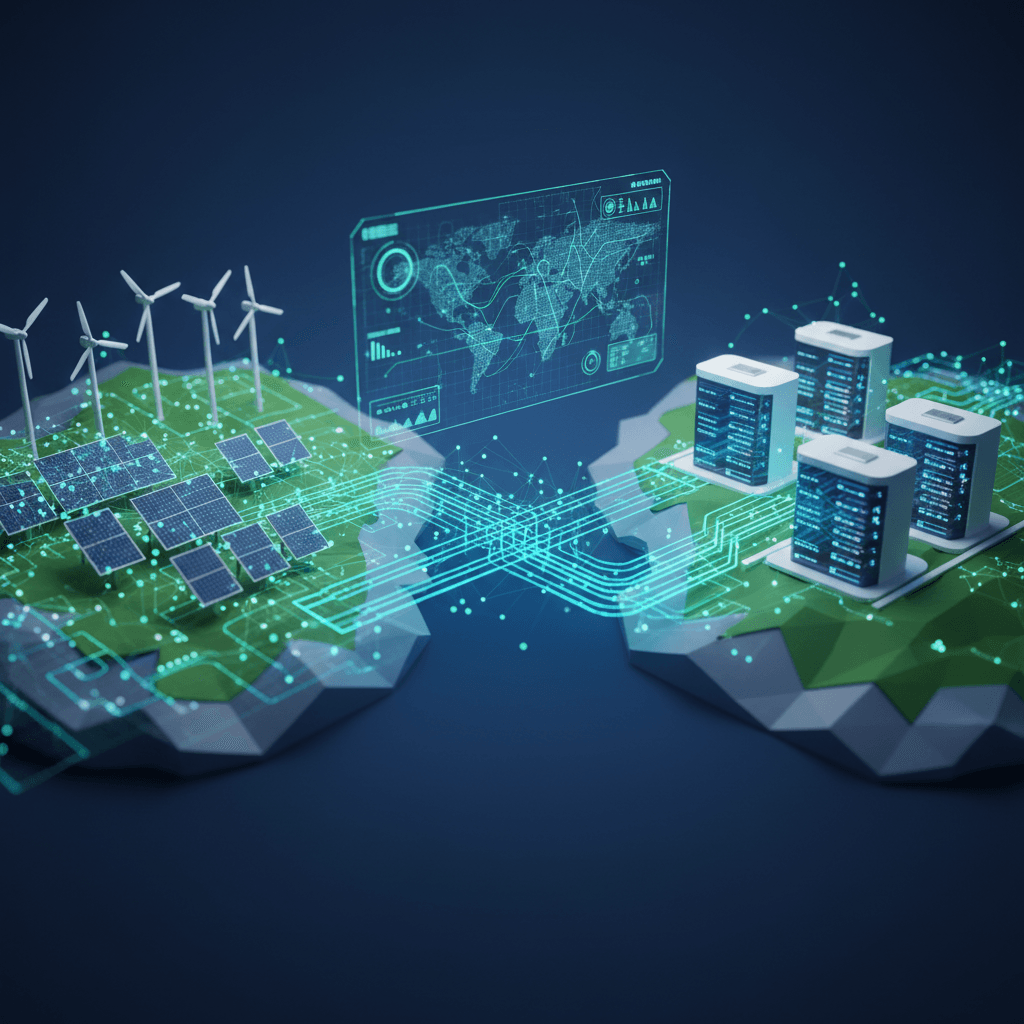
Every major economy is currently confronting the same critical bottleneck. The ongoing artificial intelligence boom is consuming electricity at a pace that legacy power grids were never designed to handle[1][2]. In the United States, capacity market prices in the country's largest grid operator have risen more than tenfold in a span of just two years, with data center growth identified as the primary catalyst. As tech hubs across North America and Europe face soaring energy prices and looming power shortfalls[3], China has executed a major technological leap that could redefine how nations power the future of computing. In a groundbreaking initiative, researchers from Peking University and Alibaba Group’s Damo Academy have successfully used artificial intelligence to map hundreds of thousands of wind and solar installations across the nation[4]. By creating a highly detailed, AI-driven national inventory of its green energy infrastructure[4], China has achieved an unprecedented view of its renewable energy capacity[5][6]. This development is not just a scientific milestone; it represents a major strategic shift that the rest of the world must closely observe as the global race for AI supremacy becomes increasingly defined by energy logistics[1][2].
The technological achievement behind this mapping project highlights the sheer scale of China's infrastructural ambitions and its capability to deploy AI for real-world physical challenges[7]. The research team achieved this by feeding a staggering seven point five six terabytes of high-resolution satellite imagery into a specialized machine learning model developed by the tech giant’s in-house research branch[8][4]. The algorithm successfully identified and logged over three hundred and nineteen thousand solar photovoltaic facilities and more than ninety-one thousand wind turbines across the vast Chinese landscape[8][4]. This marked the first time a nation has constructed such a high-resolution, comprehensive inventory of its green energy resources[4]. This massive, high-fidelity dataset does much more than just catalog physical hardware; it allows energy planners to run highly accurate simulations of energy generation patterns, identifying precisely when and where renewable energy is being generated[4]. No other country currently possesses a comparable real-time, comprehensive view of its clean energy architecture, providing Chinese grid operators with a unique asset for managing energy distribution.
This deep mapping capability directly addresses the single greatest hurdle of the renewable energy transition: intermittency. Solar and wind energy are notoriously difficult to integrate into a national grid because their output fluctuates wildly depending on changing weather conditions, which can lead to severe grid instability or massive energy waste when excess power cannot be dispatched[9]. At the same time, the energy demands of artificial intelligence are growing exponentially[10]. In the first quarter of this year, while China's overall electricity consumption grew by just over five percent, the power consumed by internet data services surged by more than forty-four percent[10]. Projections suggest that within a few years, data centers could consume up to five percent of the nation's entire electricity generation, a figure comparable to the total power consumption of major industrialized nations[9]. By utilizing their newly acquired view of the green energy landscape, Chinese engineers can now accurately predict generation spikes and valleys[9]. This allows grid operators to route surplus green energy that would otherwise be wasted directly into the nation's rapidly expanding network of energy-heavy data centers[9].
The success of this mapping project directly feeds into China's broader, long-term infrastructure strategy, which seeks to treat computing power and electricity as a single, unified national public utility[11]. Unlike the fragmented, market-driven approach of Western economies, where private technology firms build data centers wherever they can secure land and local grid access, Beijing has implemented a coordinated blueprint often referred to as the Eastern Data, Western Computing initiative[3][12]. Under this framework, compute-heavy workloads are sent to resource-rich, inland regions such as Inner Mongolia, which are backed by massive wind and solar installations[3]. Recently, China activated a direct green power supply project connecting a five-hundred-megawatt solar farm directly to one of its largest cloud computing parks, with plans for a much larger wind farm to follow[13]. By using artificial intelligence to dynamically coordinate these sprawling renewable fields with regional computing hubs, China is creating a self-sustaining system where clean energy is generated, mapped, and consumed on a massive scale without overburdening municipal grids[13][11].
This integration of AI and energy infrastructure is being driven by direct government intervention, signaling how seriously leadership views the strategic importance of this bottleneck[9][10]. Recently, the Ministry of Industry and Information Technology elevated computing facilities to a key industry requiring strict energy use and emissions supervision, placing them alongside traditional heavy industries like steel and cement[10]. Mandatory energy consumption limits and efficiency benchmarks are being introduced to ensure the technology boom does not derail national carbon neutrality goals[10]. This aggressive, centralized planning stands in stark contrast to the challenges faced by Western nations. In the United States and Europe, the build-out of new transmission lines is severely hindered by regulatory bottlenecks, local permitting delays, and aging grid components, over half of which have been operating for decades[1][3]. While Western technology giants express growing concern over potential power shortages and skyrocketing capacity prices[3], China is building a nationwide AI computing network designed to distribute workloads dynamically based on grid stability and energy availability[11].
Ultimately, the success of China's energy mapping project demonstrates that the global artificial intelligence race is no longer just a competition over chip designs and software algorithms[12]. It is fundamentally an energy and infrastructure race[1][2]. The country that can generate the most power, transmit it most efficiently, and manage its grid most dynamically will have a decisive advantage in scaling up the massive data centers required for the next generation of AI models[1][3]. By mapping its entire renewable grid and integrating those insights directly into its computing infrastructure, China has laid the groundwork for an AI-powered economy that is both sustainable and incredibly resilient[4]. As the rest of the world struggles to adapt legacy grids to the unprecedented demands of the digital age[1][2], China’s synchronized approach to power and compute serves as a stark reminder of what is required to lead the modern technological landscape[12].