
Google launches Lighthouse tool to audit how well websites accommodate autonomous AI agents
Google’s experimental Lighthouse update signals a major shift toward web design optimized for autonomous AI agents rather than human visitors.
May 21, 2026
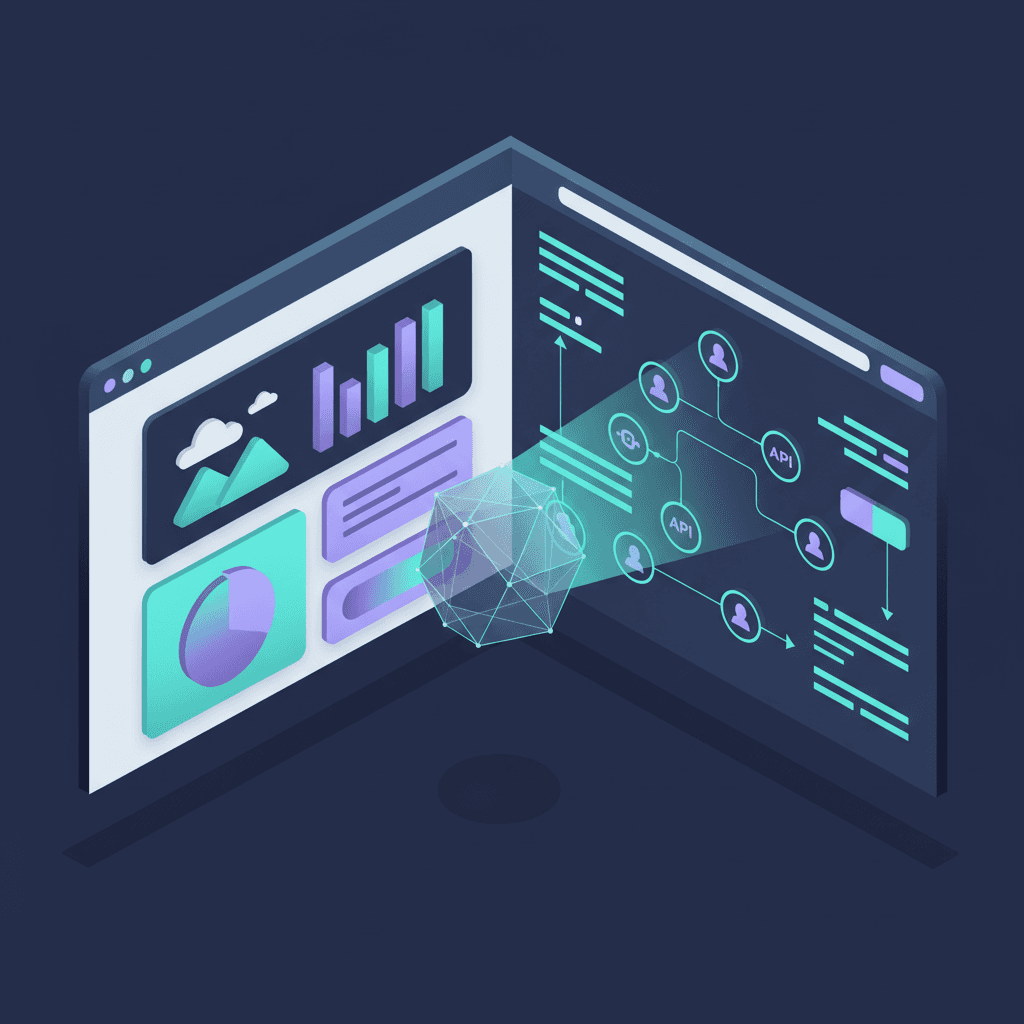
Google has quietly introduced a new paradigm in web auditing with the release of its Lighthouse 13.3 diagnostics tool, introducing an experimental evaluation category known as "Agentic Browsing"[1]. This new feature signals a profound transformation in how the technology giant conceptualizes the web, shifting the focus from optimization for human visitors to compatibility with autonomous artificial intelligence agents[2][3]. As AI systems evolve from simple text generators into action-oriented web assistants capable of booking services, purchasing products, and filling out complex forms, the metrics of successful web design are undergoing a dramatic realignment[3]. Lighthouse, a tool widely used by developers and search professionals to evaluate site performance, accessibility, and search engine optimization, now tests how easily these emerging digital agents can navigate, understand, and interact with web pages[2][4].
At the center of this new auditing framework is a check for a file called llms.txt[2][3]. Sitting at the root of a domain, this proposed text format serves as a machine-readable summary of a website's purpose, structure, and key links, specifically curated for large language models and AI agents[1][5]. According to Google's newly published documentation for Chrome developers, without an llms.txt file, agents may spend excessive time and computational power crawling a site's entire HTML code to understand its high-level structure[2][6]. Unlike traditional Lighthouse audits that return a score from zero to one hundred, the Agentic Browsing category uses deterministic checks to generate a fractional pass-to-fail ratio[2][3]. If a site lacks an llms.txt file and returns a standard 404 error, Lighthouse treats the check as optional or not applicable[6][4]. However, if the server encounters an error or behaves unpredictably when attempting to fetch the file, the audit is flagged as a failure, highlighting the importance of clean server responses for automated visitors[6][4].
Beyond the simple text file, the Agentic Browsing category evaluates a website's integration with the Web Model Context Protocol, or WebMCP[2][3]. Developed as a joint initiative by the engineering teams at Google and Microsoft under the W3C Web Machine Learning Community Group, WebMCP is a browser-level API that allows websites to register their underlying logic and forms as structured, callable tools for AI[7][8][9]. Rather than forcing an AI agent to visually scan a page, guess where to click, and hope for a predictable result, WebMCP allows developers to expose specific functions—such as booking a consultation or searching an internal inventory—directly to the browser's agent interface[10][11]. Alongside WebMCP, the Lighthouse audit scrutinizes the visual stability of a page through Cumulative Layout Shift and the integrity of the website's accessibility tree[3][12]. Because modern AI agents often utilize the accessibility tree as their primary data model to "see" a page, proper semantic HTML structure and ARIA labels are no longer just matters of legal compliance and human accessibility; they are now the primary conduits of machine comprehension[10][13].
The introduction of the llms.txt audit has highlighted an intriguing tension between different product divisions within Google[1][14]. Just days prior to the Chrome Lighthouse update, Google's Search Central division published updated optimization guidance for generative AI features, which explicitly instructed webmasters that an llms.txt file is not required for visibility in features like AI Overviews or AI Mode[2][1]. High-ranking search representatives from the company have historically dismissed the file format, suggesting that building separate Markdown pages for bots is unnecessary and comparing it to outdated search tactics[1][15]. However, industry analysts note that this apparent division in messaging is not a direct contradiction, but rather a reflection of differing use cases[14][5]. While Google Search is concerned with content discovery and indexing—which relies heavily on traditional retrieval models over existing web indexes—the Chrome and developer teams are preparing for an era where AI agents act as active browser users[14][5]. For search, a standard HTML crawl suffices, but for an agent executing a transaction on a user's behalf, having explicit capability declarations via llms.txt and WebMCP can reduce computational overhead by up to sixty-seven percent compared to visual screen scraping[14][16].
This shift marks what many industry leaders are calling the responsive design moment for the artificial intelligence era[17]. In recent months, autonomous browsing technologies have transitioned from laboratory experiments to consumer-facing products, highlighted by releases like Google's Chrome auto browse powered by Gemini, OpenAI's Atlas with Agent Mode, and Perplexity's Comet[17][11]. These tools are actively changing how traffic flows to digital properties[17]. In the past, websites were designed exclusively for human eyes, forcing users to click through multiple pages to compare products or complete purchases[18][11]. In the emerging agentic economy, an AI assistant may handle the entire transaction flow in the background, presenting the human user with only the final confirmation[13][11]. Sites that fail to optimize their digital infrastructure for machine readability risk being bypassed entirely by agents that prioritize competitors with clear, easily parsed technical structures[19][17]. As a result, developers are starting to evaluate their sites not just by visual appeal or page load speed, but by how efficiently an LLM can parse their layout[10][17].
In conclusion, Google's introduction of the Agentic Browsing audit in Lighthouse represents a pivotal step toward a hybrid web designed to accommodate both humans and machine agents[13][20]. While businesses should avoid rushing to buy superficial optimization packages under the false impression that they will boost search rankings, they must recognize that the technical foundation of the internet is shifting[4][21]. The emphasis on clean code, structured APIs, visual stability, and standard files like llms.txt marks a transition from simple content retrieval to active automated transaction[13][11]. By establishing these experimental metrics, Google is providing developers with the tools to prepare for a future where machine-readability is directly tied to business viability, ensuring that when the era of fully autonomous AI agents arrives, the web is ready to receive them[10][19].
Sources
[6]
[7]
[8]
[9]
[10]
[11]
[12]
[13]
[14]
[16]
[17]
[18]
[19]
[20]
[21]