
China Approves Massive Nvidia H200 Chip Import, Fueling Global AI Race.
Approving 400,000 H200 chips, Beijing prioritizes immediate AI supremacy over self-reliance goals for its tech giants.
January 28, 2026
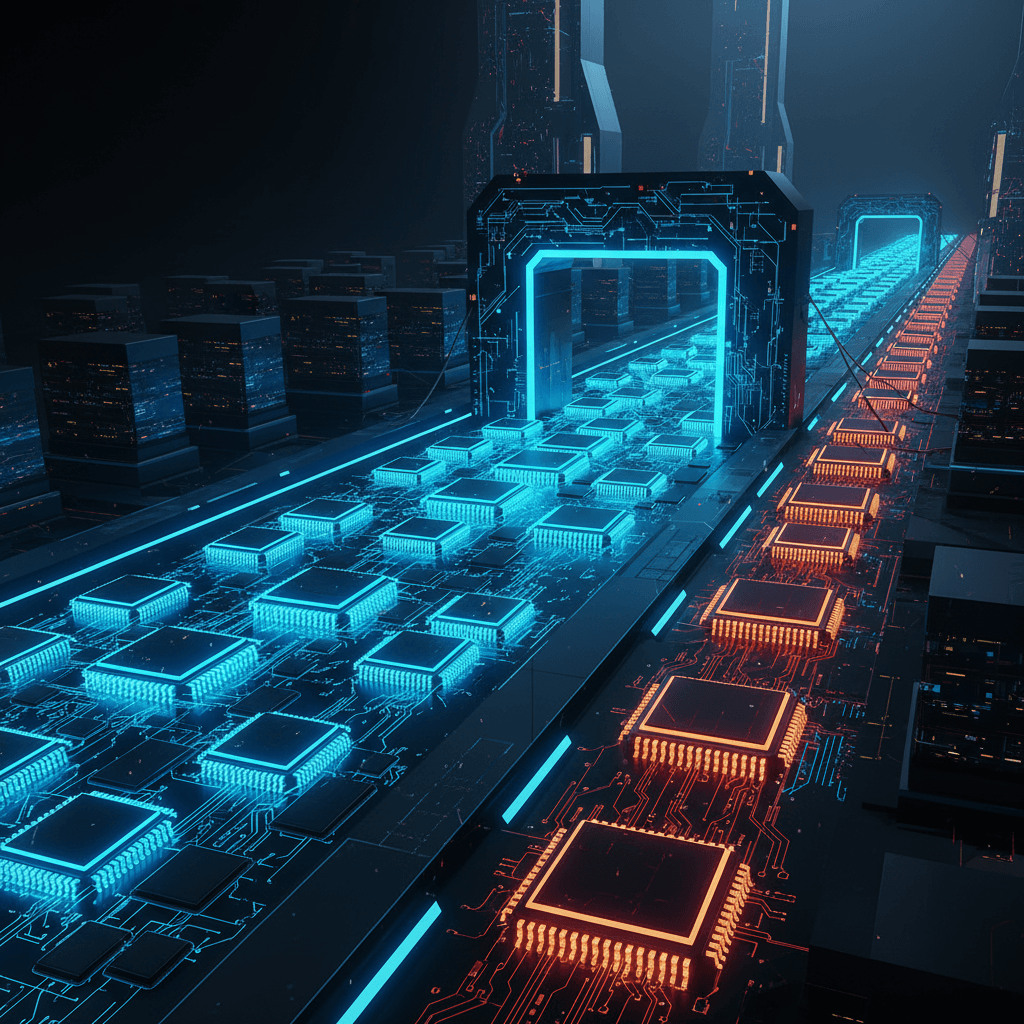
In a pivotal moment for the global artificial intelligence landscape, China has authorized the import of over 400,000 units of Nvidia's H200 AI chip for its leading technology firms, including ByteDance, Alibaba, and Tencent. This approval, reported by Reuters citing sources familiar with the matter, marks a significant shift in Beijing's recent, more restrictive stance on foreign-made semiconductors and signals a political decision to prioritize the immediate computational needs of its rapidly expanding large language model and AI sector. The massive procurement volume provides a much-needed injection of cutting-edge hardware to Chinese tech giants, who are locked in an intense competition to develop state-of-the-art AI services capable of rivaling Western counterparts like OpenAI, and comes after Chinese customs officials had, in a seemingly contradictory move just weeks prior, blocked the chips from entering the country, despite the US having cleared their export.[1][2][3][4][5]
The move directly addresses a critical bottleneck for China's AI ambitions: the immense need for advanced computational power to train frontier models. The Nvidia H200, which sources describe as the company’s second most powerful AI chip after the forthcoming Blackwell series, has become a central point of tension in the US-China technology rivalry. While the US government had previously cleared the H200 for export under strict conditions designed to keep it below thresholds considered a national security risk, China's own regulatory approval had remained the final, and until now, uncertain barrier to shipments. The H200 offers a substantial performance increase over the H20 chip, which Nvidia had previously developed specifically for the Chinese market but which was subsequently banned by the US as export controls tightened. Estimates suggest the H200 delivers approximately six times the performance of the H20, making it a powerful tool for accelerating the training of large language models, a key component in the development race.[1][2][3][6][7]
China's decision to greenlight this substantial import volume of American chips highlights the immediate and critical technological dependence of its foremost AI companies on foreign hardware. Despite significant state-backed efforts and billions of dollars poured into developing a domestic semiconductor industry, the available Chinese alternatives, such as those produced by companies like Huawei, are currently deemed insufficient to meet the advanced computational demands of the current generation of large-scale AI model development. The sources indicate that Chinese tech firms had collectively placed orders for more than two million H200 chips, vastly outstripping Nvidia’s available inventory and underscoring the acute demand. The approval for the initial batch of over 400,000 units for ByteDance, Alibaba, and Tencent, with other enterprises now waiting in queue, suggests that Beijing is strategically prioritizing its largest internet companies to maintain a competitive footing in the global AI race.[1][2][4][5][8]
However, the clearance is not without domestic political and economic stipulations, which reflect the delicate balancing act by the Chinese government. The import licenses are reportedly highly restrictive and conditional, with one key provision understood to be a requirement for the recipient companies to simultaneously purchase a certain quota of domestically produced chips. This condition attempts to mitigate the risk of technological over-reliance on the US by ensuring that the massive AI investment boom also funnels capital and demand to local semiconductor manufacturers. The conditions, which are still under review, have even led to some uncertainty, with a source suggesting customers have not yet converted the approvals into final purchase orders. This two-pronged strategy—importing the necessary, best-in-class foreign technology while mandating support for domestic substitutes—reveals the core tension in China’s tech policy between the urgent need for global AI competitiveness and the long-term goal of achieving technological self-sufficiency.[2][3][5]
The granting of these import approvals also carries significant geopolitical implications, potentially indicating a temporary easing in the US-China tech tensions, or at least a practical compromise by both sides. The US had previously shifted its export control licensing policy for certain chips, including the H200, from a "presumption of denial" to a case-by-case review, subject to stringent conditions such as a cap limiting aggregate shipments to China and Macau to no more than 50 percent of the total shipped to US customers, and a third-party testing requirement for each shipment. The Chinese government's internal debate on whether to allow the H200 imports was reportedly driven by the desire to balance domestic AI demand with nurturing its local chip industry. By moving forward with the approval, Beijing has signaled that for now, the urgent need for powerful AI infrastructure to support its national tech champions outweighs the short-term goal of total technological decoupling. The sheer scale of the order—estimated to allow China to buy approximately twice as much AI compute power as it can produce domestically this year—will dramatically bolster the training capabilities of the nation’s top large language models and accelerate the deployment of AI services at scale, thereby directly impacting the trajectory of the global AI competition.[2][9][8]