
Asylon and Thrive Logic launch physical AI to transform perimeter security with autonomous robotics
How physical AI and autonomous robotics are transforming passive surveillance into proactive, real-time security solutions for enterprise perimeters
April 7, 2026
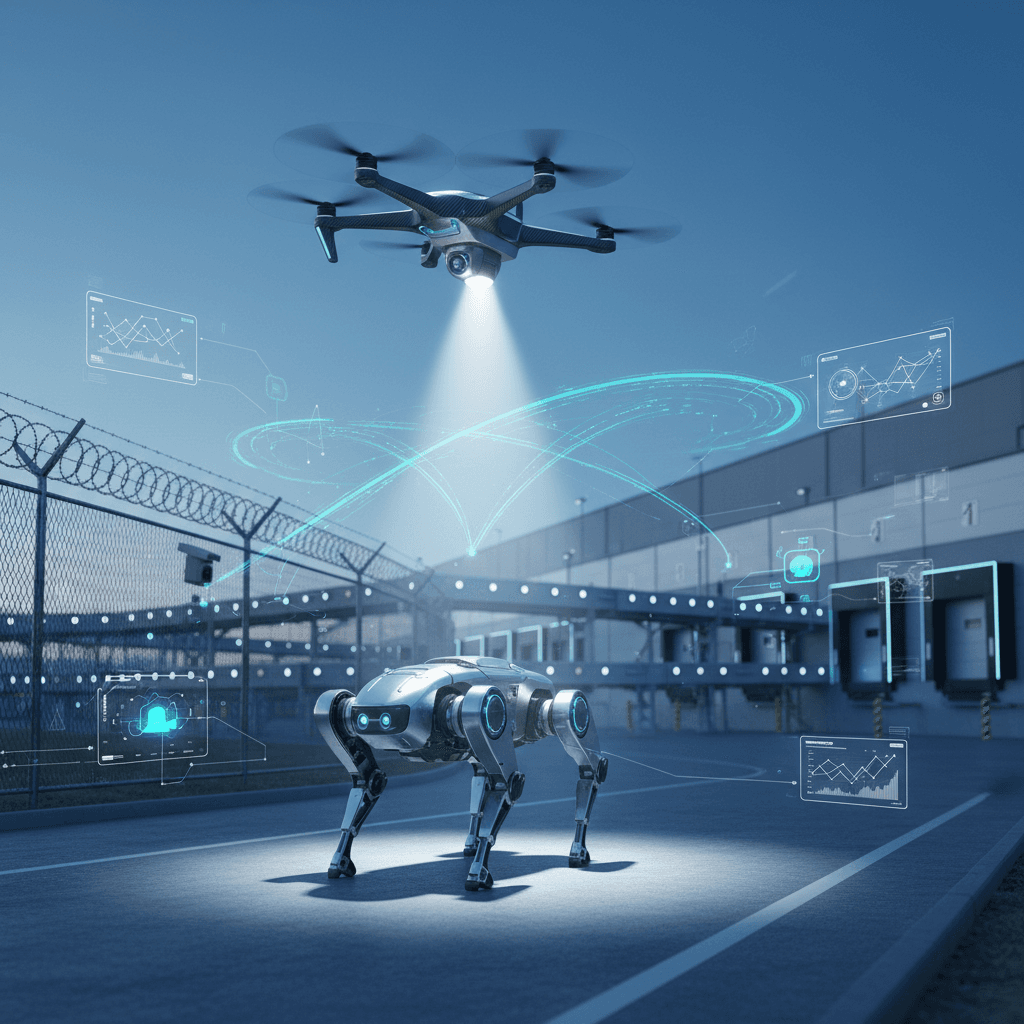
The landscape of enterprise perimeter security is undergoing a fundamental transformation as digital intelligence begins to manifest in physical form through the convergence of robotics and agentic AI.[1] A landmark partnership between Asylon, a leader in security robotics, and Thrive Logic, a platform specializing in AI-driven operational intelligence, has introduced a new paradigm known as physical AI to the network edge.[1] This collaboration moves the industry beyond the traditional model of passive surveillance—where cameras merely record events for later review—toward an era of autonomous, proactive systems capable of interpreting and responding to real-world threats in real time.[1][2] By integrating mobile robotic patrols with sophisticated AI agents and automated incident workflows, the two companies aim to solve the persistent challenges of labor volatility and inconsistent coverage that have long plagued high-security exterior environments such as logistics hubs, utility sites, and industrial campuses.[3][2]
At the core of this physical AI ecosystem is the hardware foundation provided by Asylon, which has spent years refining the marriage of ground and aerial robotics for the security sector. Their primary assets, the DroneDog and DroneSentry platforms, provide the mobility and persistence required for comprehensive perimeter oversight.[4] The DroneDog, built upon the agile Boston Dynamics Spot platform, utilizes a proprietary payload to navigate complex, uneven terrain and stairs that would be impassable for wheeled robots.[5] Meanwhile, the DroneSentry aerial system offers a high-altitude perspective, capable of patrolling five times faster than a security officer and covering ten times the area accessible at eye level.[6] These systems are supported by a 24/7 Robotic Security Operations Center (RSOC), which has already overseen more than 50,000 robotic security missions. This infrastructure ensures that autonomous patrols are not only frequent but are also managed with the rigor required for enterprise-grade compliance and safety.
The intelligence layer that transforms these robotic units into truly agentic entities is provided by Thrive Logic’s AI platform and its Visual Audio Response & Command Agent, known as VARCA.[7][8] Unlike legacy video analytics that often produce an overwhelming number of false alarms from shifting shadows or environmental noise, Thrive Logic’s agentic AI is designed to understand context and execute multi-step tasks. The platform ingests live video streams, access control data, and IoT sensor signals to detect specific behaviors like loitering, tailgating, or unauthorized entry.[7] Once a threat is identified, the AI does not just flag the event; it follows predefined standard operating procedures to initiate responses. This can include triggering alerts to specific stakeholders, locking doors, or providing step-by-step guidance to human security teams. This level of autonomy allows for a shift from a "review and react" posture to a "detect and document" strategy, significantly reducing the friction between incident identification and resolution.[3]
The technical synergy between Asylon and Thrive Logic is particularly significant because it centralizes intelligence at the network edge. By processing data locally and through secure cloud uplinks, the integrated system minimizes latency, allowing for immediate action when a security breach occurs. When an Asylon robot detects a potential anomaly during its routine sweep, the video feed is securely routed into the Thrive Logic engine for immediate analysis. If the AI agent determines the activity is a valid threat, it automatically generates a time-stamped, audit-ready incident report and launches an automated workflow. This level of integration ensures that every action taken by the robot or the AI is documented with forensic precision, creating a defensible record for compliance and legal reporting. This automation is a critical force multiplier for enterprise security teams, who are often burdened by the monotony of monitoring hundreds of live feeds.
From a broader industrial perspective, the move toward physical AI addresses a deepening crisis in the security labor market.[2] Research indicates that approximately 88% of companies have seen an increase in security incidents in recent years, yet labor shortages and high turnover rates make it increasingly difficult to maintain a consistent human presence across large perimeters. The economic implications are substantial, with the global spend on AI in the security market projected to reach approximately $71 billion by 2027, growing at a compound annual growth rate of over 23%.[9] By deploying autonomous systems that can operate 24 hours a day without fatigue, enterprises can achieve a higher return on investment than traditional guard-heavy models. This shift also signals a maturing of the AI industry, where the focus is moving away from purely digital large language models toward embodied systems that can perform physical work and make autonomous decisions in the real world.
The partnership between Asylon and Thrive Logic represents a maturation of the autonomous security sector, shifting the focus from the novelty of the robots themselves to the actionable intelligence they produce. Security leaders no longer seek more dashboards to monitor; they require reliable coverage and measurable outcomes that strengthen their overall operational maturity.[1][2] As physical AI continues to evolve, the integration of robotics and agentic software will likely become the standard for critical infrastructure and large-scale commercial facilities. By bridging the gap between digital perception and physical action, this new approach to perimeter security provides a scalable and practical solution to modern threats, ensuring that human personnel can focus on high-level judgment and strategy while AI manages the persistent and dangerous task of guarding the edge.