
Arm launches first in-house AI chip in major pivot from licensing to manufacturing
Arm pivots from licensing blueprints to manufacturing custom silicon, tackling performance bottlenecks while directly challenging its most powerful industry rivals.
March 25, 2026
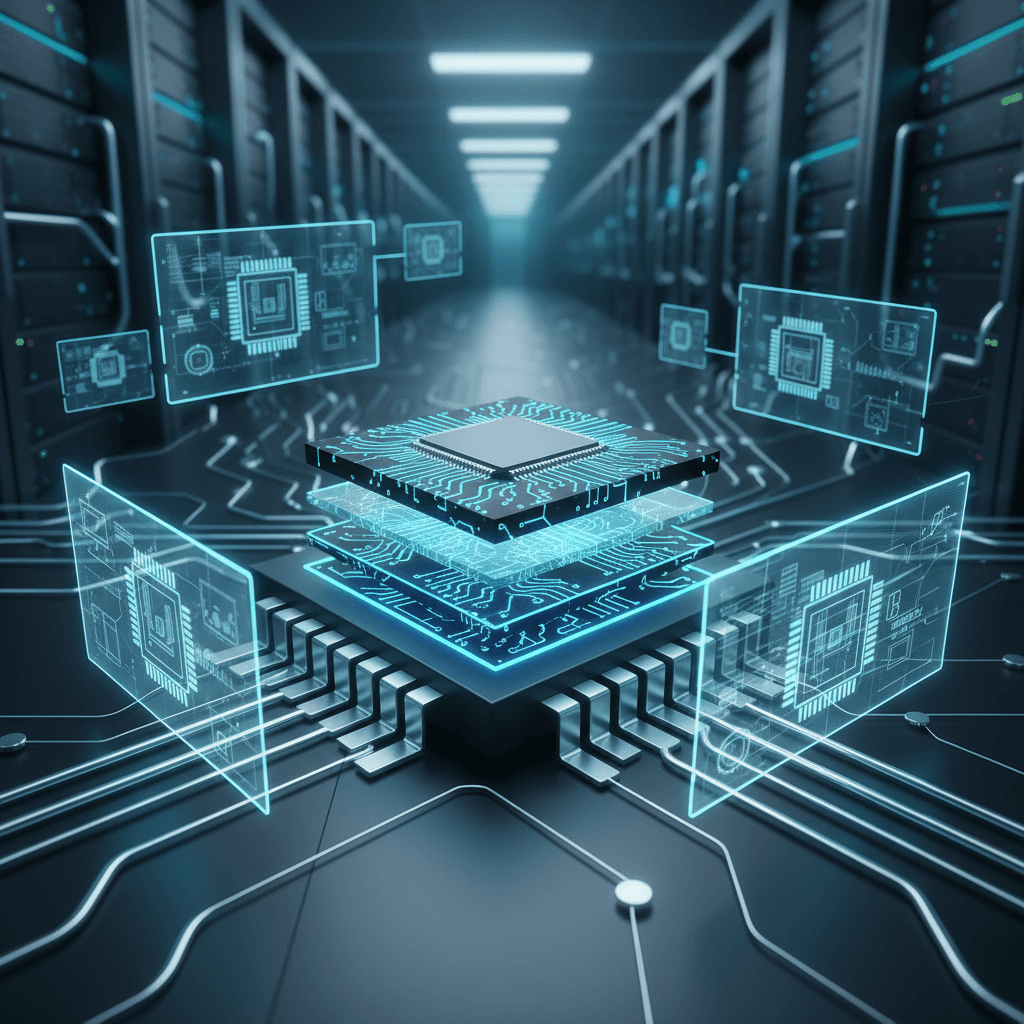
The global semiconductor landscape has undergone a seismic shift as Arm Holdings officially unveiled its first in-house manufactured chip designed specifically for artificial intelligence data centers.[1][2][3][4] This move marks a historic departure from the company’s 35-year legacy as a neutral provider of intellectual property, fundamentally altering a business model that has underpinned the modern computing era. By transitioning from a licensing-only firm to a direct producer of high-performance silicon, Arm is moving to capture a far greater share of the massive capital expenditures currently flowing into AI infrastructure.[5][4] The announcement signals that the company is no longer content to remain the behind-the-scenes architect of the tech world, but is now positioning itself as a front-line titan capable of competing directly with industry stalwarts like Intel, AMD, and even some of its own primary licensees.
The new processor, branded as the Arm AGI CPU, is a high-density silicon solution built on Taiwan Semiconductor Manufacturing Company’s advanced 3nm process. Engineering specifications reveal a powerhouse designed for the rigors of modern data centers, featuring up to 136 Neoverse V3 cores per chip.[6][1] These cores operate at a clock speed of 3.7 GHz and are supported by 12 memory channels of DDR5-8800, providing approximately 6 gigabytes per second of bandwidth per core.[7] With a thermal design power of 300 watts, the architecture is optimized for extreme density; Arm claims that a single liquid-cooled rack can house over 45,000 cores.[6] This level of performance is aimed squarely at the bottleneck currently plaguing the next generation of artificial intelligence, delivering a reported two-fold increase in performance per rack compared to traditional x86-based server processors.
The strategic impetus for this shift lies in the rapid emergence of agentic AI—autonomous systems that can reason, plan, and execute multi-step tasks. While much of the industry's focus has been on the massive GPU clusters required to train large language models, the operational reality of running agentic workloads has exposed a critical dependency on central processing units. Recent industry data suggests that in complex agent-driven tasks, data retrieval and control plane management can account for over 90 percent of total system latency.[2][7] Arm’s decision to build its own hardware is a direct response to this "CPU bottleneck." By vertically integrating its proprietary Neoverse IP with custom physical silicon, the company has created a product that handles accelerator management and API task hosting with unprecedented efficiency, potentially saving data center operators billions of dollars in capital expenditure per gigawatt of capacity.[7]
The financial rationale behind breaking the licensing-only model is equally compelling. For decades, Arm’s asset-light approach allowed it to maintain high gross margins with minimal balance-sheet risk, yet it also placed a firm ceiling on its revenue potential.[7][8] Under the traditional royalty model, Arm might earn only a few dollars for every hundred-dollar chip sold by a partner.[8] By manufacturing and selling the silicon itself, the company can capture a exponentially larger portion of the value chain. Internal projections suggest that this new business segment could generate up to $15 billion in annual revenue within five years.[9][8][4][10][11][3] While this move requires a significant increase in capital investment and brings higher operational risks, the potential for a five-fold increase in total annual sales has fundamentally re-rated the company’s valuation in the eyes of global investors.
This pivot has been heavily influenced by Arm’s majority owner, SoftBank Group, and the long-term vision of its leadership.[7] The manufacturing initiative is a cornerstone of a broader $100 billion artificial intelligence venture aimed at establishing a fully integrated technology stack—from chip blueprints to physical production and software applications.[12] To facilitate this transition, Arm has significantly expanded its engineering footprint, investing tens of millions of dollars in new validation labs and staffing a specialized team of over 1,000 engineers dedicated to bringing the AGI CPU from concept to mass production.[3] This surge in internal capability reflects a high-stakes bet that the future of computing belongs to those who control the entire hardware-software interface, rather than those who simply provide the designs.[12]
The entry of Arm into the merchant silicon market creates a complex new dynamic among the world’s most powerful technology companies. Meta Platforms has emerged as the lead partner and anchor customer for the new chip, having co-developed the hardware to ensure it meets the specific performance density requirements of its massive social media and AI infrastructure. Other high-profile commitments have come from OpenAI and Cloudflare, who are seeking more efficient ways to scale their growing computational needs.[7] However, by becoming a physical chip vendor, Arm is now a direct rival to its oldest and most successful licensees. Companies like Nvidia and Qualcomm, who rely on Arm’s architecture to build their own products, must now navigate a world where their primary technology provider is also a competitor in the data center space.[1]
Industry analysts are closely watching how this dual-track strategy of "Licensing plus Self-developed Chips" will affect the global ecosystem. There are concerns that Arm’s pivot could accelerate the adoption of open-source alternatives like RISC-V as competitors look to reduce their dependence on a rival’s architecture.[8] To mitigate these risks, Arm has emphasized that its licensing business remains a core priority and that the AGI CPU is intended to expand the overall market rather than cannibalize existing partnerships. Nevertheless, the reality of Arm-designed servers hitting the market represents a "genetic mutation" in the industry's structure. The company is betting that the unique power-to-performance ratio of its in-house silicon will be so superior that customers will prioritize performance over the traditional politics of the supply chain.
As production ramps up and the first systems become available to enterprise customers, the focus will shift to the long-term viability of this manufacturing venture. The technical hurdles of competing at the leading edge of 3nm production are immense, and any delays in the roadmap could have significant financial consequences for SoftBank and its massive investment portfolio. Yet, the initial reception from hyperscalers suggests that the demand for specialized AI silicon is far from saturated. By taking control of its own manufacturing destiny, Arm is attempting to leapfrog the current leaders in the data center market and establish itself as the indispensable foundation of the AI era. This transformation from a British IP firm into a global semiconductor powerhouse is one of the most ambitious corporate re-inventions in the history of technology, and its success or failure will likely define the trajectory of artificial intelligence infrastructure for the next decade.
Sources
[1]
[3]
[6]
[8]
[9]
[11]
[12]