
Apple shifts focus from mixed-reality headsets to develop display-less AI smart glasses
Apple pivots toward stylish, screen-less AI glasses that prioritize visual intelligence and iPhone integration over bulky mixed-reality hardware.
April 13, 2026
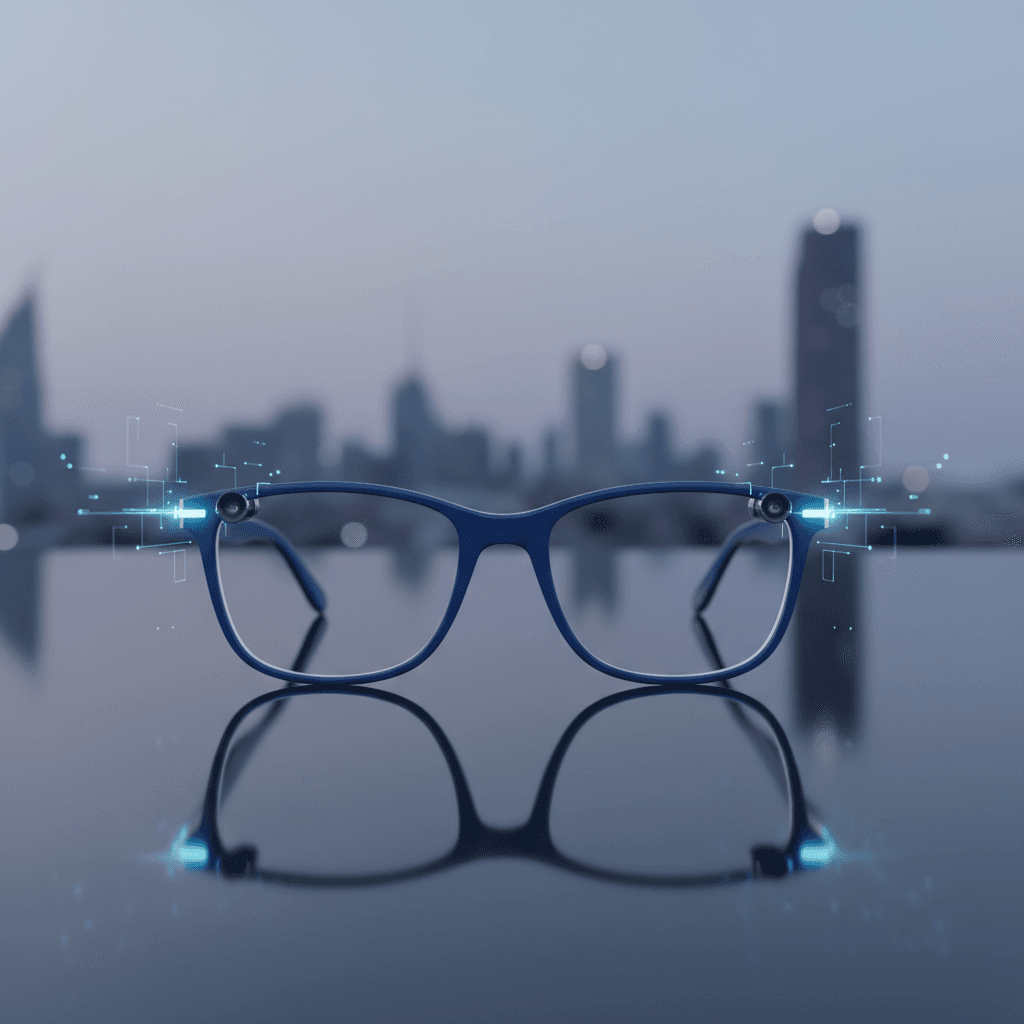
Apple is recalibrating its long-term strategy for the future of personal computing, shifting focus from high-end mixed-reality headsets toward more accessible artificial intelligence wearables.[1][2][3][4][5] According to internal reports and industry analysts, the tech giant is developing a pair of smart glasses that intentionally omit a display, favoring instead a lightweight design built around cameras, microphones, and advanced sensors.[5] This project represents a significant pivot for the company’s Vision Products Group, which is reportedly reallocating resources originally intended for a cheaper version of the Vision Pro headset to accelerate the development of these AI-driven spectacles. By stripping away the heavy lenses and complex optical engines required for augmented reality, Apple aims to create a device that users can wear comfortably all day, functioning as a seamless extension of the iPhone ecosystem.
The move comes at a time when the tech industry is witnessing a surprising resurgence in smart eyewear, driven largely by the commercial success of Meta’s partnership with Ray-Ban. While earlier attempts at smart glasses were often dismissed as niche or socially awkward, the current generation has proven that there is a significant market for "display-less" wearables that prioritize style and utility over immersive visuals. Apple’s entry into this category is seen as a direct response to this trend, as the company seeks to maintain its dominance in the premium hardware market. Internally, the project is described as an effort to bring "Visual Intelligence" to a form factor that is as socially acceptable and familiar as traditional prescription frames.[6]
The strategic shift is underscored by a reorganization within Apple’s hardware divisions. Resources that were previously dedicated to "Vision Air," a lighter and more affordable version of the Vision Pro, are being redirected to ensure the smart glasses can be brought to market faster.[7] This transition reflects a sober assessment of the mixed-reality market; while the Vision Pro pushed the boundaries of spatial computing, its high price and substantial weight have limited its appeal to a small group of enthusiasts and professionals. In contrast, display-less smart glasses offer a lower barrier to entry, both in terms of cost and user behavior.[4] By leveraging the processing power of a tethered iPhone, Apple can keep the glasses slim and elegant, avoiding the bulk that has historically plagued augmented reality hardware.
Design and aesthetics are central to Apple’s approach, as the company understands that wearables must first succeed as fashion accessories before they can succeed as technology. Current testing involves at least four distinct frame styles to ensure broad appeal.[6][8] These designs reportedly include a large rectangular frame reminiscent of classic wayfarers, a slimmer rectangular profile similar to the glasses frequently worn by CEO Tim Cook, and two circular or oval options in varying sizes.[5][9][3][10][8] To distinguish itself from competitors who often rely on plastic, Apple is reportedly opting for premium materials such as high-end acetate, which provides a more durable and luxurious feel.[2][3][5] The frames are expected to be available in a range of sophisticated finishes, including black, ocean blue, and light brown, reflecting the company’s "Icon" design philosophy, which seeks to make the product instantly recognizable.[6][8]
Technologically, the glasses will serve as the primary interface for Apple’s burgeoning suite of AI services. The hardware is expected to feature a multi-camera system, with lenses possibly arranged in a vertical oval pattern.[6][3] These cameras will not only capture high-resolution photos and video but will also serve as the "eyes" for Siri and Apple Intelligence. Using advanced computer vision, the glasses will be able to analyze the wearer’s environment in real time, identifying landmarks, reading text on signs, and providing contextual information through high-quality integrated speakers.[9] This capability, referred to as visual intelligence, marks a major step toward ambient computing, where the digital assistant can proactively assist the user based on what they are seeing without requiring them to pull a phone from their pocket.
The integration of these glasses into the broader Apple ecosystem is a key differentiator in the competitive landscape.[5] Unlike other players in the AI wearable space who must build their software foundations from scratch, Apple can rely on its existing "Apple Intelligence" framework. The glasses are expected to function as part of a three-pronged wearable strategy that also includes camera-equipped AirPods and a wearable AI pendant.[3][2][11][6][5] These devices will work in concert to feed data into a central AI model, creating a comprehensive understanding of the user’s surroundings.[3] For instance, the glasses could identify a restaurant while the AI provides a summary of the menu and reviews directly into the user’s ear. This level of native integration across hardware and software provides a cohesive user experience that is difficult for competitors to replicate.
Privacy remains a paramount concern for any device equipped with always-on cameras and microphones. To address this, Apple is reportedly designing the glasses with highly visible indicator lights that signal to others when the cameras are active. This focus on transparency is intended to mitigate the social friction often associated with recording-capable eyewear. Furthermore, by keeping the heavy lifting of AI processing on the tethered iPhone, Apple can implement its "Private Cloud Compute" architecture, ensuring that sensitive visual data is processed with the same high standards of security that the company applies to its other services. This approach balances the need for powerful AI capabilities with the necessity of protecting user and bystander privacy.
The implications for the AI industry are profound, as Apple’s entry could validate the "screen-less" wearable category as a legitimate successor to the smartphone for certain daily tasks. If successful, these glasses could shift the focus of consumer AI from text-based chatbots to multimodal assistants that interact with the physical world. This represents a departure from the "metaverse" vision of fully digital environments, moving instead toward a reality where technology is invisible and supportive. For developers, this creates a new frontier for applications that rely on environmental awareness, such as real-time translation, accessibility tools for the visually impaired, and context-aware navigation.
While Apple is still believed to be pursuing long-term research into true augmented reality glasses with integrated holographic displays, the display-less model serves as a vital bridge. It allows the company to establish a presence in the eyewear market and refine its AI interactions while waiting for the display technology and battery efficiency to catch up with its ultimate vision. By prioritizing a product that people actually want to wear today, Apple is betting that the most successful AI wearable will not be the one that replaces reality, but the one that enhances it through a familiar pair of glasses. This pragmatic shift demonstrates a commitment to "ambient computing," where the interface disappears, and the intelligence remains, fundamentally changing how users engage with both the digital and physical worlds.