
Apple Develops AI Pin, Signaling the Next Screenless Computing Battle
Cupertino plans a screenless, multimodal AI pin to leverage its ecosystem and revive Siri.
January 22, 2026
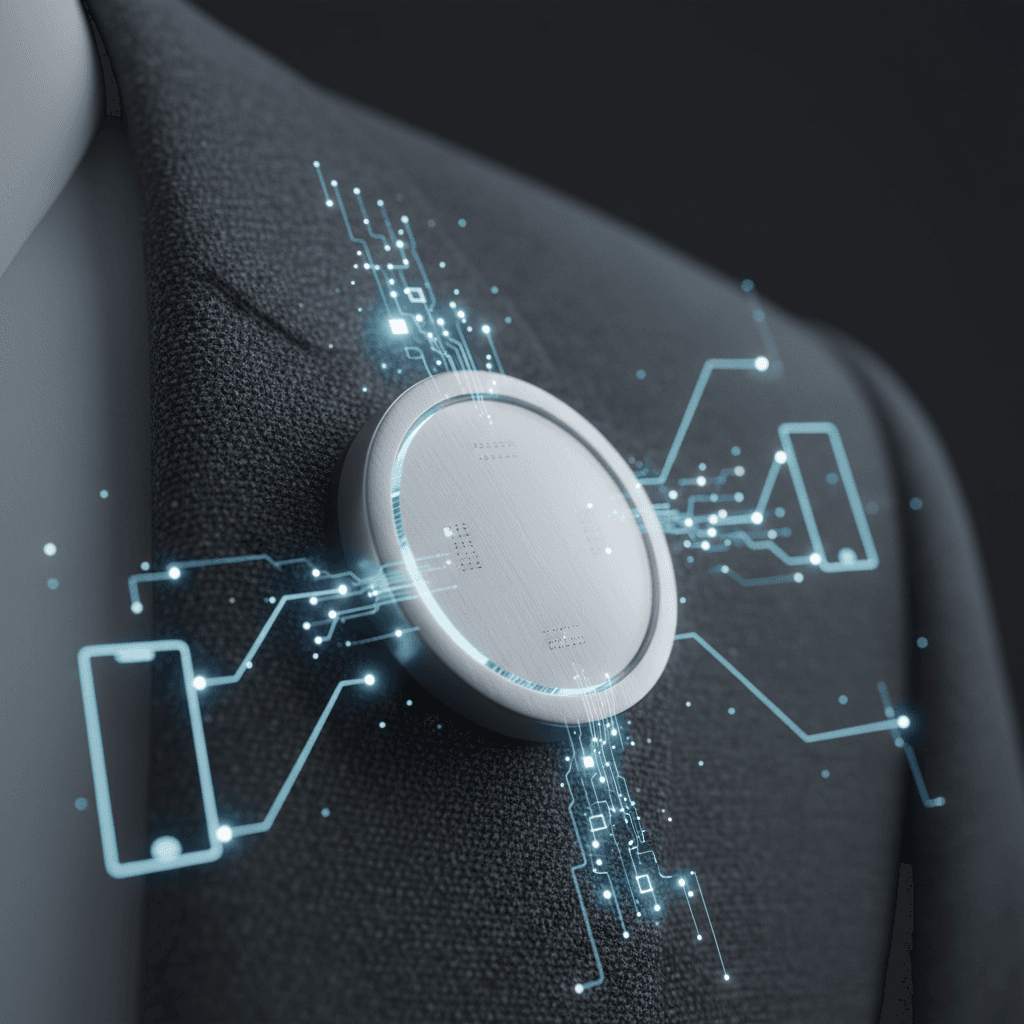
The technology landscape is undergoing a profound transformation, moving beyond the smartphone screen and into the realm of ambient, context-aware artificial intelligence hardware, a shift underscored by recent reports detailing Apple's development of its own AI wearable pin. The rumored device signals a decisive, if cautious, entry by the world’s most valuable technology company into a new product category already fraught with intense competition and the wreckage of earlier pioneers. For the AI industry, Apple's move is a clear validation of the physical AI form factor, even as it forces smaller, nimble competitors to contend with the looming power of the Cupertino giant’s brand, ecosystem, and manufacturing scale.
The specifics of the purported AI pin reveal a device engineered for continuous, multimodal interaction, designed to act as a nearly invisible conduit to the user's personal AI assistant. According to reports from The Information, the wearable is envisioned as a thin, flat, circular disc, comparable in size to an AirTag but slightly thicker, encased in an aluminum and glass shell[1][2]. Its feature set points to an ambition to capture and process the user's environment in real-time. The device is rumored to include two cameras—a standard lens and a wide-angle lens—intended for capturing photos and videos of the wearer's surroundings[1][2]. Audio input is handled by an array of three microphones, suggesting sophisticated noise cancellation and spatial awareness capabilities, alongside a small speaker and a single physical button for tactile control[3][1][2]. Powering this device is expected to be a magnetic inductive charging interface, echoing the design philosophy of the Apple Watch[1][2]. While still in the early stages, with a possible launch target as early as 2027, the internal planning suggests a major push, with speculation pointing to production targets of up to 20 million units[4][5].
Apple’s decision to pursue this form factor is a direct reaction to the emerging physical AI market that has sprung up around recent generative AI advancements. This arena has been aggressively pioneered by well-funded startups like Humane, with its Ai Pin, and Rabbit, with its r1 handheld device, as well as by other tech behemoths. The landscape is further complicated by the imminent entry of an unnamed AI wearable device from OpenAI, developed in collaboration with former Apple design chief Sir Jony Ive[6][7][8]. This concentration of innovative hardware efforts signals a collective bet by the industry’s most influential players that the next phase of personal computing will be defined by screenless, ambient AI. However, this sector has so far been defined by significant challenges rather than sweeping success. The Humane Ai Pin, for instance, launched with considerable hype but struggled commercially, facing criticism for slow response times, poor battery life, and high price, reportedly selling fewer than 10,000 units before its assets were acquired by HP[1][9][5]. Similarly, the Rabbit r1, though a cheaper alternative, also faced scrutiny over its software and utility[5]. These cautionary tales highlight a core difficulty: convincing consumers that a dedicated, single-purpose AI device can offer enough value to justify its cost and complexity, especially when their smartphones already incorporate powerful AI assistants.
The strategic importance of the AI pin for Apple is deeply tied to its broader efforts to revitalize its artificial intelligence capabilities, specifically Siri. Reports suggest the AI pin would run a newly revamped Siri chatbot, which is expected to debut alongside iOS 27[2][10]. This overhaul is rumored to be underpinned by a significant partnership with Google to utilize its Gemini large language models, transforming Siri from a voice assistant into a more versatile, conversational AI[11][7][9]. The AI pin, in this context, would serve as a crucial new hardware interface for the updated Apple Intelligence platform, moving the company's AI from being purely phone- or watch-based to an always-on, body-worn assistant. This allows Apple to push its AI strategy into the user's surrounding environment without requiring them to lift a phone or look at a screen. Crucially, Apple is expected to leverage its unparalleled ecosystem advantage. Unlike standalone devices, Apple’s pin is highly likely to be designed for seamless integration with the iPhone, Apple Watch, and its Vision Pro spatial computing platform[9]. This 'better together' approach could circumvent the failures of first-wave products by offering functionality that complements, rather than tries to outright replace, the smartphone, leveraging Apple's existing install base of billions of devices.
The implications for the technology industry are vast. Apple's entry legitimizes the wearable AI form factor and simultaneously raises the stakes for every competitor. A 2027 launch, while far off, puts Apple in a position to learn from the missteps of earlier devices and refine its product for mass adoption. Its reputation for meticulous product polish, combined with its manufacturing prowess and ability to lock users into its integrated ecosystem, poses an existential threat to smaller hardware startups. Furthermore, an always-on, camera- and microphone-equipped device introduces significant privacy and public acceptance hurdles, an area where Apple's brand as a privacy-forward company will be intensely tested[7]. Ultimately, Apple’s AI pin is not merely a new gadget; it is a clear sign that the technological fault line of the decade has shifted from the smartphone screen to the ambient, body-worn interface, cementing the physical AI wearable as the next great battleground for market dominance.