
Anthropic Vows to Fund Grid Upgrades to Shield American Households From Rising Energy Costs
The company will fund grid upgrades and new power generation to shield American households from rising AI energy costs.
February 12, 2026
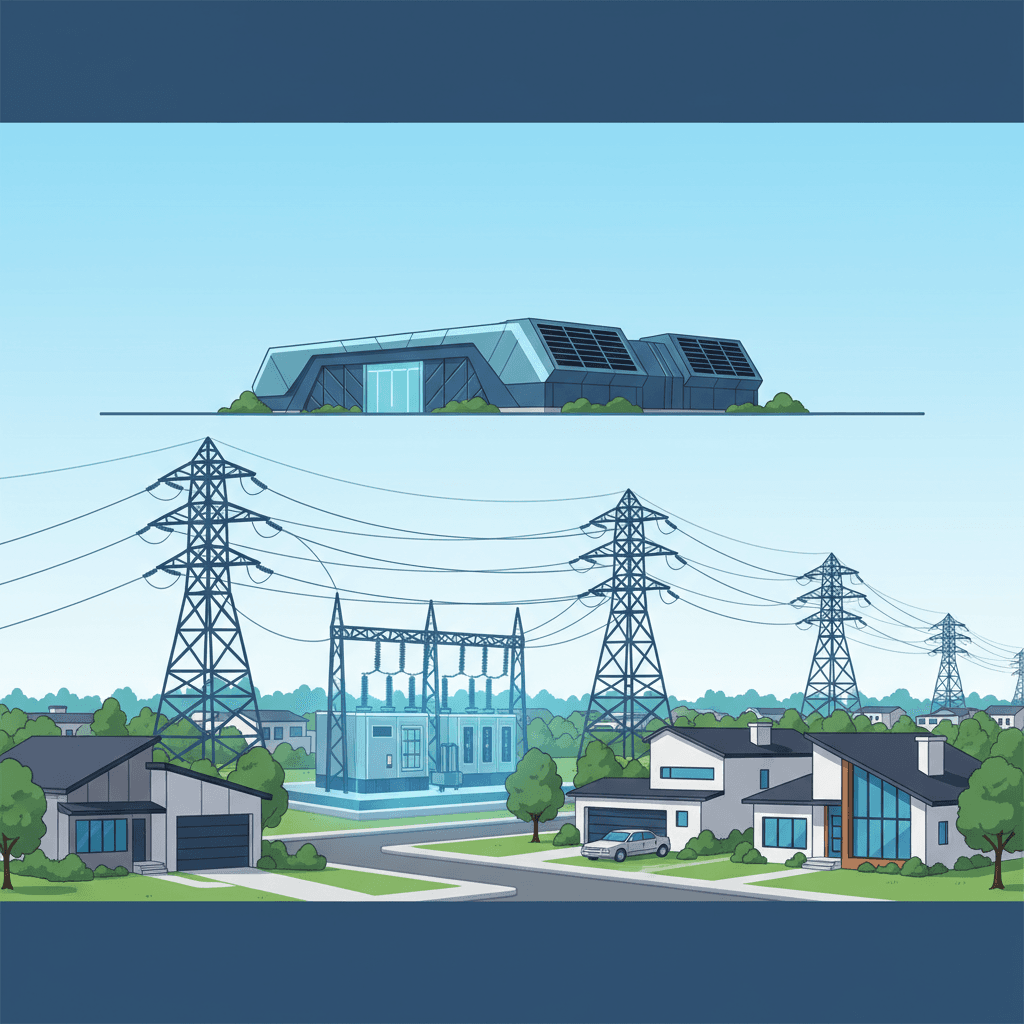
Anthropic has announced a sweeping set of commitments designed to shield American households from the rising electricity costs associated with the rapid expansion of artificial intelligence data centers.[1][2][3][4][5][6][7][8][9][10][11] As the industry races to build the massive computing clusters required to train and run frontier models, the demand for power has begun to reshape the economics of the national energy grid.[2][3] Recognizing the potential for this surge to drive up utility bills for everyday citizens, Anthropic has pledged to fully internalize the costs of its energy footprint, promising to cover 100 percent of the grid upgrade expenses and peak-hour price fluctuations traditionally passed on to the public.[5] This move marks a significant shift in how tech companies engage with national infrastructure, framing energy responsibility not just as an environmental concern, but as a critical component of the social contract necessary to sustain the AI boom.
The cornerstone of this initiative is a commitment to pay for the entirety of the grid infrastructure upgrades required to connect its new data centers to the power network.[1][2][3][4][6][5][7][12][8][9] Historically, when a massive industrial user joins a local grid, the cost of installing new high-voltage transmission lines, substations, and transformers is often distributed among all ratepayers in that utility’s service area. Anthropic’s new policy seeks to end this practice by absorbing these interconnection costs through a surcharge on its own monthly electricity bills.[8][12] By taking on the full financial burden of the physical hardware needed to power its facilities, the company aims to ensure that the arrival of a gigawatt-scale data center does not lead to a spike in the local community’s basic service fees. This approach is particularly relevant given the projected scale of the US AI sector’s needs, which are estimated to reach at least 50 gigawatts of capacity over the next several years.[1][2]
Beyond physical infrastructure, Anthropic is addressing the "tightening" of the energy market caused by sudden, massive spikes in demand. When a data center begins consuming large quantities of electricity, it can drive up wholesale market prices, particularly in regions where the existing supply is barely sufficient to meet current needs.[2][5][1][3] To mitigate this, the company has pledged to procure net-new power generation to match its consumption rather than simply purchasing carbon credits or competing with residents for existing green energy sources. In regions where new power plants are not yet operational, the company intends to collaborate with utilities and independent energy experts to estimate the demand-driven price effects its operations may cause and provide direct offsets to cover those increases for local consumers.[3][2][12][8][5] This "net-new" strategy is designed to expand the total pool of available energy in the United States, positioning AI infrastructure as a catalyst for broader energy investment rather than a drain on limited resources.
A key technical component of this plan involves the deployment of sophisticated curtailment systems and grid optimization tools.[2][1][5][6][4][3] Unlike traditional industrial loads that must run at a steady pace, AI training workloads are often flexible. Anthropic plans to leverage this flexibility by capping or reducing its data centers' power consumption during peak hours when the grid is most strained—such as during summer heatwaves or extreme winter freezes. By throttling its usage when demand is high, the company reduces the need for utilities to fire up expensive and carbon-intensive "peaker" plants, which in turn helps stabilize rates for the general public. Furthermore, the company is investing in advanced cooling technologies, such as liquid cooling and water-efficient systems, to further reduce the physical and resource-heavy footprint of its facilities. These investments are intended to prove that large-scale computing can coexist with residential energy needs without compromising the reliability or affordability of the grid.
The timing of this announcement aligns with growing political and regulatory pressure on the AI industry. Federal and state leaders have expressed increasing concern that the energy-intensive nature of AI could undermine national grid stability and frustrate efforts to keep energy affordable for American families. In states like New York and Georgia, legislators have already proposed or implemented pauses on new data center permits to evaluate their long-term impact on local resources. Meanwhile, reports suggest that federal administrations are exploring voluntary agreements that would compel AI firms to guarantee they will not drive up household utility prices.[1] By taking these proactive steps, Anthropic is attempting to navigate this regulatory landscape and demonstrate that private-sector AI leadership can be achieved without imposing a "tech tax" on the public. Company leadership has emphasized that while systemic change in permitting and transmission reform is still necessary at the federal level, individual companies must take immediate action to handle the costs of their own growth.
The scale of the financial commitment is substantial, fitting into a broader 50-billion-dollar investment in American computing architecture.[6] Through partnerships with specialized infrastructure providers like Fluidstack, Anthropic is currently developing major data center sites in Mitchell County, Texas, and Niagara County, New York, with additional facilities planned for Louisiana and other regions. These projects are expected to create thousands of construction jobs and hundreds of permanent roles, potentially revitalizing local economies. However, the success of these projects depends on maintaining public support, which has been wavering as citizens become more aware of the sheer volume of water and electricity these "bit barns" require. Data center energy consumption, which accounted for roughly 4.4 percent of US electricity in 2024, is projected by some analysts to nearly triple to 12 percent by 2028.[1] Anthropic’s commitment to shield ratepayers is a direct response to the anxiety these statistics generate, aiming to decouple the growth of AI from the rising cost of living.
Ultimately, Anthropic’s strategy sets a new benchmark for the AI industry, challenging other major players to internalize the externalities of their expansion.[2] As the competition for the most powerful models intensifies, the cost of the underlying electricity is becoming a primary competitive factor. By promising to protect the public from these costs, Anthropic is attempting to frame the development of frontier AI as a national asset rather than a public burden. This model suggests a future where the success of a technology company is measured not just by its algorithmic performance, but by its ability to integrate responsibly into the physical and economic infrastructure of the country. Whether other tech giants will follow suit remains to be seen, but the precedent establishes a new standard for corporate accountability in the era of gigawatt-scale computing. The transition toward this more responsible model reflects a maturing industry that recognizes it cannot thrive in isolation from the communities that power its progress.