
Anthropic transforms Claude into an autonomous agent capable of operating Windows and Mac desktops
Anthropic’s new agentic tools allow Claude to navigate desktops and automate complex workflows, transforming personal computers into self-operating machines.
April 3, 2026
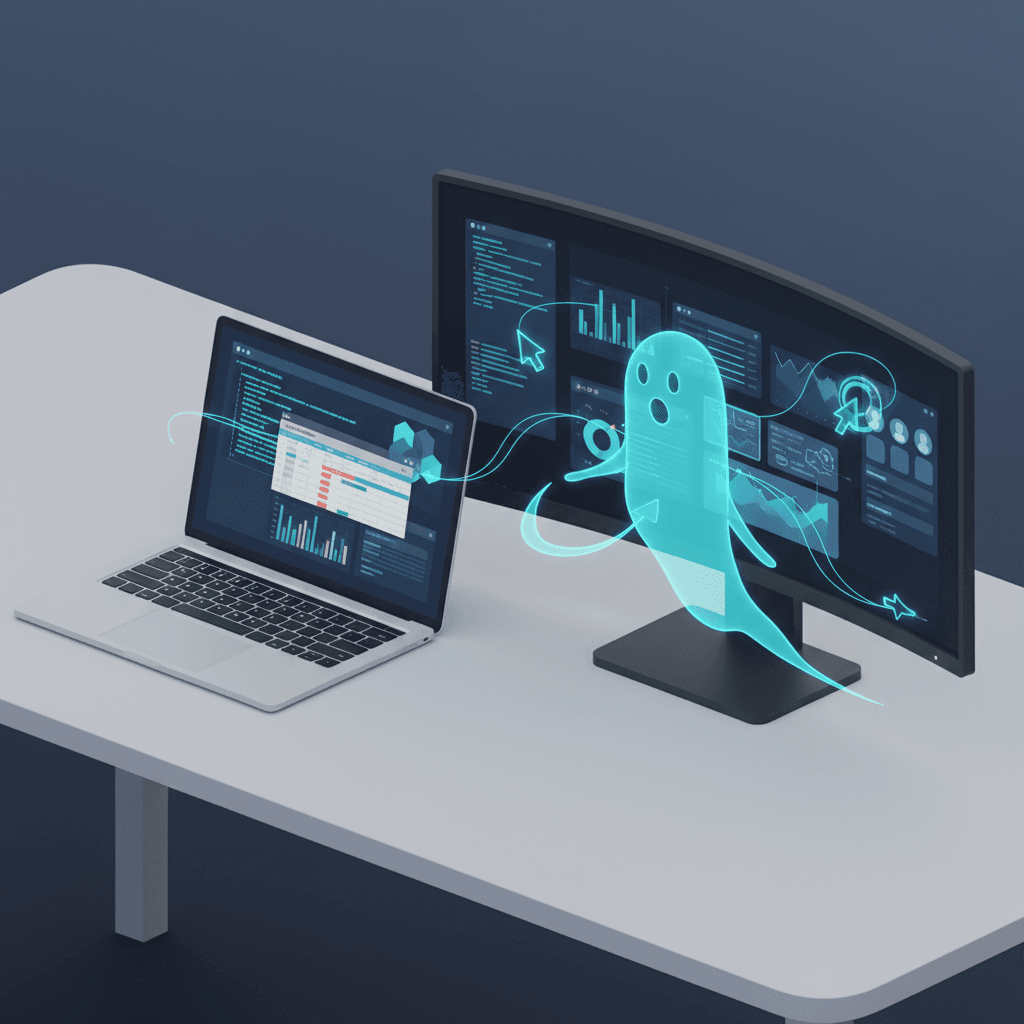
Anthropic has officially transitioned its AI assistant, Claude, from a conversational interface into an active agentic tool capable of operating personal computers.[1][2][3][4] Through the rollout of two primary tools, Claude Code and Claude Cowork, the company has introduced a research preview that allows the AI to navigate Mac and Windows desktops, interact with various applications, and execute multi-step workflows that were previously the sole domain of human users.[5][4] This development signifies a critical shift in the artificial intelligence industry, moving beyond text generation and toward the era of Large Action Models that can directly manipulate digital environments.
The new capabilities are built upon a foundation of computer use technology that enables Claude to interpret screen content and translate it into precise mouse movements, clicks, and keystrokes.[1][3][6] Unlike traditional automation that relies on rigid scripts or direct API integrations, Claude’s approach is fundamentally visual. The model takes a series of screenshots to understand the user's interface, allowing it to navigate legacy software, internal dashboards, and complex web applications that lack formal developer interfaces. This ability to "see" and "act" allows Claude to bridge the gap between disparate software tools, effectively acting as a digital glue for fragmented professional workflows.
At the center of this release are two distinct products tailored for different segments of the workforce. Claude Code is a command-line interface tool specifically engineered for software developers. It allows engineers to delegate high-level technical tasks, such as refactoring entire codebases, writing and running tests, and managing Git repositories, directly from the terminal. Because it operates with the full permissions of the user, it can access local files and execute system-level scripts, significantly accelerating the development lifecycle. Anthropic reports that early usage of Claude Code has grown by 300 percent following its recent updates, reflecting a strong appetite for autonomous engineering agents that can handle the "grunt work" of software maintenance.
For the broader market of knowledge workers, Anthropic has launched Claude Cowork.[7] This desktop application provides a graphical interface for non-technical users to automate routine administrative labor. Cowork is designed to handle tasks such as organizing large sets of files, extracting data from spreadsheets to populate web forms, and synchronizing information across multiple applications like Slack, Google Calendar, and email clients. To optimize performance and reliability, Cowork follows a specific hierarchy of action. It first attempts to use direct software connectors for speed and precision.[8] If no integration exists, it pivots to using a browser-based agent, and as a final fallback, it utilizes direct desktop control to interact with the screen exactly as a human would.[3][8]
A significant addition to this ecosystem is a feature known as Dispatch, which introduces a new dimension of remote productivity.[4][1] Dispatch allows users to assign tasks to their desktop Claude assistant through their mobile devices.[2][3] A user can initiate a complex research task or a data processing job while away from their desk, and Claude will execute the task on the user's primary computer. This "persistent agent thread" provides push notifications once a task is completed, effectively turning the personal computer into a background worker that operates independently of the user’s physical presence. This feature is currently available to users on Pro and Max subscription plans and highlights the transition of the PC from a tool that requires constant attention to a collaborative workspace that works autonomously.[3][8][1][2]
The move toward direct computer control has prompted intense focus on security and privacy within the AI community. Granting an AI model the ability to view a screen and control a mouse introduces a variety of new threat models, most notably the risk of indirect prompt injection. This occurs when an AI encounters hidden instructions in a third-party email or website that could trick the agent into performing unauthorized actions, such as deleting files or exfiltrating data. To mitigate these risks, Anthropic has implemented several layers of technical safeguards. Claude Cowork, for instance, runs primarily within a sandboxed virtual machine to isolate its activity from the host operating system’s core files.[9]
Furthermore, Anthropic has introduced a granular permission system that requires explicit human approval before the AI can access specific applications or perform sensitive actions like file deletion. Certain categories of software, including cryptocurrency wallets, investment platforms, and banking applications, are blocked by default to prevent accidental or malicious financial transactions. Despite these measures, the company has maintained a transparent stance on the limitations of the current research preview, noting that the system is not yet suitable for regulated workloads involving sensitive healthcare or financial data.[3] Early testing has shown that while the agent is highly capable, it still experiences an error rate of roughly 23 percent on highly complex multi-step tasks, necessitating a "human-in-the-loop" approach where users monitor the AI’s progress.
The competitive landscape of the AI industry is being rapidly reshaped by these advancements. Anthropic’s rollout of desktop control places it in direct competition with OpenAI’s rumored "Operator" agent and Google’s "Jarvis" project. While Microsoft has integrated similar capabilities into its Copilot+ PC ecosystem, Anthropic’s cross-platform approach for both macOS and Windows offers a level of flexibility that appeals to diverse enterprise environments. The industry is effectively moving away from the "chatbot" era, where AI was a reactive respondent, and toward an "agent" era, where AI is a proactive participant in the digital economy.
The broader implications for white-collar productivity are profound. By automating the "digital labor" of navigating interfaces and moving data between apps, these tools allow workers to focus on higher-level strategic and creative tasks. However, this also raises questions about the future of entry-level professional roles that traditionally involve the very manual digital tasks Claude is now beginning to master. As the technology matures and error rates decline, the benchmark for productivity is likely to shift, with the ability to manage and direct AI agents becoming a core requirement for the modern workforce.
The successful integration of Claude into the desktop environment represents more than just a software update; it is a fundamental reconfiguration of the relationship between humans and their computers. By allowing an AI to navigate the operating system, Anthropic is turning the computer into a self-operating machine. While technical hurdles regarding latency and task reliability remain, the general availability of these tools to Pro and Max users suggests that the infrastructure for autonomous digital agents is now moving out of the laboratory and into the real world. The focus for the industry will now likely shift toward improving the "reasoning" capabilities of these agents to ensure they can handle the unpredictability of human workflows without constant supervision.
In conclusion, the launch of Claude Code and Cowork marks a milestone in the evolution of artificial intelligence. By giving Claude "hands" and "eyes" on the desktop, Anthropic has set a new standard for what a personal assistant can achieve. As users begin to integrate these autonomous agents into their daily lives, the feedback from this research preview will be instrumental in refining the security protocols and interaction models that will define the next decade of computing. The era of the autonomous desktop has arrived, and its impact on the tech industry and the global workforce will likely be felt for years to come.
Sources
[1]
[2]
[3]
[6]
[7]
[8]