
Anthropic transforms Claude Code into an autonomous background agent for proactive local software development
Anthropic’s update shifts Claude from a reactive assistant to an autonomous agent that manages maintenance and monitoring in the background.
March 7, 2026
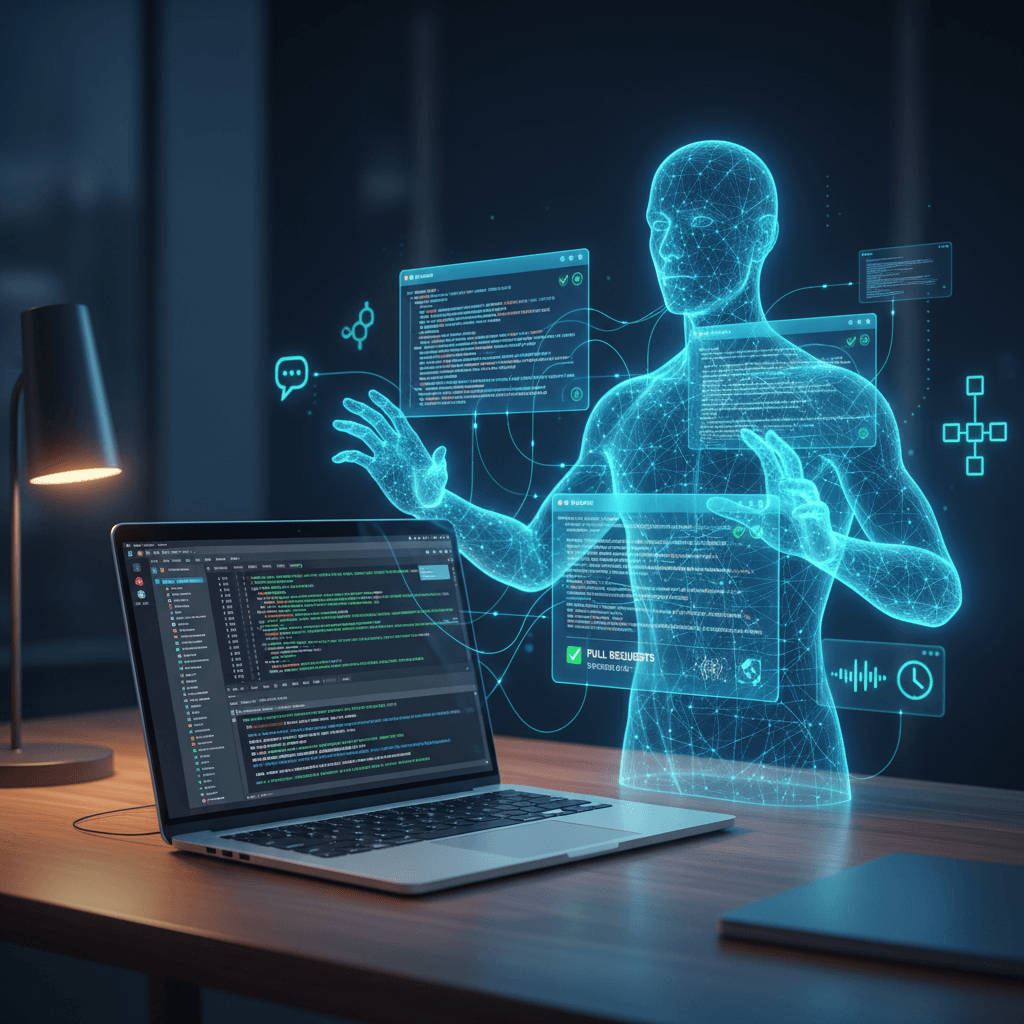
The integration of autonomous capabilities into the software development lifecycle has reached a significant milestone as Anthropic transitions its Claude Code tool from a reactive command-line interface into a proactive background worker.[1] By introducing local scheduled tasks, the company has effectively shifted the role of the artificial intelligence from a passive assistant that waits for human prompts to an active agent capable of independent monitoring, maintenance, and execution.[2] This evolution marks a departure from the traditional chatbot model, positioning AI as a persistent digital coworker that operates within the local environment of a developer’s workstation.
At the core of this update is the ability for users to define recurring workflows that run automatically based on specified intervals.[3] Through the Claude Code desktop application, often referred to as Claude Co-work, developers can now set up "intelligent cron jobs" that handle the tedious but necessary aspects of modern programming. For instance, a background task can be configured to scan server error logs every few hours, identify recurring bugs, and automatically generate pull requests with proposed fixes. This capability extends beyond mere code generation; it encompasses the entire diagnostic and administrative process, allowing the AI to research the root cause of an issue, verify its findings against the existing codebase, and stage changes for human review without any immediate user intervention.
The technical architecture supporting these background tasks relies on a combination of local execution and sophisticated context management. Unlike many AI tools that function primarily in the cloud, Claude Code operates locally on the user's machine, providing it with direct access to the file system, terminal commands, and local development environments. To manage this safely, Anthropic utilizes a virtual machine-like sandbox that isolates the AI’s operations from the host operating system.[4] This local-first approach is critical for security-conscious enterprises, as it ensures that sensitive proprietary code remains within the local network while the AI performs its analysis. When a scheduled task is triggered, the system spins up a dedicated session, injects the predefined instructions, and leverages the full suite of configured tools to complete the objective.[5][3][2]
A vital component of this autonomy is the Model Context Protocol, an open standard developed by Anthropic that allows Claude to connect with external data sources and third-party applications. By integrating this protocol with scheduled tasks, the AI can move beyond the boundaries of the source code repository. A scheduled task can now pull real-time data from communication platforms like Slack, project management tools like Linear, or document repositories like Google Drive.[6] This enables use cases such as daily stand-up briefings where the AI summarizes a team's progress across multiple channels, or recurring security scans that compare the local codebase against the latest vulnerability databases. The synergy between persistent background execution and expansive data access transforms the tool into a multi-functional automation engine.
Within the developer workflow, the introduction of these features manifests in two distinct ways: session-scoped tasks and durable desktop tasks. Session-scoped tasks are managed via a loop command within the command-line interface and are designed for short-term assistance, such as monitoring a long-running build or "babysitting" a complex pull request until it passes continuous integration checks. These tasks expire when the terminal session ends, providing a temporary boost in productivity for immediate projects. In contrast, the desktop application supports durable scheduling, which persists across system restarts and terminal closures.[7] These durable tasks are registered with the local operating system’s native scheduler, ensuring they fire at the designated time as long as the computer is powered on. This distinction allows developers to choose the appropriate level of persistence for their specific needs, from tactical shortcuts to strategic long-term automation.
The shift toward background agency addresses a fundamental bottleneck in developer productivity: the high cognitive load of context switching. Developers often lose significant time to "janitorial" tasks—updating dependencies, cleaning up dead code, or triaging non-critical bugs—that distract from high-level architectural work. By delegating these responsibilities to a background worker, the human developer can focus on creative problem-solving while the AI maintains the health and consistency of the codebase in the periphery. Anthropic’s implementation includes a human-in-the-loop safety model where the AI can be restricted from making destructive changes or committing code without explicit approval, maintaining a balance between autonomous speed and human oversight.[8]
From an industry perspective, this development signals an intensifying race to create the first truly viable "AI Software Engineer." While early tools focused on code completion and predictive typing, the next generation is defined by agency and persistence.[1] Competitors in the space are increasingly moving toward "agent mode" configurations, but Anthropic’s focus on the local environment and the terminal-native experience offers a different philosophy.[1] By placing the AI directly into the developer’s existing toolchain rather than forcing them into a proprietary web-based IDE, Anthropic is betting that the most effective AI collaborators are those that fit seamlessly into established professional environments.
The implications for the broader AI industry are profound, as this move suggests a future where AI is no longer a destination but an ambient service. If an AI can successfully manage its own schedule and seek out work autonomously, the nature of human-AI interaction changes from a series of questions and answers to a delegation of outcomes.[2] This transition necessitates a new set of skills for software engineers, who must now act as managers and architects of AI agents, defining the boundaries and objectives for their autonomous coworkers. The success of this model will likely depend on the reliability of the AI’s reasoning and its ability to handle edge cases without human intervention, an area where Anthropic has focused heavily on reducing hallucination rates and improving logical consistency.
Furthermore, the data-driven results of these early agentic tools are beginning to emerge, showing measurable impacts on code generation volume and error reduction. As major technology companies report that a growing percentage of their commercial code is being generated or assisted by AI, the demand for tools that can handle multi-step, long-running processes will only increase. Anthropic’s move to turn Claude into a background worker is a direct response to this demand, providing a framework for organizations to scale their development efforts without necessarily increasing their headcount. By automating the routine, the industry is moving closer to a model of "augmented engineering" where the baseline of productivity is significantly higher than it was just a few years ago.
In conclusion, the evolution of Claude Code into an autonomous background worker represents a major step forward in the practical application of generative AI. By enabling local scheduled tasks, Anthropic has provided developers with a powerful new way to manage the complexity of modern software systems. This transition from a reactive assistant to a proactive agent underscores a larger trend in the technology sector toward autonomous systems that can operate independently within defined guardrails. As these tools continue to mature, they will likely become an indispensable part of the professional toolkit, redefining what it means to write, maintain, and secure code in an AI-driven world. The focus now shifts to how developers will utilize this newfound autonomy and how the industry will adapt to a workforce where the most consistent contributors are background processes running on local machines.
Sources
[2]
[3]
[6]
[7]
[8]