
Anthropic transforms Claude Code into an always-on AI agent controllable through mobile apps
The new Channels feature transforms Claude Code into a proactive autonomous agent capable of mobile-first engineering via messaging apps.
March 20, 2026
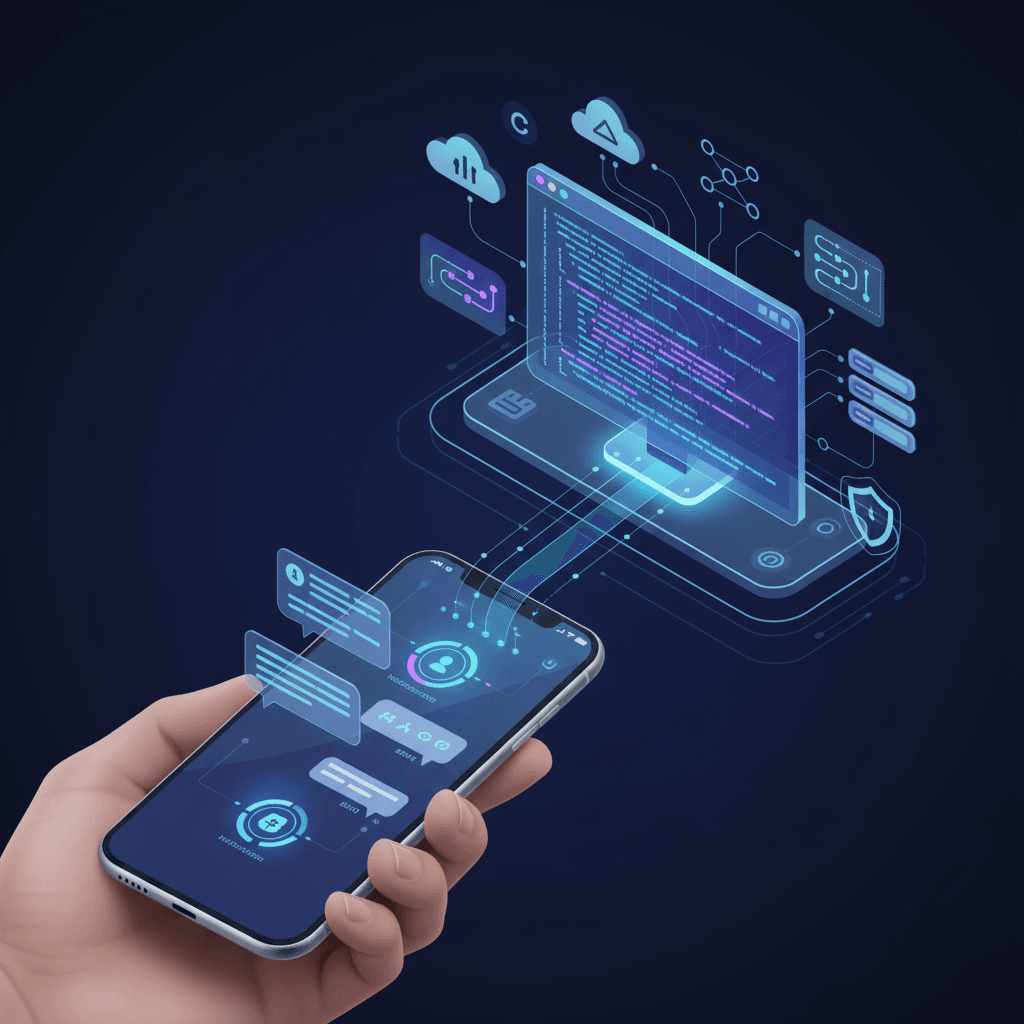
Anthropic has officially transitioned its Claude Code developer tool from a terminal-based command-line utility into a persistent, always-on AI agent with the release of a new capability known as Channels.[1][2][3] This update represents a significant shift in the company’s product strategy, moving away from synchronous, chat-based interactions toward an asynchronous model where the AI can monitor external events and act on them without a human being present at the computer.[1] By allowing external data streams such as continuous integration results, monitoring alerts, and real-time chat messages to flow directly into an active Claude Code session, Anthropic is positioning its model as a proactive collaborator rather than a reactive assistant. This advancement reflects a broader trend in the artificial intelligence industry toward agentic workflows, where models are given the autonomy to complete long-running tasks and coordinate across multiple platforms independently.
The technical foundation of the Channels feature is built upon the Model Context Protocol, an open-source standard introduced by Anthropic to standardize how AI models connect to external data sources and tools.[1] In this new architecture, the Claude Code session functions as a persistent polling service that remains active in the background of a developer's machine or on a virtual private server.[1] When launched with a specific channels flag, the agent connects to designated plugins—such as the newly released official Telegram and Discord integrations—and begins listening for incoming events.[1][3] This is powered by the Bun runtime, which provides the high-speed execution environment necessary for the agent to process incoming webhooks and messages with minimal latency. Unlike previous versions of AI coding tools that required a user to initiate every turn of a conversation, a Claude Code session equipped with Channels can stay dormant until it receives a "ping" from an external source, at which point it "wakes up" to analyze the request, browse the local codebase, run tests, and report its findings back to the user through the same communication channel.[1]
One of the most immediate implications of this feature is the rise of what industry observers are calling mobile-first autonomous engineering. Through the integration of Telegram and Discord bots, developers can now remotely control their local development environments from a mobile device.[1] For instance, a software engineer away from their desk could receive a notification about a failed build in their CI/CD pipeline and message the Claude Code agent to investigate the failure, write a fix, and push a new pull request, all through a standard chat interface on their phone. Anthropic has also introduced a local-only testing environment called Fakechat, which allows developers to simulate these push events on their own machines before connecting to live external servers.[1] This focus on "vibe coding"—the ability to describe a feature or fix in natural language and have the AI handle the mechanical implementation—is a direct response to the growing popularity of open-source agentic frameworks. By providing a native, high-performance bridge between the smartphone and the professional development environment, Anthropic is effectively narrowing the gap between inspiration and implementation.
The introduction of Channels also places Anthropic in direct competition with a burgeoning ecosystem of open-source projects, most notably OpenClaw. Released in late 2025, OpenClaw gained rapid adoption among developers for its ability to turn Claude models into personal, 24/7 AI workers accessible via various messaging apps.[3][2][1] Anthropic’s official entry into this space indicates a strategic effort to internalize the most successful features of the open-source movement while offering the security and brand reliability associated with a frontier AI lab. While OpenClaw remains highly flexible with support for hundreds of different models and community-contributed plugins, Anthropic’s native implementation offers a more streamlined setup process and tighter integration with the underlying Claude 4.6 architecture. This includes the ability for the agent to perform multi-agent coordination, where a lead agent can dispatch sub-agents to perform read-heavy tasks like codebase reviews or parallel testing, reporting the unified results back to the user via the active Channel.
From an industry perspective, the move toward "always-on" agents raises critical questions regarding security, safety, and governance. Giving an AI model a persistent line of communication to a developer’s terminal—which often contains sensitive API keys, production credentials, and proprietary source code—presents a significant surface for potential misuse or accidental errors. To mitigate these risks, Anthropic has implemented a security pairing mechanism that requires users to authorize specific accounts via unique pairing codes. The system also defaults to an allowlist policy, ensuring that only messages from verified identities can trigger actions within the Claude Code session. Furthermore, the persistent nature of these agents introduces new economic considerations.[4] Because an autonomous agent can consume a large volume of tokens while investigating a complex bug or running recursive loops, Anthropic has introduced more granular effort controls and context compaction features to help users manage costs. These controls allow developers to set limits on how much "thinking" an agent can do before it must stop and wait for human approval.
Ultimately, the release of Channels marks a fundamental change in the identity of the software engineer’s toolkit.[1] It signals the end of the era where AI was treated as a sophisticated search engine and the beginning of an era where it is treated as a digital teammate with its own set of "ears" in the form of communication channels. As these agents become more integrated into the standard development lifecycle, the focus of human engineering may shift from writing lines of code to orchestrating teams of autonomous agents and defining the high-level logic that governs their behavior. For the AI industry, this release serves as a benchmark for how frontier models will eventually move beyond the browser and into the background of daily professional workflows, operating as invisible but highly capable companions that are always ready to respond to a prompt, regardless of where the user is or what device they are holding. This move toward ubiquity and autonomy is not just an update for developers; it is a preview of how agentic AI will likely expand into other professional domains, from legal research to financial analysis, where the value of an "always-on" intelligence is just as transformative.