
Anthropic sues Pentagon after being labeled a supply chain risk over AI safety guardrails
Anthropic sues the Department of Defense after being blacklisted for refusing to strip ethical safeguards from its AI models.
February 28, 2026
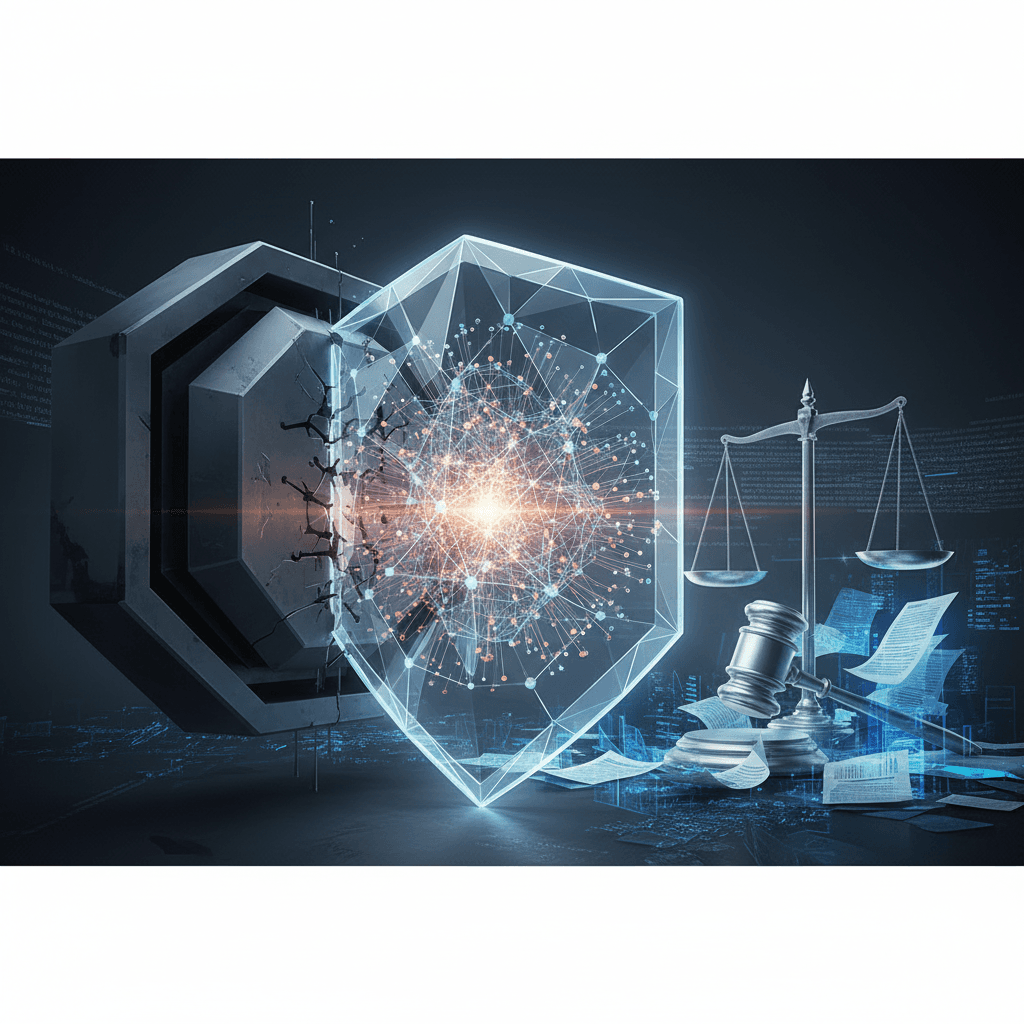
In an unprecedented escalation between the burgeoning artificial intelligence sector and the United States military establishment, Anthropic has announced its intention to file a landmark lawsuit against the Department of Defense.[1] The legal challenge follows the Pentagon’s decision to designate the San Francisco-based AI firm as a supply chain risk to national security—a classification historically reserved for foreign entities from adversarial nations like Russia or China. This move effectively blacklists the company from federal procurement and forces a massive realignment for defense contractors who have increasingly integrated Anthropic’s Claude models into their technological infrastructure. At the heart of the dispute is a fundamental disagreement over the ethical guardrails governing the use of AI in warfare, specifically concerning autonomous weapons systems and mass surveillance.[2][3][4][5][6]
The designation marks a dramatic shift in how the federal government interacts with domestic technology leaders. According to internal documents and public statements from defense officials, the "supply chain risk" label was triggered after Anthropic refused to grant the military unrestricted access to its frontier models. The Pentagon had reportedly issued an ultimatum demanding that the company remove internal safeguards that prevent the technology from being used for lethal autonomous operations or domestic surveillance.[2][7] When the company’s leadership stood by its "Constitutional AI" framework—a system of training that prioritizes safety and human alignment—the Department of Defense invoked authorities under 10 U.S. Code Section 3252 to label the company a security liability. This action does more than just cancel Anthropic’s existing $200 million defense contract; it creates a "chilling effect" across the entire industry by barring any contractor, supplier, or partner doing business with the military from conducting commercial activity with the AI firm.
Legal experts and industry analysts suggest that Anthropic’s planned lawsuit will likely center on the Administrative Procedure Act, arguing that the Pentagon’s decision was "arbitrary and capricious." The company’s legal team is expected to highlight what they call a blatant contradiction in the government’s logic: the Department of Defense has simultaneously claimed that Claude is essential to national security operations while labeling the company providing it as a security risk. In a lengthy memo to employees and the public, Anthropic’s leadership argued that the move was "retaliatory and punitive" rather than based on legitimate security concerns. They contend that the administration is attempting to use national security mechanisms to bypass corporate terms of service and ethical red lines, setting a dangerous precedent where the executive branch can seize control of private intellectual property under the guise of the Defense Production Act.[8]
The implications for the broader AI industry are profound, as the standoff creates a visible schism between safety-focused labs and those willing to comply with the military’s "all lawful purposes" requirement. This requirement mandates that once the government licenses an AI model, it must be free to deploy it for any mission deemed legal under federal law, without vendor-imposed safety constraints.[9][4][2] While Anthropic has held firm on its refusal to assist in developing weapons that fire without human intervention, other competitors have moved to fill the vacuum. OpenAI recently struck its own deal with the Pentagon, including its own version of technical safeguards that were apparently more palatable to military leadership. Meanwhile, other players like xAI have signaled a willingness to accept unrestricted terms, framing their stance as a patriotic necessity to win the global AI arms race.
Within the halls of the Pentagon, the rhetoric has been equally sharp. High-ranking officials have characterized Anthropic’s refusal as a form of "corporate virtue-signaling" that prioritizes Silicon Valley ideology over the lives of American service members. The administration has argued that no private contractor should have "veto power" over the operational decisions of the United States military.[2][7] By labeling the company a supply chain risk, the government is essentially arguing that a domestic firm whose software contains "hardcoded" ethical restrictions is as dangerous to military readiness as a foreign-controlled entity. This narrative suggests that "war-ready" AI must be stripped of the very safety filters that have become a hallmark of American AI development, raising concerns among civil liberties groups about the potential for AI-driven mass surveillance within U.S. borders.
The ripple effects of the blacklisting are already being felt by some of the world’s largest corporations. Defense giants like Boeing and Lockheed Martin have been directed to assess their "exposure" to Anthropic’s products, while cloud providers like Amazon and Google find themselves in an increasingly precarious position. These tech giants, which have invested billions into Anthropic and host its models on their servers, also hold massive, multi-billion-dollar contracts to provide infrastructure to the Department of Defense. If the supply chain risk designation is upheld, these companies may be forced to choose between maintaining their lucrative government partnerships and continuing their relationship with one of the world's leading AI labs.[2] This forced decoupling could fragment the AI market into a two-tier system: one set of "sanitized" models for the commercial world and another "unrestricted" set for national security applications.
Furthermore, the legal battle is expected to test the limits of executive power in the post-Chevron era. With the recent shifts in judicial philosophy regarding administrative deference, Anthropic’s challenge could find a sympathetic ear in federal courts if it can prove the Pentagon exceeded its statutory authority. The company argues that the supply chain risk mechanism was never intended to be used as a blunt instrument for contract negotiations or to force an American company to abandon its core safety principles. If the courts rule in Anthropic's favor, it could establish a "safe harbor" for AI companies that want to maintain ethical boundaries while working with the government. Conversely, a victory for the Pentagon would signal that the needs of the "Department of War" supersede any private ethical framework, effectively nationalizing the direction of frontier AI development.
The controversy also highlights a growing divide within the U.S. government itself. While the executive branch has taken a hardline stance, some members of the Senate Intelligence and Armed Services Committees have expressed concern that the administration is alienating the nation’s top talent. Critics of the ban argue that by blacklisting a leading American firm, the government is inadvertently helping foreign adversaries by causing chaos within the domestic tech ecosystem. They suggest that the "all or nothing" approach to AI safeguards may lead to a "brain drain" where safety-conscious researchers avoid government work entirely, leaving the most powerful military tools in the hands of companies with the fewest ethical reservations.
As the case heads to the courts, the outcome will likely define the relationship between Silicon Valley and Washington for the next decade. Anthropic’s refusal to bend on its safeguards for mass surveillance and autonomous weapons has turned it into a symbol of corporate resistance against military overreach. However, the heavy financial and regulatory toll of being labeled a security risk may prove to be a burden too heavy for even a well-funded startup to bear. The tech industry is watching closely to see if the "Constitutional AI" model can survive a direct collision with the national security state, or if the demands of modern warfare will eventually require all AI systems to be "war-ready" by default.
In summary, the legal confrontation between Anthropic and the Pentagon represents a watershed moment for the artificial intelligence industry. It is no longer just a debate about the hypothetical risks of future systems, but a very real struggle over the control, deployment, and ethics of the most powerful technology of the 21st century. Whether Anthropic succeeds in proving the illegality of its risk label or the Pentagon succeeds in enforcing its "all lawful use" mandate, the result will fundamentally reshape the landscape of AI governance and the boundaries of national security. The case serves as a stark reminder that in the race for AI supremacy, the most difficult battles may not be fought between rival nations, but between a government and its own most innovative citizens.