
Anthropic secures SpaceX Colossus supercluster to eliminate compute bottlenecks and double Claude usage limits
Securing exclusive access to SpaceX’s Colossus supercluster eliminates compute bottlenecks and dramatically expands usage limits for Claude AI models.
May 6, 2026
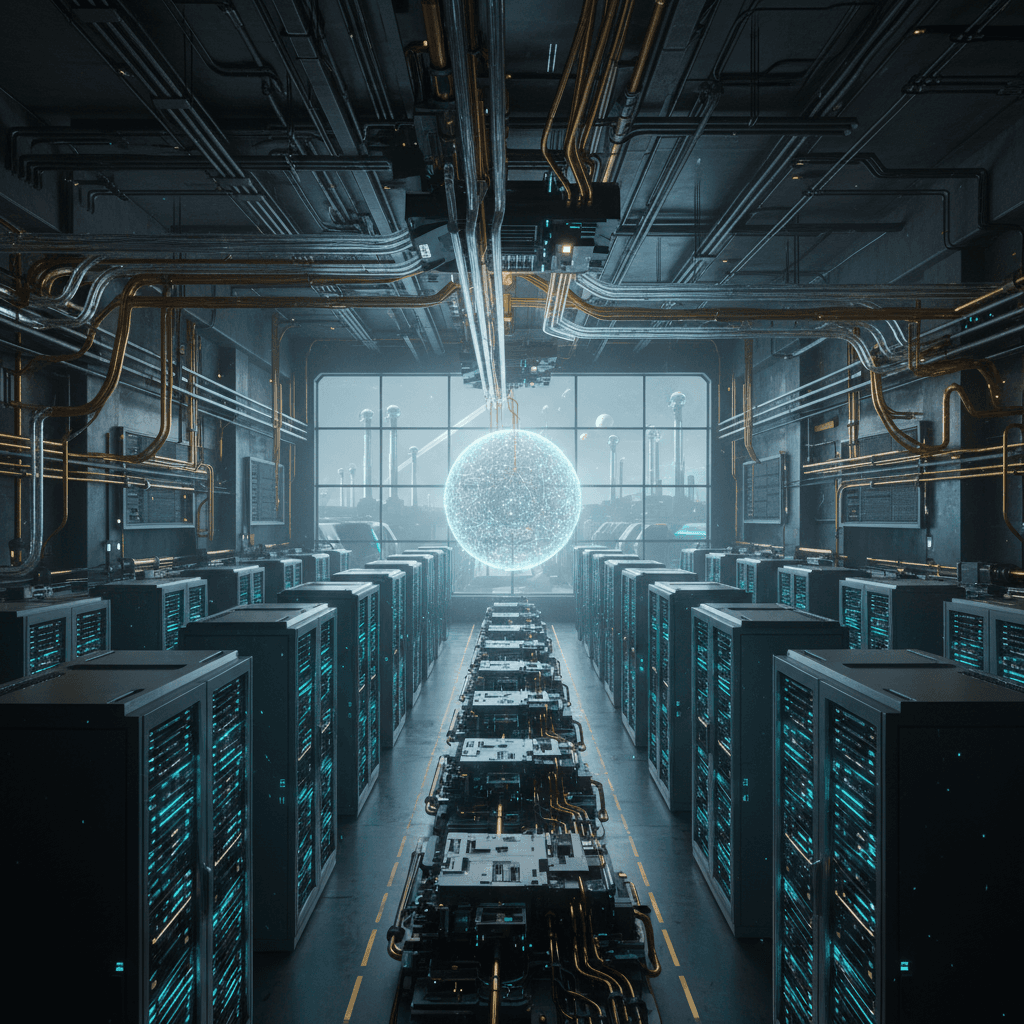
In a landmark agreement that signals a dramatic escalation in the global artificial intelligence arms race, Anthropic has secured the full computing capacity of the Colossus 1 data center, an infrastructure juggernaut operated by SpaceX.[1][2][3] The deal grants the San Francisco-based AI firm exclusive access to more than 300 megawatts of power and an immense cluster of over 220,000 NVIDIA GPUs, effectively positioning Anthropic as one of the most compute-rich organizations in the world. This massive influx of hardware, which includes a high-density deployment of NVIDIA H100, H200, and next-generation GB200 Blackwell accelerators, is expected to come fully online within the next thirty days. For Anthropic, the acquisition represents a critical solution to the persistent compute bottlenecks that have historically constrained the deployment and iteration speed of its Claude model family.
The technical specifications of the Colossus 1 facility, located in Memphis, Tennessee, underscore the sheer physical scale required to maintain a seat at the frontier of artificial intelligence. Originally established by xAI before its recent integration into the broader SpaceX corporate structure, the Memphis supercluster was constructed in record time, utilizing a sophisticated mix of traditional grid power and onsite natural gas turbines to bypass the lengthy timelines typical of modern utility infrastructure. By taking over the entirety of Colossus 1, Anthropic is gaining the equivalent of a small city’s worth of energy dedicated solely to the inference and training requirements of its flagship models. This site is widely regarded as one of the most efficient high-performance computing environments ever built, featuring liquid-cooling systems and advanced networking fabrics designed specifically to handle the massive parallel workloads essential for large-scale generative models and autonomous agents.
Beyond the raw hardware metrics, the partnership is driving immediate and substantial improvements to the user experience for Claude’s diverse customer base. Effective immediately, Anthropic has announced a doubling of the five-hour rate limits for Claude Code across its Pro, Max, Team, and seat-based Enterprise tiers.[2][4][5][1][6][7] Claude Code, the company’s agentic command-line tool that allows developers to delegate complex software engineering tasks directly from their terminals, has seen explosive adoption since its release, often leading to restrictive usage caps during periods of high demand. In addition to doubling these limits, the company is removing the peak-hour throttling that previously restricted Pro and Max subscribers during high-traffic windows. Perhaps most significant for the enterprise sector is a massive upward revision of API rate limits for the Claude Opus models. Documentation suggests that some tiers will see an increase of up to 1,500 percent in maximum input tokens per minute, providing the throughput necessary for large-scale corporate deployments and autonomous agent fleets that require constant, high-volume reasoning capabilities.
The alliance between Anthropic and SpaceX is particularly noteworthy given the complex competitive dynamics and the shifting alliances within the industry. Earlier in the decade, the leadership at these organizations often found themselves on opposite sides of philosophical and safety-oriented debates. However, the immense capital and energy requirements of the current "Level 3" and "Level 4" AI models appear to have fostered a pragmatic "frenemy" relationship. By leasing its premier data center to a direct competitor of its own Grok models, SpaceX is pivoting toward a role as a foundational infrastructure provider, a move that provides the aerospace company with a steady stream of capital to fund its even more ambitious goals. This collaboration is further evidenced by Anthropic’s disclosed interest in partnering with SpaceX to develop multiple gigawatts of orbital AI compute capacity.[8][3][9][10][7][11] This long-term vision involves deploying solar-powered data centers into Earth’s orbit, potentially solving the terrestrial challenges of land use, cooling, and sustainable energy that are beginning to plague ground-based mega-projects.
This latest move is part of a broader, multi-billion-dollar infrastructure strategy as Anthropic seeks to diversify its compute supply chain. While the SpaceX deal is the most immediate in terms of impact, it joins a portfolio of massive agreements, including a five-gigawatt commitment with Amazon and a separate five-gigawatt arrangement with Google and Broadcom scheduled to scale through 2027.[2][4] Anthropic’s ability to draw power from a diverse array of hardware, including AWS Trainium and Google TPUs alongside the NVIDIA GPUs at Colossus 1, provides it with a unique level of resilience in a market defined by chip shortages and energy scarcity. The company has also emphasized that its infrastructure expansion will prioritize democratic jurisdictions with strong legal frameworks, an apparent nod to its "Constitutional AI" ethos and a commitment to data residency and security for its enterprise clients.
The industry-wide implications of the Colossus 1 deal are profound, suggesting that the era of model efficiency as the primary competitive advantage may be giving way to a period of raw industrial scale. As models like Claude 4 continue to push the boundaries of autonomous task execution and long-horizon reasoning, the "compute moat" has become the defining factor for frontier labs. For the broader developer ecosystem, the lifting of rate limits signals that AI is moving from a novelty tool toward a reliable, high-availability utility. The increase in API ceilings for Opus models, in particular, will likely catalyze a new wave of third-party applications that were previously impossible due to latency and throughput constraints.
Ultimately, the partnership between Anthropic and SpaceX reflects a maturing AI sector where the boundaries between software innovation and heavy industrial engineering are increasingly blurred. By securing the full capacity of one of the world's most powerful supercomputers, Anthropic has not only cleared the way for the next generation of its models but has also set a new benchmark for what it means to be a "compute-rich" entity. As the industry looks toward the possibility of orbital data centers and gigawatt-scale clusters, the Colossus 1 deal stands as a pivotal moment where the physical constraints of the planet began to meet the limitless demands of digital intelligence. The coming months will likely reveal whether this unprecedented surge in capacity will result in a corresponding leap in AI capabilities, as the world watches Claude transition from a restricted assistant to an ubiquitous agent of global commerce and development.