
Enterprises adopt localized AI infrastructure to overcome critical data readiness and privacy hurdles
Enterprises are mastering AI readiness by combining localized high-performance hardware with secure governance and automated software ecosystems
May 6, 2026
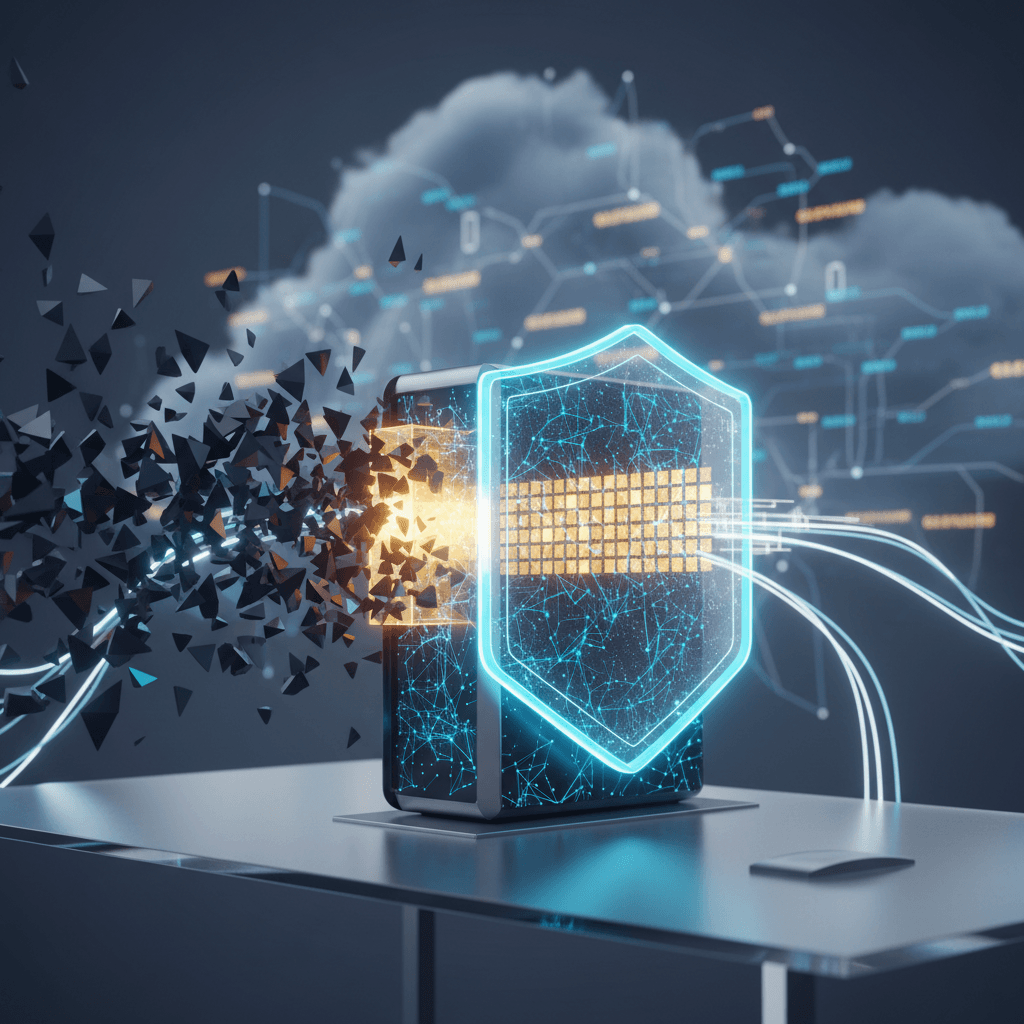
The rapid acceleration of generative artificial intelligence has forced a fundamental shift in how enterprises view their digital foundations, moving the conversation from simple data storage to the complex orchestration of intelligence. While the technology media often characterizes data as the new oil, the practical reality for most organizations is that extracting value from this resource remains a significant hurdle.[1] Ahead of the upcoming AI and Big Data Expo in San Jose, industry leaders are increasingly focusing on the critical intersection of high-performance hardware and the software ecosystems required to process data for AI ingestion. At the center of this transition is the concept of data readiness, a state that remains elusive for many companies struggling with fragmented ownership, inconsistent schemas, and legacy infrastructure that was never designed for modern interoperability.
One of the most persistent friction points identified by experts, including Jerome Gabryszewski, HP’s AI and Data Science Business Development Manager, is the tendency for organizations to underestimate the organizational and architectural debt underlying their datasets. While the technical process of moving from manual to automated data ingestion is often viewed as a software challenge, it is frequently a governance issue in disguise. Before automation can take hold, companies must reconcile data silos across departments and modernize infrastructure that lacks the necessary integration capabilities. The technical lift of automation is often smaller than the governance work required to prepare the data for consumption. This realization is shifting the enterprise focus toward a more holistic view of the AI pipeline, where the hardware on which data is processed becomes just as important as the algorithms themselves.
The debate between local and cloud-hosted compute has reached a turning point as enterprises weigh the benefits of speed and cost against security and data privacy. HP has positioned its workstation strategy to address this by advocating for a local-first approach to the development cycle. High-performance systems like the Z8 Fury are being designed to handle the full model development cycle on-premises, allowing data science teams to test, train, and iterate locally before scaling to the cloud. This strategy is driven by the need to manage cloud spend and the desire to keep sensitive proprietary information within the company’s own firewall. The recent introduction of the ZGX Fury, powered by the NVIDIA Grace Blackwell architecture, represents a push toward deskside trillion-parameter inference, effectively bringing data center-level power to the individual developer’s workspace.[1] This capability allows teams to run continuous fine-tuning on sensitive data without the latency or token costs associated with external cloud providers.
Complementing this hardware is a sophisticated software stack designed to simplify what has historically been a fragmented and tedious setup process for data scientists.[2] The Z by HP Data Science Stack Manager serves as a curated gateway to popular tools such as TensorFlow, PyTorch, and NVIDIA CUDA, automating the management of package updates and dependencies. By providing a consistent environment across both Windows and Ubuntu, these tools aim to reduce "setup fatigue," allowing professionals to spend more time on model development and less on environmental troubleshooting. Furthermore, the development of HP AI Studio highlights a push toward centralized collaboration. By integrating a trust layer through partnerships with startups like Galileo, HP is enabling developers to detect and correct hallucinations, drift, and bias within their models.[3] This focus on "trustworthy AI" is becoming a mandatory requirement for enterprise adoption, where a single inaccurate output can lead to significant reputational or operational risk.
The evolution of the traditional personal computer into a specialized "AI PC" is another pillar of this enterprise transformation. HP is rolling out an intelligence layer known as HP IQ, which utilizes a 20-billion-parameter local model to handle complex tasks directly on the device.[4][5][6][7][8] This shift toward localized inferencing for document analysis and meeting summaries addresses the twin concerns of data privacy and internet dependency.[7] Features like the Visor interface and NearSense proximity-based connectivity aim to remove digital friction, allowing devices to recognize each other and share context in real-time.[5] By keeping the bulk of the AI processing local, enterprises can democratize AI access while bypassing the massive data privacy risks inherent in sending proprietary files to the cloud. This decentralized approach to intelligence suggests a future where the PC is no longer just a window into the cloud, but a primary execution layer for agentic AI.
As AI models begin to update themselves continuously, the risks of concept drift and data poisoning have become front-of-mind for IT decision-makers. Continuous learning transforms AI from a project into a liability if it is not governed with the same rigor as traditional code deployments. Industry leaders are advising clients to treat model updates with high levels of observability and version control, ensuring that the "art" of AI does not result in unpredictable system behavior. This requirement for oversight extends to the hardware fleet itself. Platforms like the Workforce Experience Platform now ingest telemetry from millions of endpoints to provide AI-driven remediation for device issues. By combining hardware-level security, such as quantum-resistant firmware protection, with AI-powered management tools, organizations are attempting to build a resilient foundation that can withstand the increasingly sophisticated cyber threats associated with the AI era.
The move toward automated intelligence is ultimately a journey of cultural and structural change as much as it is a technological one. Companies that successfully navigate this landscape are those that treat data not just as a static asset to be stored, but as a dynamic fuel that requires a sophisticated refinery of local compute, curated software, and robust governance. The shift toward hybrid models—where data is processed locally for privacy and speed but scaled to the cloud for massive workloads—reflects a maturing understanding of the AI lifecycle. As the industry moves closer to the widespread deployment of agentic AI, the ability to orchestrate these various components into a seamless, secure, and cost-effective ecosystem will define the winners in the enterprise space. The art of AI for the enterprise is no longer just about the model; it is about the entire infrastructure that makes that model actionable, trustworthy, and scalable.