
Anthropic launches Ultraplan to move complex Claude Code architectural planning to the cloud
Anthropic’s Ultraplan shifts intensive software planning to the cloud, enabling asynchronous multi-agent reasoning and collaborative browser-based architectural reviews.
April 11, 2026
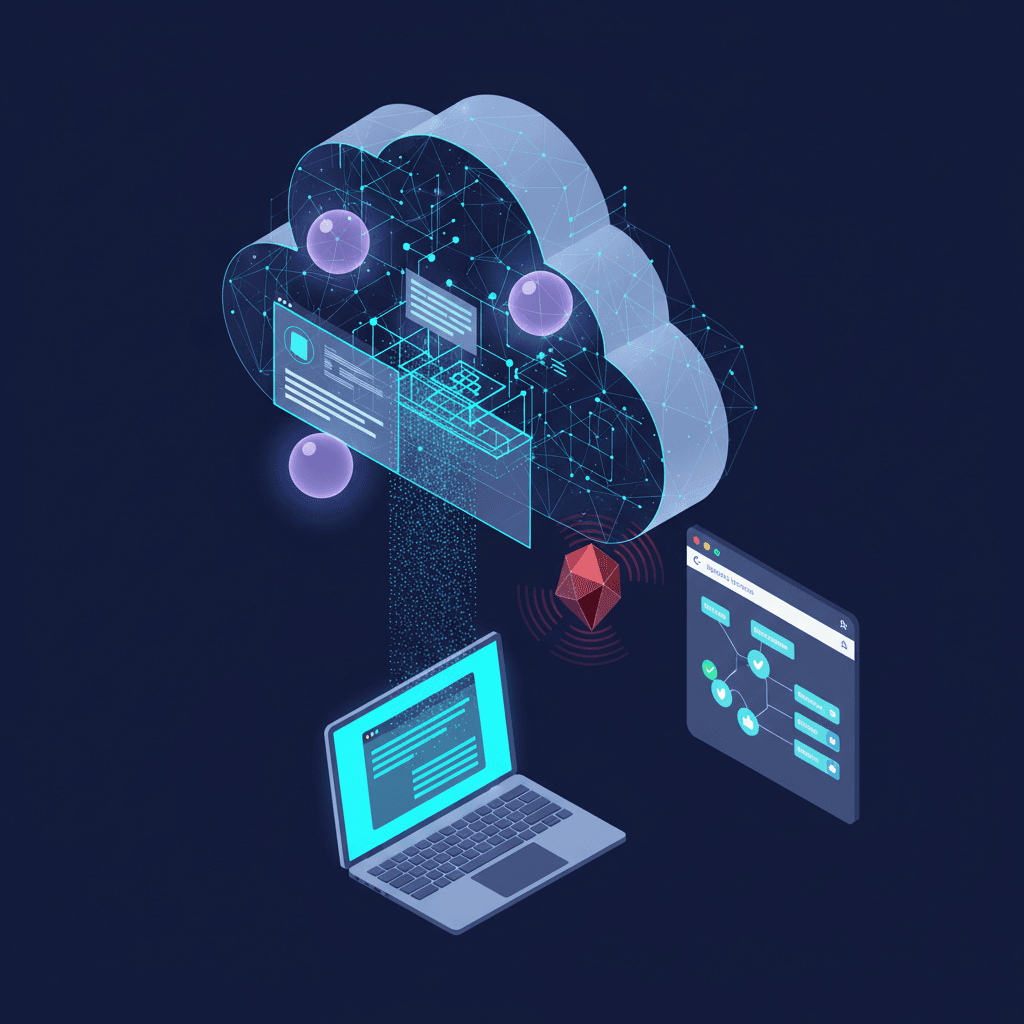
Anthropic has introduced a significant evolution to its Claude Code command-line interface with the launch of Ultraplan, a feature that moves the intensive task of architectural planning from the local terminal to the cloud. This strategic shift addresses one of the primary friction points in agentic software engineering: the bottleneck created when a local development environment is occupied by an AI agent performing complex reasoning. By offloading these cognitive-heavy processes to Anthropic’s cloud infrastructure and providing a browser-based interface for review, the company is attempting to redefine the developer experience from one of constant monitoring to one of high-level delegation and oversight.
The introduction of Ultraplan marks a departure from the traditional linear interaction model of terminal-based coding assistants.[1] Previously, when a developer tasked Claude Code with a complex refactoring or feature implementation, the terminal session would essentially become a locked process as the model researched files and drafted a plan. Ultraplan solves this by decoupling the planning phase from the execution environment.[2] When a user triggers the feature—either via the /ultraplan command or by opting to refine a local plan in the cloud—the task is handed off to a remote session.[3][4][2] This allows the developer to continue working on other branches, running tests, or performing standard CLI operations while the cloud-based agent constructs the implementation strategy in the background.
The technical foundation of Ultraplan relies on a sophisticated multi-agent architecture designed to improve the reliability of complex code changes. Unlike standard sequential planning, where a single model instance attempts to solve a problem from start to finish, the Ultraplan engine utilizes a group of specialized agents.[5][6] This typically involves three parallel explorer agents that independently investigate the codebase to propose different approaches to a problem, followed by a critic agent that evaluates these proposals for security flaws, architectural consistency, and potential regressions. This ensemble approach significantly reduces the "hallucinations" and logical oversights common in single-agent systems, particularly when dealing with large repositories where a change in one service might have cascading effects on another.
The visibility and control offered by the browser-based review interface represents a major upgrade in the developer’s supervisory role. Moving the review process from a scrolling terminal window to a dedicated web environment on claude.ai allows for a more granular interaction with the AI’s logic. The interface includes a navigable outline sidebar that lets developers jump between different sections of a large-scale plan, such as database schema changes, API endpoint updates, and unit test additions. More importantly, it introduces social-coding features like inline comments and emoji reactions. Developers can highlight specific lines of the proposed plan to leave feedback, ask for revisions, or flag concerns, allowing the AI to iterate on the plan before any code is actually written to the local disk.
Integration with existing version control systems remains a core requirement for this cloud-based workflow. Because the planning happens on Anthropic’s servers, the system requires a synchronized GitHub repository to access the necessary context. This setup ensures that the cloud environment is working with an up-to-date representation of the codebase. Once a plan is finalized and approved in the browser, developers are presented with two distinct paths for implementation.[4][2][3] They can choose to execute the changes entirely in the cloud, which culminates in the AI opening a pull request on the repository, or they can teleport the plan back to their local terminal.[2] This teleportation feature allows for a seamless handoff, injecting the approved strategy back into the local Claude Code session for immediate execution on the developer’s machine.
The move toward cloud-based planning reflects a broader trend within the artificial intelligence industry as companies shift from simple code completion to autonomous agentic workflows. For years, tools like GitHub Copilot were celebrated for their ability to predict the next few lines of code within an IDE. However, the industry has rapidly moved toward "agentic" solutions—tools that can understand the intent behind a natural language request, navigate a complex directory structure, and propose multi-file changes. By introducing Ultraplan, Anthropic is positioning Claude Code as a direct competitor to specialized environments like GitHub Copilot Workspace and Replit Agent, which also prioritize high-level planning and multi-agent coordination over simple autocomplete.
From a performance standpoint, the implications are substantial.[7] Benchmarks such as SWE-bench, which measures an AI’s ability to solve real-world GitHub issues, have shown that agents with a dedicated planning phase consistently outperform those that jump straight into execution. By utilizing a multi-agent cloud engine, Anthropic is essentially giving Claude Code more "thinking time" and a broader perspective on the codebase.[5] This is particularly valuable for enterprise-scale migrations or the implementation of cross-cutting concerns where a single error in the planning phase can result in hours of manual debugging.
However, the shift to cloud-based planning also introduces new considerations regarding security and privacy. Offloading codebase analysis to the cloud means that more data is processed outside of the local environment. Anthropic has addressed this by ensuring that Ultraplan operates within its established security frameworks, though the requirement for a GitHub connection and cloud-based environment setup may present hurdles for developers working on highly sensitive or air-gapped systems. For the majority of professional developers, however, the trade-off between absolute local control and the massive productivity gains offered by asynchronous cloud planning appears to be an acceptable compromise.
Looking forward, the success of features like Ultraplan may signal the end of the "black box" era of AI coding. By making the planning process transparent, collaborative, and distinct from execution, Anthropic is treating the AI agent less like a magic wand and more like a senior technical lead. The ability to argue with a plan, refine it through comments, and see it evolve before it touches a single file creates a level of trust that was previously missing from autonomous coding tools. This evolution suggests a future where the primary skill of a software engineer shifts from syntax and typing speed to architectural oversight and the ability to manage a fleet of specialized AI agents.
Ultimately, the launch of Ultraplan is a testament to the maturation of AI-assisted development. It recognizes that for AI to be truly useful in a professional context, it must respect the developer’s time and provide a reliable, high-fidelity interface for collaboration. By freeing the terminal and leveraging the power of cloud-based multi-agent reasoning, Anthropic is not just making it easier to write code; it is making it more feasible to delegate complex engineering tasks with confidence. As the competition between AI providers intensifies, the battle will likely move away from which model is the most "intelligent" and toward which platform provides the most integrated and intuitive workflow for the human in the loop.
Sources
[1]
[2]
[3]
[4]
[7]