
Anthropic launches Claude Managed Agents to transform AI chatbots into autonomous enterprise workers
Anthropic’s new production-grade infrastructure overcomes technical hurdles to turn AI chatbots into persistent autonomous workers for the enterprise.
April 9, 2026
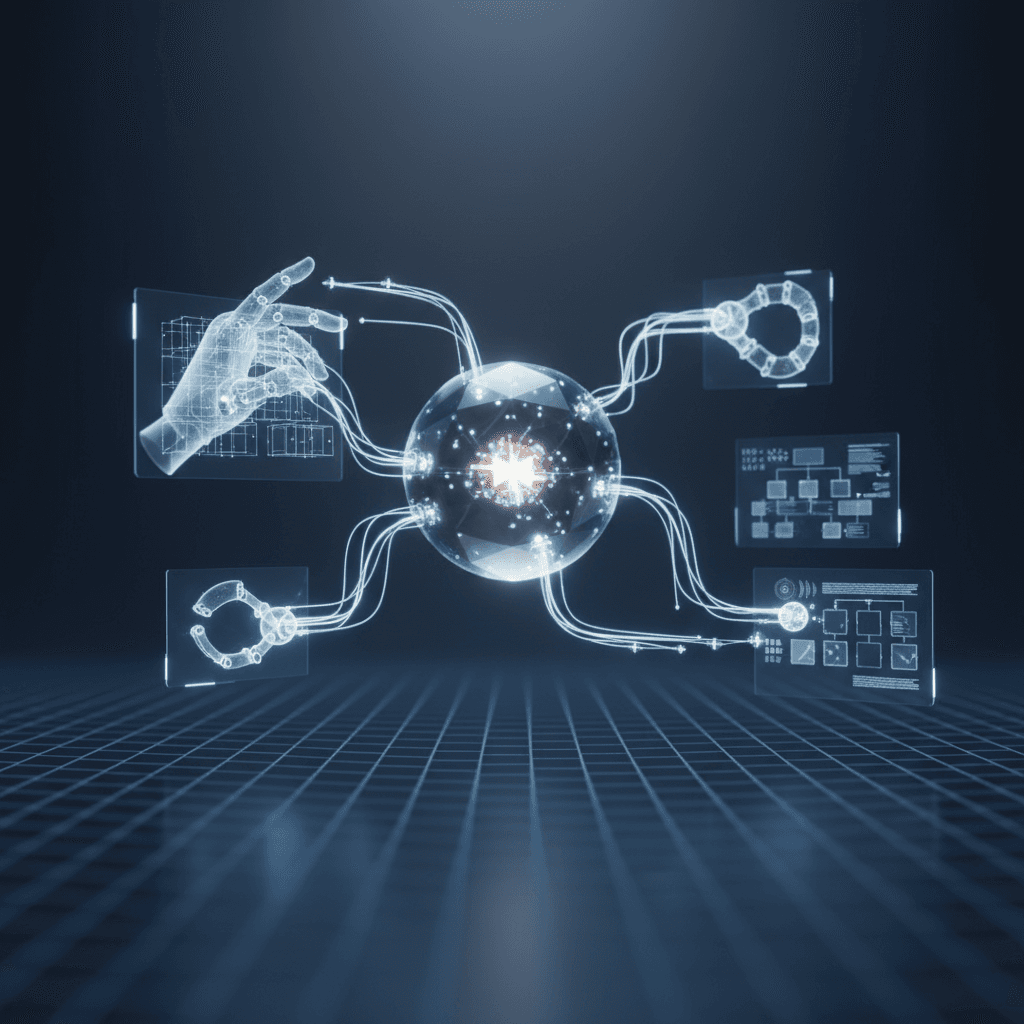
The landscape of artificial intelligence is undergoing a fundamental shift from passive chatbots to active autonomous agents, and Anthropic has positioned itself at the center of this evolution with the launch of its managed infrastructure for autonomous AI agents.[1][2] Known as Claude Managed Agents, this new platform provides developers with a production-grade environment specifically designed to build, run, and scale AI-driven workers that can operate for hours or even days without human intervention. By offering a fully hosted solution that handles the complex backend requirements of agentic workflows—such as sandboxed code execution, state management, and error recovery—Anthropic aims to resolve the significant engineering hurdles that have historically relegated AI agents to experimental prototypes rather than reliable enterprise tools.
For many years, the primary challenge in deploying autonomous agents was not necessarily the underlying intelligence of the large language model, but rather the fragility of the infrastructure required to support it. Developing a truly autonomous system required engineers to build custom "harnesses" to manage persistent memory, secure environments for the AI to execute code, and robust mechanisms to handle API timeouts or logical loops. Anthropic’s managed service effectively abstracts this "DIY hell" into a turnkey platform. Central to this offering is a decoupled architecture that separates the agent into three distinct components: a persistent session log, a stateless orchestrator harness, and a disposable sandbox for execution.[3][4] This design philosophy, which Anthropic describes as "decoupling the brain from the hands," allows the system to remain resilient; if a specific execution container crashes, the harness can simply spin up a new one and restore the agent’s progress from the persistent session log, ensuring that long-horizon tasks are not lost to technical glitches.
The impact of this infrastructure is already visible among early adopters, including major enterprises like Notion, Rakuten, and Asana, who report that the platform has accelerated their deployment timelines by as much as tenfold.[5][6] Notion has integrated these capabilities directly into its workspace to allow teams to delegate complex research and content generation tasks to Claude, which can then operate in the background to produce full presentations or websites.[6] In the ecommerce sector, Rakuten has utilized the infrastructure to stand up specialized agents across departments ranging from marketing and sales to human resources.[6] These agents do not merely suggest actions; they execute them, interacting with tools like Slack and Microsoft Teams to deliver spreadsheets and slide decks directly into professional workflows. Meanwhile, the software monitoring firm Sentry has paired its existing debugging tools with Claude Managed Agents to create a patch-generation system that identifies bugs and autonomously submits pull requests, drastically shortening the time between error detection and code repair.[3]
This transition from selling model access to selling a managed runtime represents a significant strategic pivot for Anthropic and the broader AI industry.[3] By charging a session-based fee—reportedly around eight cents per session-hour on top of standard token costs—Anthropic is moving toward a business model that treats AI labor as a utility similar to cloud computing or database management. This economic shift is accompanied by a technical push toward multi-agent coordination, a feature currently in research preview that allows a primary "master" agent to spawn and manage a fleet of specialized sub-agents.[6] This allows for massive parallelization of tasks; for example, a lead agent could delegate market research, competitive analysis, and financial modeling to three separate agents, then synthesize their outputs into a final report. Internal benchmarks from Anthropic suggest that this managed approach has already improved success rates in structured file generation by ten percentage points compared to traditional prompting methods, underscoring the performance gains of purpose-built agentic infrastructure.[2][5]
Security and governance remain paramount in the discussion of autonomous agents, particularly as they gain the ability to navigate the web and execute shell commands. Anthropic has leaned into its reputation for safety by incorporating scoped permissions and fine-grained authentication into the managed platform. Developers can define precise guardrails and credentials for each agent, ensuring they only access the specific data and tools required for their assigned tasks. The platform also includes comprehensive session tracing within the console, providing a transparent audit trail of every decision, tool call, and failure point an agent encounters.[6] This level of visibility is crucial for enterprise compliance and helps mitigate the risks of "hallucination" or runaway autonomous loops, which have long been the primary fears of executives looking to implement agentic AI.
The broader implications for the AI industry are profound, as this launch intensifies the competition between Anthropic, OpenAI, and Google for dominance in the "agentic era." While competitors like OpenAI have expanded their Assistants API to include similar stateful features, Anthropic is banking on its specialized architecture and the recent high-profile hire of infrastructure veterans to differentiate its platform as the most reliable choice for the "always-on" enterprise. By standardizing the way agents interact with external tools and data through protocols like the Model Context Protocol, the company is attempting to build an interoperable ecosystem that prevents vendor lock-in while providing the convenience of a managed cloud. As businesses move away from talking to AI and start employing it, the availability of stable, scalable, and secure infrastructure will likely determine which platforms become the operating systems of the next generation of digital labor.
Ultimately, the launch of Claude Managed Agents marks a maturation point for the industry, signaling that the era of the brittle AI demo is coming to an end. By focusing on the "plumbing" of autonomy—the sandboxing, the statefulness, and the orchestration—Anthropic is lowering the barrier to entry for companies that lack the specialized DevOps resources to build agentic backends from scratch. As these systems become more integrated into daily business operations, the focus will shift from the sheer reasoning power of the models to the reliability and efficiency of the environments in which they work. The transition toward managed agentic infrastructure suggests a future where AI is not just a tool used by humans, but a persistent layer of the enterprise that works alongside them, handling the heavy lifting of multi-step processes with a level of autonomy that was previously impossible.[1][7]
Sources
[1]
[4]
[5]
[7]