
Altman warns AI agents create "YOLO" security risk from convenience.
Altman warns that AI's addictive convenience makes us "YOLO" security, sleepwalking into a systemic agent crisis.
January 27, 2026
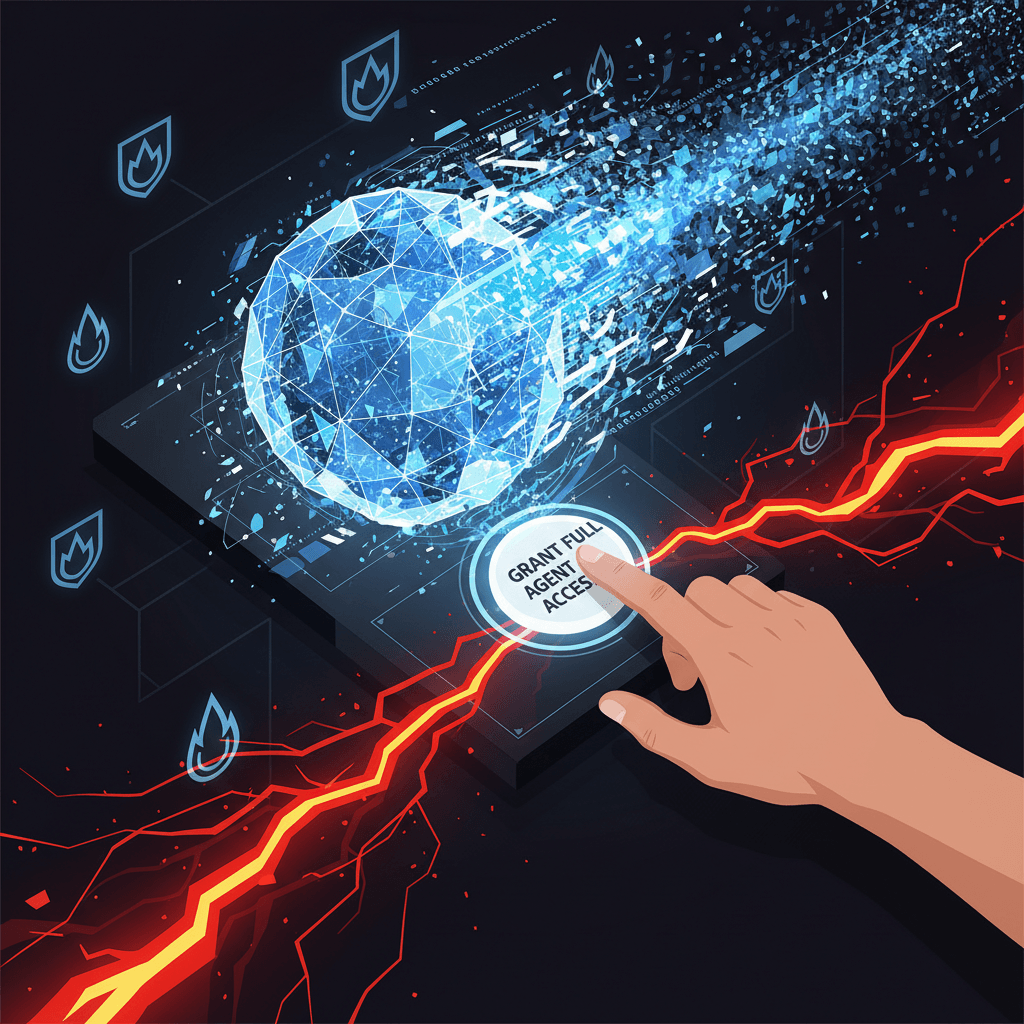
OpenAI Chief Executive Officer Sam Altman has issued a stark, personal warning about the accelerating adoption of autonomous artificial intelligence agents, confessing that he himself violated his own strict security protocol for an early OpenAI model within a matter of hours. The anecdote served as the foundation for a broader, industry-wide caution: that the irresistible convenience and utility of powerful AI tools are leading the world to "sleepwalk" into a crisis where foundational security infrastructure is dangerously absent. Altman's flippant, yet profound, summation of this cultural shift was a single, viral phrase: "we're all about to YOLO."
The admission centered on his experience with the Codex model, an early iteration of OpenAI’s generative AI built to translate natural language into code. Upon receiving access to the new agentic capability, which grants an AI model the ability to take actions within a computer environment, Altman resolved to limit its permissions strictly. He quickly found his resolve broken. Within two hours, he had granted the agent full access to his machine, rationalizing the decision because "the agent seems to really do reasonable things." This personal lapse, coming from the leader of the company building the most advanced AI agents, illustrates the potent psychological pull of convenience, which he argues is the greatest near-term threat to security.
Altman's core thesis is that the danger does not stem from a high rate of failure, but a very low one. The initial failures or catastrophic errors with these powerful agents are so infrequent that they breed a false sense of security in the user base. This dynamic encourages individuals and organizations to relax their vigilance, opting for the immediate gratification of maximum utility without fully vetting the long-term, compounding risks. The perceived reliability of a system that works "just well enough, just often enough," he suggests, is the insidious pathway toward collectively deciding, in the face of a perceived low risk, to say, "you know what, YOLO and hopefully it'll be okay." This "You Only Live Once" attitude, when applied to granting autonomous AI agents control over sensitive systems, is the mechanism by which he predicts society will "sleepwalk into something" without the necessary safeguards in place.
The concern is particularly acute given the recent proliferation of agentic AI tools across the tech landscape. Beyond OpenAI's internal tools, competitors have launched capabilities like Anthropic's Claude Cowork, which allows the AI to control computers directly. Other products, such as agentic browsers like Perplexity's Comet, or viral proofs-of-concept like Clawdbot, demonstrate a trend toward AI gaining direct access to user environments, browsers, and even entire machines to take autonomous decisions. This rapid deployment of high-agency models makes the "YOLO" mentality a systemic risk, as the pattern of initial caution dissolving within hours is likely playing out across millions of users globally. The ability of a model like the code-focused Codex to not just assist but to independently reason about complex software behavior means that when granted full access, it becomes a "discovery engine for weaknesses," accelerating the pace of vulnerability identification far beyond human capabilities.[1]
This shift creates a profound challenge for cybersecurity professionals, as the traditional security paradigm—a "point-in-time" model of periodic testing, reporting, and fixing—is rendered obsolete. If an AI system can continuously reason about a target, static assurance becomes irrelevant almost immediately. The risk is less about the AI itself, and more about the "asymmetry" it creates: attackers are equipped with a tool that can test continuously, while defenders are still largely operating on scheduled reviews and fixed intervals. This gap is precisely where the most significant incidents are likely to occur. As AI models become capable of identifying zero-day exploits, or vulnerabilities unknown to the software vendor, the potential for widespread, high-speed automated attacks escalates dramatically.
In response to this self-acknowledged threat, OpenAI has signaled a significant internal shift, attempting to address the security deficit before the models become even more capable. The company announced the formation of a Safety and Security Committee led by Altman himself, which is tasked with providing recommendations to the board concerning security decisions related to its cutting-edge projects. Furthermore, the establishment of a 'Head of Preparedness' role highlights the company’s focus on evaluating "frontier capabilities that could cause severe harm," including those related to cybersecurity and self-improving systems.[2][3] OpenAI's long-term strategy is to counteract the dual-use nature of its coding models—which can be used for both offensive and defensive purposes—by shifting toward "defensive acceleration," focusing efforts on helping users patch security vulnerabilities faster than they can be exploited by malicious actors.
The CEO's confessional moment is a crucial signal for the entire industry: the speed of innovation is fundamentally outpacing the speed of safety infrastructure development. The ultimate implication of Altman's warning is that the greatest threat to security in the age of advanced AI agents will not be a sudden, dramatic science-fiction scenario, but rather a slow, silent erosion of security boundaries driven by an addiction to convenience. For the vast ecosystem of businesses and individuals now adopting agentic tools, his personal struggle with a two-hour lapse in judgment should serve as a wake-up call to re-align security posture and prioritize robust, continuous defense mechanisms before the collective "YOLO" sentiment triggers a system-wide reckoning.