
AI Writes Full Romance Novels in 45 Minutes, Upending Authorship.
Proficient AI users are generating hundreds of novels and six-figure incomes by concealing the machine’s role from readers.
February 9, 2026
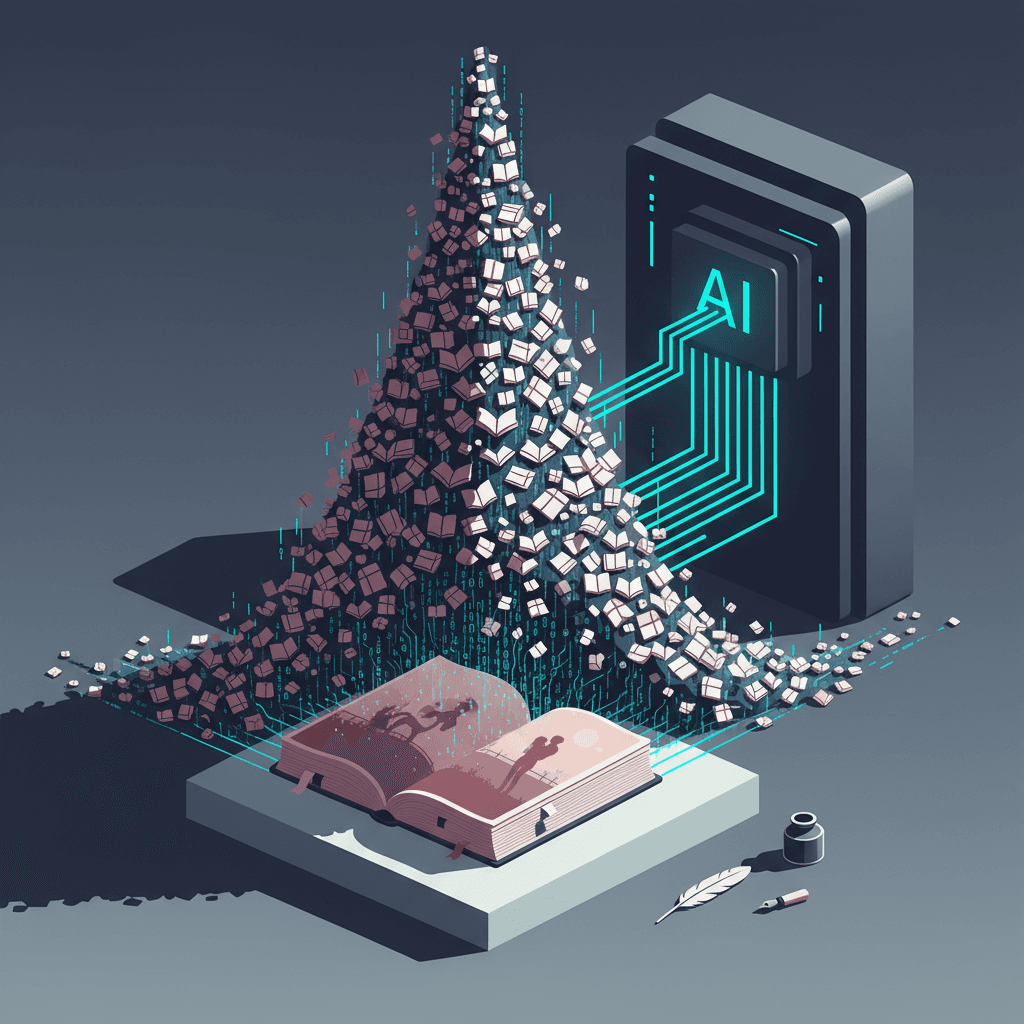
The ancient struggle of the human artist against the machine has reached a startling new frontier, one where the speed of creation is measured not in years or months, but in minutes. A recent examination of the romantic fiction market, a multibillion-dollar segment of the publishing world, reveals that human writers are facing an "impossible race" against artificial intelligence models capable of generating a complete novel before a typical workday even concludes. This disruptive technology has upended the economics of authorship, creating a shadow industry where prodigious output translates directly into six-figure incomes, provided a crucial secret is maintained: the machine’s role must be concealed from the reading public.
The acceleration of content generation represents a seismic shift from the traditional writing timeline, which often sees an author dedicate six months or more to crafting a single manuscript. Large language models (LLMs) have slashed this period to an almost unimaginable fraction. One author, identified as a power-user of AI tools like Anthropic’s Claude, disclosed earning a six-figure sum after producing over 200 novels in the span of a single year[1]. The sheer velocity of the technology was demonstrated when the author’s AI program, running in the background during an interview, managed to generate a complete romance novel—a story about a rancher falling for a city girl—in approximately 45 minutes[1]. The economic challenge to traditional human authors is starkly encapsulated in the resulting question: “If I can generate a book in a day, and you need six months to write a book, who's going to win the race?”[1]. Commercial AI writing services now openly advertise the capability to create 80,000-word novels in just two to four hours, claiming a speed 2,000 times faster than traditional writing methods[2]. This massive and rapid proliferation of content is flooding the market, with one major self-publishing distributor reporting a 50 percent surge in incoming manuscript volume, a spike primarily attributed to AI-generated submissions[3].
Despite the unprecedented pace of production, the commercial success of these AI-generated works hinges on a pervasive lack of transparency within the digital marketplace, creating a profound authenticity paradox. Reports indicate that AI-generated novels sell "just fine" as long as the readers are unaware of the book’s origin[1]. The lucrative business model thus relies on deliberate concealment, with AI-enabled authors actively hiding their technological assistance under their pen names[1]. This is not a universal practice, as some new-age publishing houses that exclusively deal in AI-produced fiction do include a disclaimer on the product page, but the financial incentives clearly favor silence[1]. The critical limitation of the technology remains its struggle with the emotional nuances that define the romance genre: a consistent flaw noted is the AI’s inability to deliver true emotional depth or the necessary slow-burn tension that dedicated romance readers seek[1]. While a model like Claude may offer "elegant prose," it reportedly falls short on rendering convincingly steamy scenes, and other models producing explicit content are often critiqued as feeling "mechanical" and lacking human nuance[1].
The ethical and commercial implications of this AI-driven influx are already sending ripples throughout the publishing ecosystem. Surveys suggest a significant, if often quiet, adoption of the technology among established writers, with about a third of over 1,200 authors across various genres admitting to using generative AI for tasks such as plotting or drafting, many of them keeping this fact private[1]. This clandestine use highlights a growing fear among human authors that disclosing AI use will diminish their brand and readers’ perception of their work[4]. The romance genre, specifically, has been identified as highly exposed to displacement, in part because its readership is so voracious, consuming content at a pace that traditional authors find nearly impossible to match[5]. Compounding the problem is the issue of market saturation and intellectual property. The mass-production tactics of a few AI-powered creators have led to the flooding of platforms like Amazon's Kindle Direct Publishing with low-quality works, sometimes published under the names of real human authors in a clear act of identity theft and reputational damage[6]. This immense volume of new titles compelled the e-commerce giant to institute a significant policy change, capping the number of new books a self-published author can upload to no more than three per day, a direct attempt to curb the deluge of machine-generated manuscripts[3].
The ultimate threat of this technological development transcends mere competition; it raises fundamental questions about the value of human labor and originality in art. The ability of LLMs to imitate an author’s distinct style, often requiring only two existing books as training material, creates a mechanism for high-speed, personalized replication that undercuts the time, craft, and emotional investment of the human novelist[1]. This race against the machine is thus rapidly redefining what it means to be a "successful" author—not as a master of craft and storytelling, but as a proficient AI prompter and content manager[7]. As AI continues to evolve, the distinction between human-crafted, emotionally resonant storytelling and machine-generated, formulaic content will become the new battleground for authenticity, forcing the publishing industry to grapple with a future where the source of a story is as vital to its saleability as the story itself.