
AI Boom Fuels 60% App Store Surge, Launching Era of "Vibe Coding"
AI-fueled "vibe coding" is democratizing app development and flooding the App Store with quick, complex, and potentially flawed prototypes.
January 25, 2026
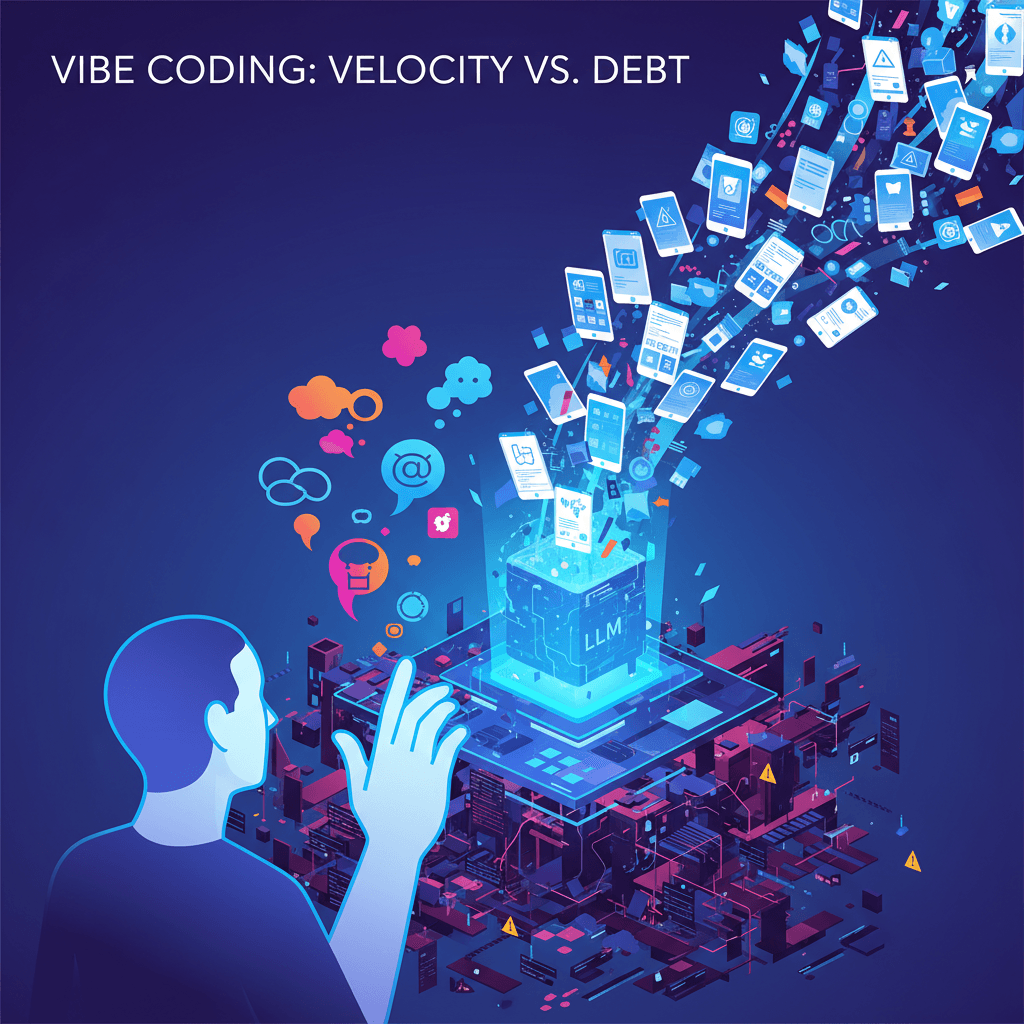
The mobile application ecosystem is undergoing a transformative shift, marked by an unprecedented surge in new app creation that is fundamentally altering the landscape of digital development. After a period of relative stagnation, the number of new iOS apps released saw a remarkable 60 percent year-over-year spike in December, a phenomenon largely attributed to the emergence and popularization of AI programming tools[1][2]. This explosion in output signals a new era for the App Store, one driven by a novel, intent-focused development style that has been dubbed "vibe coding"[1][3].
Vibe coding represents a paradigm change in how software is created, shifting the focus from the meticulous command of syntax and boilerplate code to the high-level articulation of an idea or a desired feature[3][4]. Coined by AI researcher Andrej Karpathy, the term describes a process where developers use comprehensive natural language prompts to describe a problem or functionality, and a large language model (LLM) then generates a significant chunk of working code[3][5][6]. Instead of writing code manually, the developer's primary role evolves into guiding, testing, and refining the AI's output, allowing them to effectively "forget that the code even exists" in the early stages of ideation[4][5]. This approach democratizes software creation, drastically lowering the technical barrier to entry for aspiring entrepreneurs, designers, and domain experts who lack traditional programming expertise[2][4].
The rapid adoption of this methodology is evidenced by data showing a significant increase in startup spending on "vibe coding" platforms. An analysis by venture capital firm Andreessen Horowitz (a16z) showed a marked surge in spending on tools designed for this purpose, with platforms like Replit, Cursor, Lovable, and Emergent ranking among the top AI-native application companies based on spending data[7][6]. These platforms, which fall into the category of "horizontal AI tools," are making sophisticated software development accessible to individuals in non-traditional technical roles, mirroring the original, revolutionary spirit of the iPhone SDK's launch in 2008[2][7][6]. Tools like Cursor AI, Claude Code, and platforms for mobile development are enabling users to convert an idea into a functional prototype that is ready for App Store submission in a fraction of the time previously required[8][9][10].
However, the speed and low barrier to entry of vibe coding present a significant challenge for the longevity and quality of the resulting applications. A key downside is the tendency for AI-generated code to be built for the goal of "making it work," rather than for the essential requirements of "making it scale"[11]. Early-stage AI-generated code often suffers from issues like massive, monolithic files with poor internal organization, which turn debugging into a nightmare[11]. More critically, these applications can be plagued by performance inefficiencies, such as the N+1 query problem in database interactions, which goes unnoticed with ten users but causes severe slowdowns and database drowning once the user base hits a few thousand[11]. Developers who rely too heavily on the AI without fully understanding the underlying logic risk compounding technical debt that is far more expensive and time-consuming to fix later on[5].
The influx of quickly generated apps is also creating friction within the broader App Store ecosystem, posing a new challenge for platform quality and the integrity of the review process[12]. Reports indicate that the App Store is becoming flooded with low-quality, crash-prone applications that may not have been thoroughly tested, leading to a general rise in user frustration[13]. For honest, established developers, this over-saturation is translating into a stricter and more unpredictable App Store review process, with some legitimate apps facing increasing rejection rates or even removal for failing to meet an ambiguous "minimum threshold" in a newly competitive environment[12]. Furthermore, a lack of developer vigilance with AI-generated code has been linked to potential security flaws, including the inadvertent exposure of private API keys and overlooked vulnerabilities[12][5].
Ultimately, the spike in new iOS apps is a clear signal that the development world is moving toward a model of AI-human collaboration, where the developer acts more as a product manager and architect than a manual coder[10][5]. The future success of this trend hinges on professionalizing the vibe-coding workflow, ensuring that the initial velocity gained from AI-assisted code generation is balanced with a disciplined approach to code review, architecture, and scalable design. While AI has made app creation more democratic and faster than ever, the long-term viability of the AI-generated App Store will depend on developers mastering the art of instructing, debugging, and refining the code the machines produce[10].
Sources
[1]
[2]
[3]
[5]
[6]
[8]
[9]
[10]
[11]
[12]
[13]