
AI Collapses Creation Timelines, Forcing Leaders Into Shackleton Survival Mode
The accelerating speed of AI is crushing established business models, requiring leaders to unlearn ego and cultivate radical resilience.
January 16, 2026
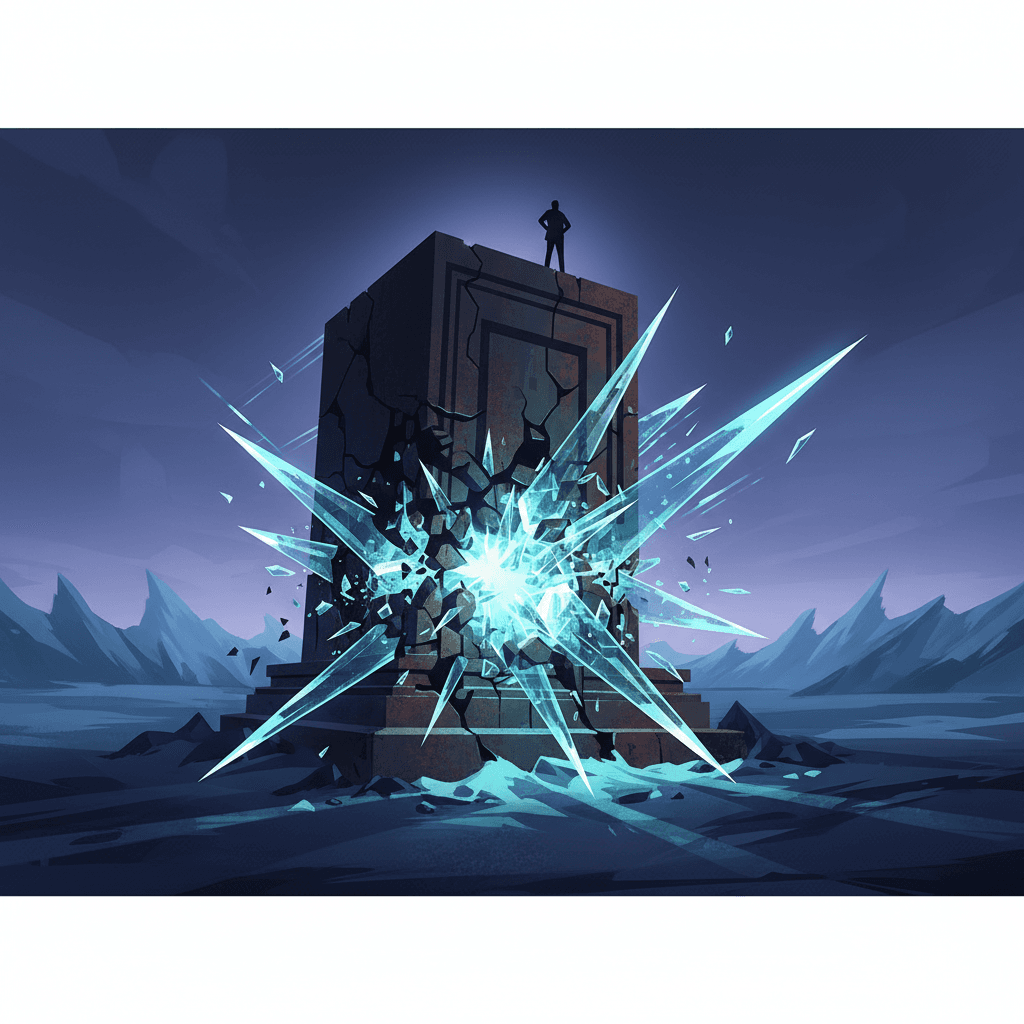
The accelerating influence of Artificial Intelligence is forcing a critical and often painful re-evaluation of established operational paradigms, leading actor-entrepreneur Arvind Swami to declare that "old models will collapse" as leaders face unprecedented 'Shackleton Moments' of organizational crisis and existential change. His commentary places the current technological upheaval within a context of extreme leadership challenge, arguing that the true disruption of the AI era is not just technological, but fundamentally human, demanding a profound shift in mindset characterized by the unlearning of ego and the cultivation of radical resilience.
The core of Swami's analysis centers on the compression of the creative and operational timeline, a phenomenon he describes as AI 'collapsing creation timelines.' AI tools, from generative models to sophisticated coding and automation platforms, drastically reduce the time-to-market and the conceptualization-to-execution window for nearly every industry. This means that a process that once took months or years can now be completed in weeks, a speed that makes incremental change strategies obsolete. For traditional business models, which rely on predictable cycles of innovation and long-term capital planning, this compression introduces an intolerable level of volatility. When the time it takes a competitor to replicate or supersede a product is measured in days, the competitive moat around an established business shrinks to near zero. This is the mechanism by which he predicts old models—those built on the slow, deliberate pace of pre-AI human production—will inevitably collapse.
He connects this technological pressure cooker to the historical metaphor of the ‘Shackleton Moment,’ a term derived from Sir Ernest Shackleton’s Imperial Trans-Antarctic Expedition aboard the *Endurance*, which was crushed by pack ice in 1915.[1] Shackleton never achieved his goal of crossing the continent, yet his story became a masterclass in crisis leadership because he saved every single one of his 27 crew members during a two-year ordeal in the Antarctic wilderness.[1][2] A ‘Shackleton Moment’ in business, therefore, refers to an existential, seemingly hopeless crisis where the original mission (the grand strategic goal) must be abandoned, and the singular focus shifts to the immediate, fundamental goal of survival and preservation of the core team.[3][2] In the context of AI, the metaphor suggests that many businesses find their 'ship'—their established market position or technology stack—is effectively crushed by the ice of rapid technological obsolescence. The leader's task is no longer to complete the original mission but to pivot, maintain morale, and ensure the survival of their people and the organization's capacity to adapt.
For leaders navigating these turbulent waters, Swami insists that traditional measures of success and leadership qualities are insufficient, specifically identifying the need to "unlearn ego." He argues that in a fast-paced environment where AI can rapidly invalidate expert knowledge or a long-held strategic decision, the leader who clings to past success or personal authority is the most dangerous.[3][2] The leadership model exemplified by Shackleton was one of shared responsibility, empowerment, and an ability to abandon a plan when it failed, embodying supreme flexibility.[3][1][4] This modern leadership requires a humility that accepts the limitations of individual human knowledge against the computational power of AI, fostering a culture where data and immediate evidence, rather than hierarchical seniority or pride, dictate the next course of action. This shift is particularly crucial in the technology sector, where product cycles are now measured in months and a single AI breakthrough can disrupt an entire sub-domain.
The second critical requirement he champions is the absolute necessity of building organizational resilience. Resilience in this context goes beyond mere recovery; it is the capacity to not just bounce back, but to *continuously adapt* and emerge stronger from successive crises. Swami's perspective is uniquely informed by his dual career as a prominent actor and a successful entrepreneur with a strong background in technology and business.[5][6] After a sabbatical from acting, he transitioned to business, co-founding Prolease India, a transaction processing company, and later establishing Talent Maximus, a staffing and payroll processing firm that achieved substantial success, demonstrating his hands-on experience in building and leading a large-scale enterprise through market shifts.[6][7][8] His business background, which includes an academic foundation with a Master's in International Business, lends weight to his analysis of corporate models.[6][9] He understands that the pressure on supply chains, human resources, and back-end processes—the very 'old models' in his purview—is immense, making resilience the fundamental operational metric.
Ultimately, Swami's message is a stark warning and a clear prescription. The AI-driven future is not a gradual evolution but a series of ice-crushing 'Shackleton Moments' that demand immediate, decisive action. For organizations to survive the collapse of their old models, the leadership must trade the historical currency of ego and rigid planning for the new currency of humility, relentless adaptation, and a deep-seated organizational resilience that prioritizes the collective's ability to navigate the technological blizzard. The survival story of Shackleton’s crew, where every individual was saved, serves as the aspirational blueprint for corporate leadership facing the existential threats and opportunities presented by the accelerating capabilities of artificial intelligence.