
AI CEO: Selling Advanced Chips to China Equals Giving Them "Nuclear Weapons."
Anthropic CEO warns easing AI chip restrictions is 'selling nuclear weapons,' mortgaging America's technological future.
January 21, 2026
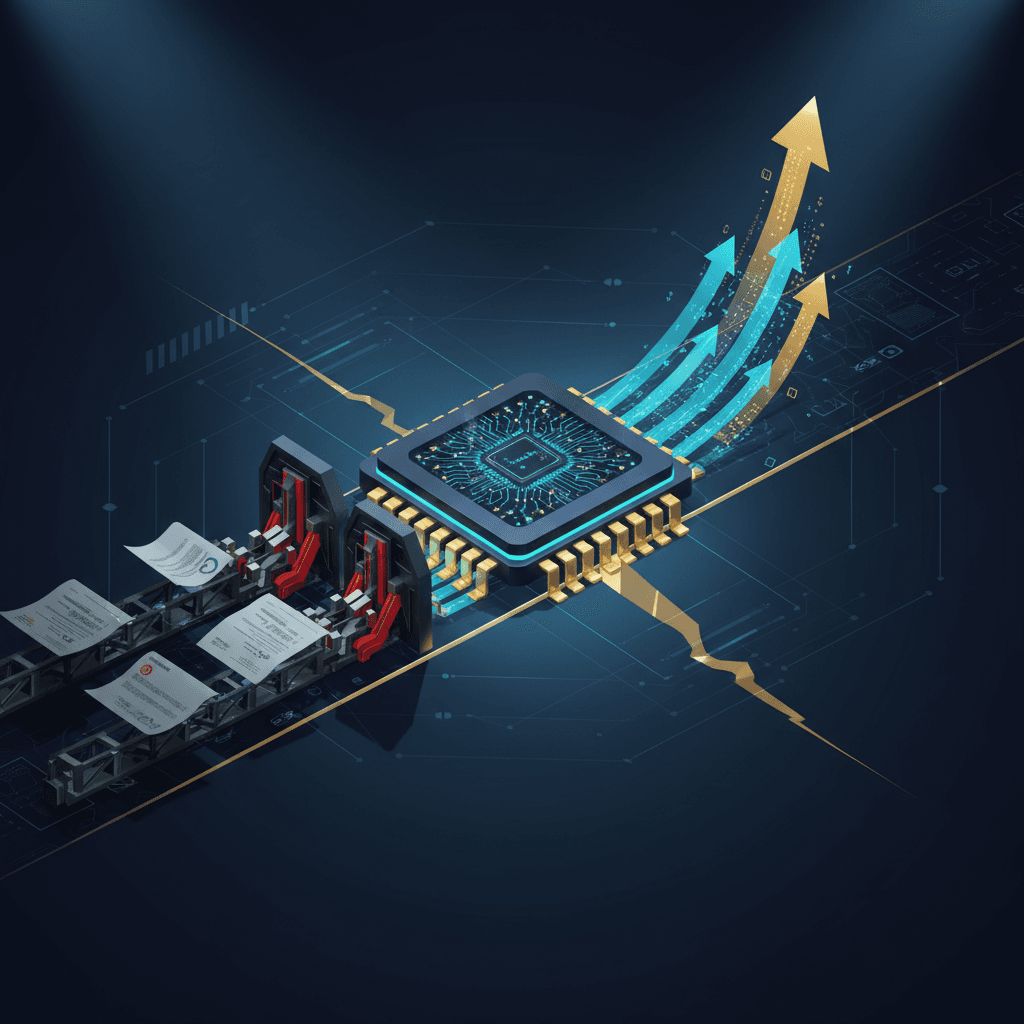
The debate over the United States' policy on exporting advanced artificial intelligence chips to China has intensified into a high-stakes geopolitical and economic clash, with a leading AI figure, Anthropic CEO Dario Amodei, issuing a stark warning about the profound national security implications of easing restrictions. His comments, comparing the export of powerful AI chips to China to "selling nuclear weapons to North Korea," underscore the fundamental disagreement between key players in the US tech and policy spheres following a recent, controversial shift in regulatory approach. The US government's decision to permit the sale of certain high-performance AI chips to China, a significant reversal from prior restrictions, has ignited a firestorm, pitting the commercial interests of chipmakers against the long-term strategic and defense concerns of a rising technological power competition.[1][2][3][4][5]
Amodei's core argument is rooted in the belief that American dominance in advanced semiconductor technology represents the nation's most critical strategic advantage over China. He has repeatedly warned that selling these chips is akin to "mortgaging our future as a country" because it rapidly provides China with the foundational compute power necessary to accelerate its own development of super-intelligent, or Artificial General Intelligence (AGI), systems.[6][4][7] The CEO of the prominent AI startup, which is heavily involved in the race for AGI, views this US technological lead not merely as an economic asset, but as the last strategic edge Washington possesses, especially when compared to US shortcomings in other key areas like munitions or shipbuilding.[6] By handing over high-end processors, Amodei contends, the US is giving "wings to chasing China" and risking a future where a nation of "100 million beings smarter than Nobel Prize winners are under the control of a country," creating an unacceptable national security threat.[7]
The specific controversy centers on a recent policy shift that altered the export framework for certain chips, moving from a near-total ban to a case-by-case review system for processors below a specified performance threshold.[8] This regulatory change effectively greenlit the sale of chips like Nvidia's H200 and potentially AMD's MI325X to Chinese customers, products that, while not the most cutting-edge (Nvidia's most advanced Blackwell and forthcoming chips remain restricted), are still immensely powerful and represent the most advanced AI hardware legally available for export to China since restrictions were initially implemented.[3][9][10][8] The administration that approved this shift framed it as a calibrated effort to balance economic interests with national security concerns, even going so far as to announce that the US government would receive a 25% cut of all revenue generated by the sales.[3][11][5] This financial component, however, has been criticized by some as turning a national security matter into a "toll booth" for government revenue.[5]
The economic and commercial counterpoint to Amodei's hard-line stance is largely driven by the US chipmakers themselves. Companies like Nvidia and AMD have lobbied against a complete ban, arguing that entirely closing the Chinese market, which constitutes a vast portion of the global technology sector, will inevitably backfire. Their position is that a total embargo would simply incentivize and accelerate China's domestic chipmaking industry, pushing Chinese firms to dedicate massive resources to developing their own alternatives.[3][9][10] The argument suggests that by maintaining a complete lock-out, US companies risk being permanently shut out of the world's second-largest economy and losing crucial revenue that funds the research and development necessary to keep the US technologically ahead in the first place.[4][10] Furthermore, some analysts and executives, such as the CEO of Google DeepMind, have offered a contrasting assessment, suggesting that Chinese AI labs may trail Western frontier labs by a measurable margin, implying that the immediate threat from their current capabilities may be less dire than Amodei suggests, though they acknowledge that Chinese companies excel at replication.[5][12]
The implications of this policy reversal for the global AI industry are immense, highlighting a deep strategic friction between short-term commercial gain and long-term geopolitical dominance. The debate is not just about microprocessors; it is about the fundamental infrastructure underpinning the next generation of military, economic, and social power. Advanced AI, powered by this high-performance computing, has applications that range from military targeting and autonomous systems to sophisticated surveillance and economic control. Critics of the export shift, including Amodei, have referenced a potential "1984 scenario, or worse," a nod to the Orwellian dystopia, to articulate their fears about the use of powerful AI systems by authoritarian governments.[10][13][7] The move forces a complex strategic calculus for the entire US AI ecosystem, including Anthropic itself, whose own growth and partnerships are tied to the success of US technology firms, now navigating a policy environment where commercial and national security guardrails are in direct tension.[8] The outcome of this policy, whether it successfully balances economic realities with strategic restraint or accelerates a major rival’s technological ascent, will likely shape the geopolitical landscape of artificial intelligence for decades to come.[8]