
ADLINK and Noble Machines launch humanoid robots to automate dangerous work in hazardous environments
Integrating rugged edge AI and advanced autonomy to deploy humanoid robots for hazardous tasks in high-risk industrial environments
March 11, 2026
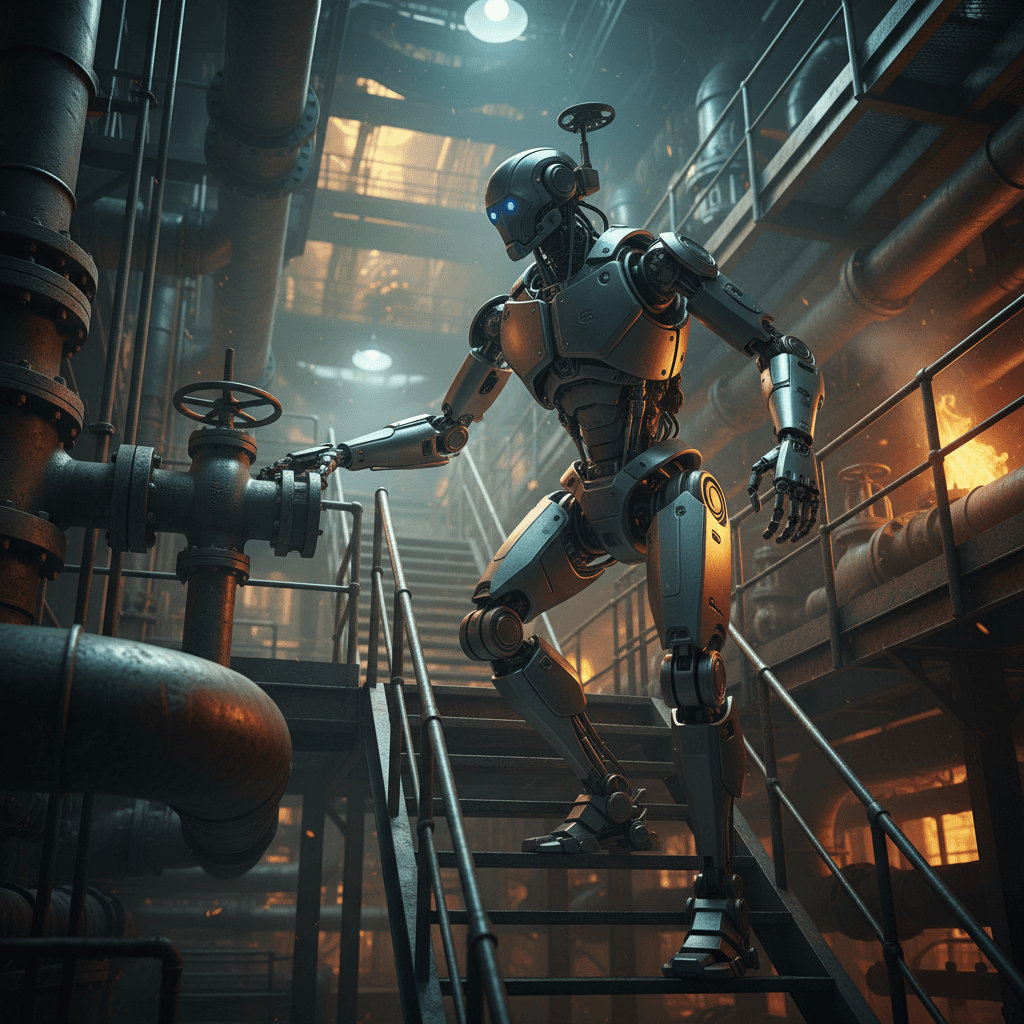
A strategic alliance between ADLINK Technology and Under Control Robotics, the developer of the Noble Machines startup, is set to redefine the boundaries of industrial automation through the deployment of general-purpose robots designed specifically for hazardous environments.[1][2] This partnership integrates high-performance edge artificial intelligence platforms with advanced autonomy software to create a new class of bipedal and bi-manual machines.[3][2] By merging ADLINK’s ruggedized hardware with Noble Machines’ sophisticated whole-body control systems, the two firms aim to address critical labor shortages and safety risks in sectors where human presence is increasingly difficult to sustain.[1][2] The collaboration marks a significant shift in the robotics industry, moving away from single-task stationary arms toward mobile, human-like systems capable of navigating complex, unpredictable industrial landscapes.
The technical foundation of this partnership rests on the integration of ADLINK’s DLAP series edge AI platforms, which are built upon the NVIDIA Jetson Thor architecture.[2][3][4] This hardware is specifically engineered to handle the intensive computational demands of real-time reasoning, multimodal sensor processing, and high-bandwidth data throughput required for autonomous motion. To ensure reliability in the field, these systems are designed to meet rigorous industrial standards, including IEC 60068 certifications for shock and vibration resistance.[4][3] They are capable of operating across a wide temperature range and are equipped with specialized interfaces, such as up to eight GMSL camera connections and 5G connectivity, providing the "nervous system" necessary for a robot to sense and react to its surroundings instantly. This ruggedized approach is essential for deployment in the dust-choked tunnels of mining operations or the high-vibration environments of heavy construction sites.[3]
Complementing this robust hardware is Noble Machines’ proprietary autonomy stack and AI-driven whole-body control software.[1][3] Unlike traditional robots that follow rigid, pre-programmed paths, these new general-purpose robots utilize a unified onboard intelligence to manage perception, reasoning, and coordinated physical action. The software allows the machines to adapt to shifting loads, uneven terrain, and external disturbances in real time. One of the most significant breakthroughs of this integrated stack is its ability to learn new industrial skills through demonstration, language-based instructions, and gestures, rather than through months of manual coding. This accelerated training pipeline enables the robots to acquire complex operational tasks in just a few hours, drastically reducing the time-to-value for industrial clients who need to deploy solutions quickly to maintain productivity.
The strategic choice of a humanoid form factor—incorporating two legs and two arms—is a calculated move to ensure these robots can integrate seamlessly into existing industrial infrastructure. Most modern factories, refineries, and power plants were designed around the human body, featuring stairs, narrow catwalks, and manual valves that are difficult for traditional wheeled or tracked robots to navigate. By mirroring the human silhouette, Noble Machines’ units can operate in these environments without requiring companies to undertake expensive retooling or facility redesigns.[2] These robots are capable of handling heavy payloads, with a lifting capacity of up to 50 pounds, allowing them to take over physically demanding tasks such as material handling, sorting, and hazardous substance inspections that have historically led to high rates of worker injury and turnover.
The economic implications of this partnership are substantial, particularly for high-value industries like mining, petrochemicals, energy, and semiconductor manufacturing. These sectors are currently grappling with a dual crisis: a shrinking pool of skilled labor willing to work in dangerous conditions and increasingly stringent safety regulations that drive up operational costs. The deployment of smart robots into these "dull, dirty, and dangerous" roles allows companies to move human workers into safer, supervisory positions while maintaining 24/7 operational capacity. The involvement of industry leaders such as Schaeffler and Solomon further validates the practical utility of this technology, as these partners help bridge the gap between theoretical AI development and real-world factory floor requirements.[5]
From a broader industry perspective, the alliance between ADLINK and Noble Machines represents the accelerating trend of "Physical AI," where the digital intelligence of large-scale models is finally manifesting in capable, durable mechanical bodies. The leadership team at Noble Machines, which includes veterans from SpaceX, NASA, Apple, and Caltech, brings a philosophy rooted in high-stakes engineering where failure is not an option.[5] Their focus on validating AI performance in real-world operational environments before scaling ensures that these systems are not merely experimental prototypes but production-ready tools. As edge computing continues to decentralize intelligence away from the cloud, the ability for robots to process data locally and act autonomously in disconnected environments like remote oil rigs or deep underground mines becomes a critical competitive advantage.
The market for such advanced robotics is poised for explosive growth, with industry analysts projecting that the global humanoid and general-purpose robot sector could reach tens of billions of dollars over the next decade.[6][7] This growth is driven by the realization that automation must evolve beyond the assembly line to stay relevant in a more complex global economy. By providing a scalable computing architecture that can be deployed across various hardware form factors, ADLINK and Noble Machines are setting a new standard for industrial resilience. Their joint development agreement ensures that as AI models become more powerful, the hardware supporting them remains capable of translating that digital power into safe, effective physical labor.
Ultimately, the success of this partnership will be measured by its ability to transform high-risk industrial workflows into safe, automated processes. As these smart robots begin to populate construction sites and engineering plants, the focus of the AI industry is shifting from purely digital assistants to machines that can manipulate the physical world with precision and reliability. The integration of high-performance edge AI with adaptive motion control marks the beginning of an era where human safety is no longer compromised by industrial necessity. By removing people from the most hazardous environments and replacing them with intelligent, ruggedized machines, ADLINK and Noble Machines are not just advancing technology; they are redefining the future of industrial work itself.