
Williams’s Career Lays Foundation for AI-Driven Deep Space Exploration
The astronaut legend’s final mission unexpectedly became the ultimate stress test for next-generation space AI and autonomy.
January 21, 2026
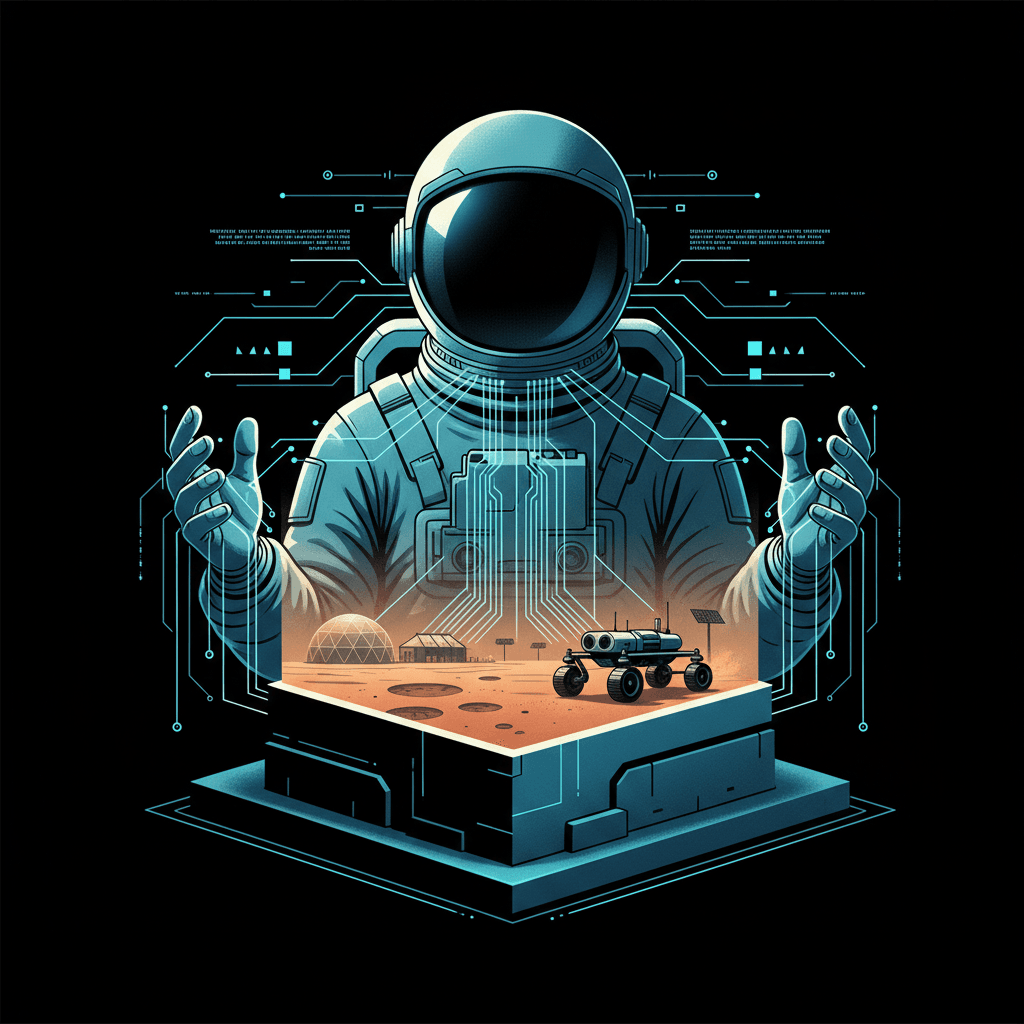
Sunita Williams, one of the most accomplished American astronauts in history, has concluded her extraordinary 27-year career with NASA, a tenure marked by record-breaking time outside a spacecraft and leadership during a pivotal era of commercial spaceflight. Her retirement, effective from December 27, 2025, follows an unexpected nine-month mission that became a crucial, real-world stress test for the future of autonomous systems and human-machine collaboration in space. Across three missions to the International Space Station (ISS), Williams logged an impressive 608 days in orbit, securing the second-most cumulative time in space for a NASA astronaut, surpassed only by Peggy Whitson.
Williams’s career is indelibly stamped with achievements of human endurance and technical prowess that will serve as a foundational legacy for the next generation of deep-space exploration. A U.S. Navy Captain and aviator with over 3,000 flight hours, her transition to the astronaut corps in 1998 brought a pilot’s discipline to the complex world of orbital mechanics and extravehicular activity (EVA)[1]. During her first mission, Expedition 14/15, she made international headlines by becoming the first person to run a marathon in space, completing the Boston Marathon on the ISS treadmill, a feat that underscored the importance of exercise for long-duration crew health[2]. Her physical achievements also include a space triathlon during her second mission, Expedition 32/33, where she served as the ISS commander[3]. Even more significant are her spacewalk records; with nine EVAs totaling 62 hours and six minutes, she holds the record for the most cumulative spacewalk time by a woman and ranks fourth on the all-time list among all astronauts[4][5]. These hours spent outside the safety of the station, often performing critical repairs and installations like the replacement of power systems components, directly informed the protocols for human-led maintenance that autonomous robots are now being designed to emulate.
The ultimate phase of her career, however, provided the most profound implications for the rapidly evolving artificial intelligence and robotics industries. Williams was a part of NASA's Commercial Crew Program (CCP) and flew on the inaugural crewed flight of Boeing’s Starliner spacecraft[6]. What was intended to be a short eight-day test flight in June 2024 morphed into a 286-day odyssey aboard the ISS due to technical glitches in the Starliner’s propulsion system, which necessitated a return via a SpaceX Crew Dragon capsule[7][8]. This extended, high-stakes contingency underscored the shift toward autonomous systems and the need for new standards of human-machine teaming. Williams and her fellow crewmember were forced to rely heavily on the onboard, AI-driven life support and diagnostic systems while working with Mission Control to troubleshoot the complex issues from orbit.
This reliance on advanced systems places Williams's final mission at the confluence of human ingenuity and AI development. Her experience highlights the critical data loop where human performance in unpredictable environments provides invaluable training data for machine learning models. Williams's prior involvement in the Robotics branch, where she worked on the ISS Robotic Arm and the Special Purpose Dexterous Manipulator, further cements her role in the foundation of space robotics[9][10]. Astronauts like Williams, who must interface with and occasionally override automated controls, offer the precise feedback required to develop "explainable AI" (XAI)[11]. This ensures that as mission-critical systems become more autonomous—managing life support, navigation, and fault diagnostics for missions to the Moon and Mars—the crew understands and trusts the rationale behind the AI's decisions, a vital consideration when a communication delay with Earth can be up to 44 minutes[12][11]. The need for AI systems to operate autonomously for long periods, especially in the absence of a crew for deep-space habitats, makes the high-pressure, long-duration experience of Williams a gold standard for validating the resilience and robustness of these technologies[11].
Williams's career, therefore, serves as an operational benchmark for the AI industry's push into space. Her successful navigation of a technical crisis aboard a next-generation commercial vehicle demonstrates both the promise of private space enterprise and the absolute necessity of fault-tolerant, autonomous systems. As NASA pivots toward the Artemis missions and the establishment of a sustained presence on the Moon, the lessons derived from her three missions will directly inform the integration of AI-enabled technologies into next-generation spacecraft and planetary rovers[13]. Her contributions have laid a foundation for the future, helping to define the operational capabilities and limitations of human-robot collaboration. The agency's praise upon her retirement—that her work advancing science and technology has laid the foundation for future missions to the Moon and Mars—is a testament to a career that was not just about breaking human records, but about pioneering the symbiotic relationship between astronaut and machine that will enable humanity's next giant leaps[7].
Sources
[1]
[5]
[9]
[10]
[11]
[12]
[13]