
Trump Demands Federal AI Rules, Threatens States' Broadband Funds
Trump's AI order forces states to choose between local protections and vital broadband funds, sparking a constitutional clash.
December 15, 2025
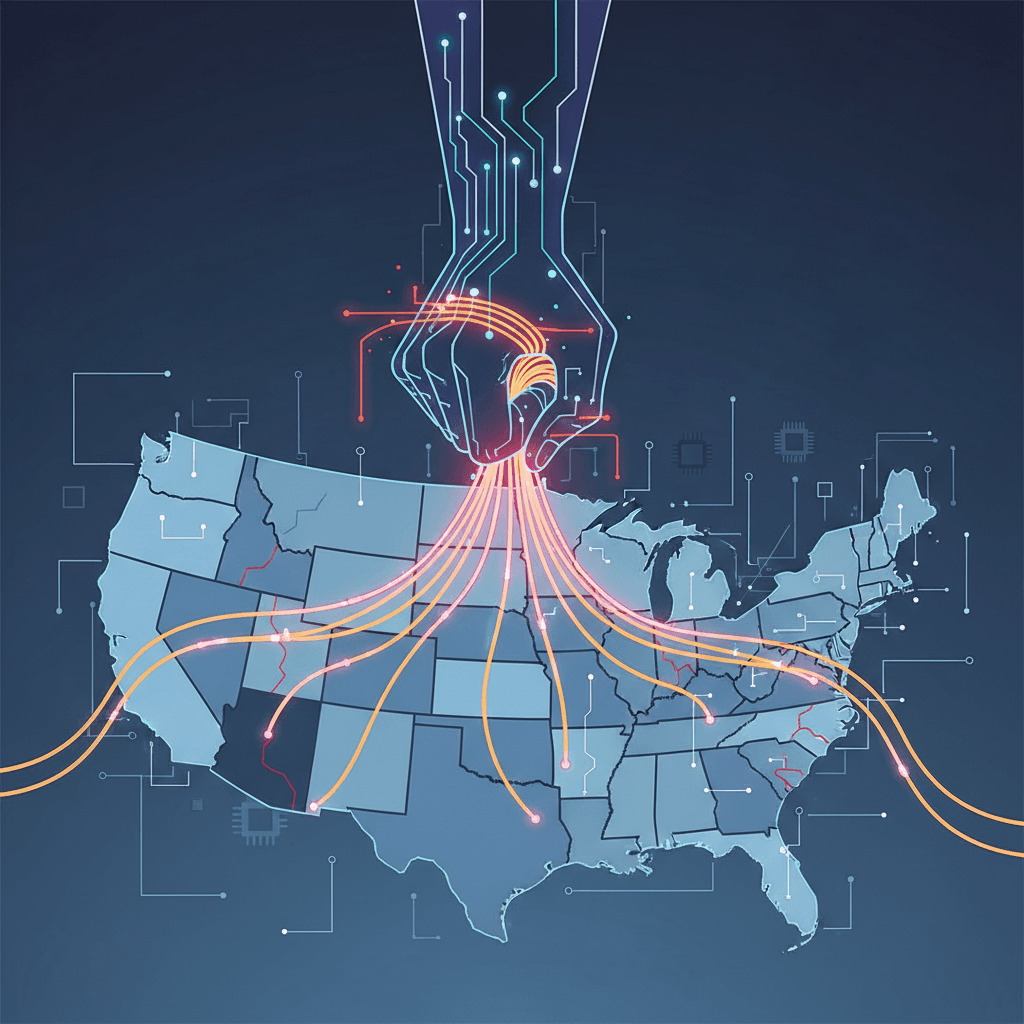
A sweeping executive order signed by former President Donald Trump aims to centralize control over artificial intelligence regulation, threatening to withhold billions in federal broadband funding from states that enact their own AI laws.[1][2][3] This aggressive move to establish a single national framework for AI is intended to foster innovation by preventing a complex patchwork of state-by-state rules.[4][5][6] However, the strategy rests on precarious legal ground and carries significant political risks, potentially slowing down critical infrastructure projects in the very rural and underserved communities that form a key part of Trump's voter base.[7][8] The policy underscores a fundamental tension between the administration's goal of U.S. dominance in AI and the traditional rights of states to regulate new technologies to protect their citizens.[4][9]
At the heart of the administration's strategy is the "Ensuring a National Policy Framework for Artificial Intelligence" executive order, which asserts broad federal authority over state-level AI legislation.[4] The order directs the Commerce Department to identify what it deems "onerous" state AI laws and proposes making states with such laws ineligible for funds from the $42.5 billion Broadband Equity, Access, and Deployment (BEAD) program.[1][10][7][11] The rationale presented is that a fragmented regulatory landscape could stifle the growth of AI applications that depend on high-speed networks, thereby undermining the purpose of the BEAD funding.[10][11] The order also establishes a Department of Justice "AI Litigation Task Force" to challenge state laws deemed unconstitutional or otherwise unlawful.[1][2] This push for federal preemption is a victory for many in the tech industry who have lobbied against a 50-state compliance puzzle, arguing it would create burdensome bureaucracy and hinder competition, particularly for startups.[2][12] The administration's stance is that a "minimally burdensome" national framework is essential for the U.S. to maintain its global lead in AI, especially in its race against China.[4][3]
The plan to leverage broadband funding as a tool for policy compliance introduces significant risks for many of Trump's own supporters. The BEAD program is specifically designed to expand high-speed internet access to rural and underserved areas, which often lag behind urban centers in digital connectivity.[8][13] These regions, which include many Republican-leaning communities, are counting on these federal dollars for economic development, remote work opportunities, telehealth services, and distance learning.[8][13] Withholding these funds could delay or halt projects aimed at closing the digital divide, disproportionately affecting the very voters the administration relies on.[7][8] Republican governors and state lawmakers have also voiced opposition to federal overreach, creating potential political blowback from within the party.[7][14] The strategy creates a difficult choice for states: either forgo regulations tailored to their specific concerns about AI harms like algorithmic bias and consumer protection, or risk losing crucial funding for essential infrastructure.[15][16]
The legality of the executive order is highly questionable and is expected to face immediate and numerous legal challenges.[4][1] Critics argue that the president cannot preempt state laws via executive order, as that power rests with Congress.[12] Previous legislative attempts to impose a moratorium on state AI laws have failed in Congress, including a Senate amendment that was rejected 99-1, indicating a lack of bipartisan support for such a sweeping preemption.[10][2][15] Legal experts suggest that tying unrelated policy objectives—AI regulation—to federal funding for broadband could be challenged under the Spending Clause of the Constitution as unduly coercive.[17] States are likely to argue that the administration is unconstitutionally changing the conditions of federal grants after funds have already been appropriated and budgeted for specific projects, from digital literacy programs to telehealth initiatives.[9][15][16] Colorado's attorney general has already signaled an intent to challenge the move in court, calling it an "unlawful and unconstitutional" attempt to coerce policy change through intimidation.[18]
The debate over federal preemption versus states' rights in AI regulation reflects a deeper conflict over how to best foster innovation while mitigating potential harms. Proponents of a unified federal approach argue that consistency is crucial for economic competitiveness and that a patchwork of state laws creates uncertainty and high compliance costs that disproportionately affect smaller businesses.[5][6][19] They contend that AI is inherently an issue of interstate commerce, justifying federal oversight.[5][19] On the other hand, a growing number of states have been actively legislating on AI, addressing specific local concerns from the use of AI in hiring decisions to deepfakes in elections and consumer data privacy.[20][21][22][23] Civil liberties groups and consumer advocates warn that a federal rollback of these protections, without a robust federal alternative, would leave citizens vulnerable and essentially let technology companies "run wild."[3][16] This preemption effort, they argue, does little to address the documented harms of AI systems and instead prioritizes corporate interests over public safety.[24][16] The outcome of this high-stakes confrontation will not only shape the future of AI governance in the United States but will also have lasting implications for the balance of power between the federal government and the states.
Sources
[1]
[3]
[4]
[5]
[11]
[12]
[13]
[15]
[16]
[17]
[19]
[20]
[21]
[22]
[23]
[24]