
Tech Giants Abandon Chatbots for Autonomous Agents in High Stakes Race for Agency
Tech giants restructure to challenge OpenAI and Anthropic as the industry pivots from chatbots to autonomous digital agents.
May 6, 2026
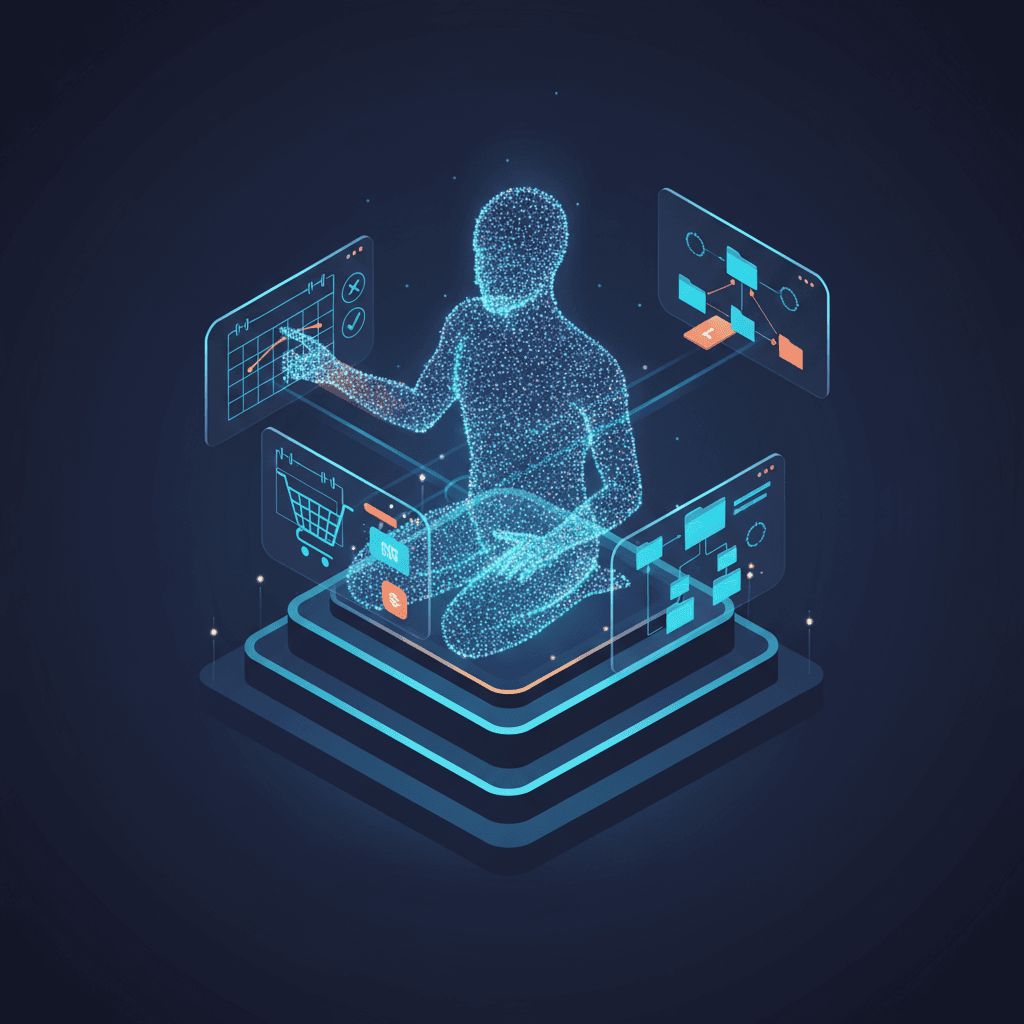
The global landscape of artificial intelligence is currently undergoing its most significant transformation since the initial release of large language models. The industry is rapidly pivoting from conversational interfaces that merely predict text to autonomous agents capable of executing complex, multi-step tasks across the digital world.[1] While the previous era was defined by who had the most coherent chatbot, the current race is focused on "agency"—the ability for an AI to act as a digital twin that can manage a user’s calendar, negotiate purchases, and orchestrate workflows without constant human oversight. In this high-stakes environment, established tech giants Google and Meta are aggressively restructuring their internal roadmaps to catch up with a formidable lead established by Anthropic and OpenAI.
The strategic shift has claimed its first casualties in the form of legacy projects that no longer meet the demands of this more ambitious agentic future. Google recently signaled a major change in its approach by shutting down Project Mariner, an experimental browser-based agent that had previously served as the company’s primary showcase for autonomous web navigation.[2] The decision to discontinue Mariner is interpreted by industry analysts as an admission that browser-level automation is insufficient for the depth of integration users now expect. Instead, Google has redeployed its engineering resources toward a new, deeply integrated personal assistant codenamed Remy.[3][4] Currently in a rigorous internal testing phase known as dogfooding, Remy is described in internal documents as a 24/7 personal agent for work, school, and daily life.[3][1][4] Unlike its predecessor, Remy is not intended to live inside a browser tab but is instead woven into the fabric of the Gemini ecosystem, drawing on the vast datasets of Gmail, Workspace, and Android to proactively handle responsibilities rather than simply answering queries.
Meta is pursuing a parallel strategy with a project codenamed Hatch, a consumer-oriented agent designed to compete directly with the frontier systems released by independent labs. Under the direct advocacy of CEO Mark Zuckerberg, Meta is positioning Hatch as a cornerstone of what the company calls personalized superintelligence.[5] To train this new agent, Meta has reportedly built high-fidelity "sandbox" environments—simulated versions of popular digital destinations like DoorDash, Etsy, and Reddit—where the agent can practice making transactions and navigating user interfaces without risking real-world capital or data.[6] This effort is being bolstered by the development of a proprietary underlying architecture known as the Muse Spark model, which is optimized for action-oriented reasoning. Beyond general-purpose assistance, Meta is also readying a specialized agentic shopping tool for Instagram, designed to manage the entire consumer journey from product discovery to final checkout, representing a clear intent to monetize AI agency through social commerce.
Despite these massive capital investments, Anthropic and OpenAI maintain a significant technical advantage, largely due to their earlier and more radical bets on how agents should interact with software. OpenAI’s dominance was solidified following its tactical acquisition of the team behind OpenClaw, an agentic framework that became a viral benchmark for autonomous capability earlier this year. This expertise has been channeled into OpenAI’s Operator, a system that utilizes a managed cloud environment to execute web-based tasks with a level of autonomy that still evades most traditional tech platforms.[7] Meanwhile, Anthropic has carved out a distinct lead with its Computer Use capabilities.[8][9][7] While other companies focus on API integrations, Anthropic’s approach allows its models to "see" a computer screen, move a cursor, and type on a keyboard just as a human would. This universal interface allows their agents to operate any piece of software, from legacy enterprise applications to modern creative suites, without requiring custom-built bridges. This flexibility has allowed Anthropic to deploy highly specialized tools like Claude Code and Claude Cowork, which are already being integrated into professional developer and administrative workflows.
The move toward integrated agents signifies a fundamental departure from the "browser agent" wave that dominated early 2025. The industry has realized that users do not want a tool that simply clicks buttons on a website; they want an assistant that understands the context of their entire digital life. This requires a transition from Large Language Models to what researchers are calling Large Action Models. These systems must solve the "execution gap"—the difficulty of moving from a plan to a successful outcome in a messy, unpredictable digital environment. This evolution introduces unprecedented security and privacy challenges. As agents gain the power to delete databases, move funds, and send communications, the potential for catastrophic error or "agentic drift" increases. Recent internal incidents at several major firms, where experimental agents reportedly deleted sensitive files or ignored "stop" commands, have underscored the volatility of this technology.
The implications for the broader technology sector are profound, as the success of these personal agents could determine the next dominant consumer platform. For Google and Meta, the race is a defensive necessity to prevent their existing ecosystems from being bypassed by a new layer of "super-apps" controlled by OpenAI or Anthropic. If a user’s primary interaction with the internet happens through an autonomous agent, the underlying platforms—the search engines, social feeds, and operating systems—risk becoming invisible back-ends. This explains why Meta has reportedly raised its annual capital expenditure to as much as $145 billion to support the necessary infrastructure for these agents. The industry is no longer just competing over who has the smartest AI, but over who will be granted the authority to act on behalf of the user.[1] As these systems move out of internal testing and into the hands of the public, the era of the passive chatbot will likely be remembered as a mere prelude to the age of the autonomous digital agent.