
Taiwan Invests $500 Billion to Reshore AI Chip Production, Securing US Tech Future
Taiwan commits $250 billion to reshore advanced chip manufacturing, fundamentally securing the US artificial intelligence supply chain.
January 16, 2026
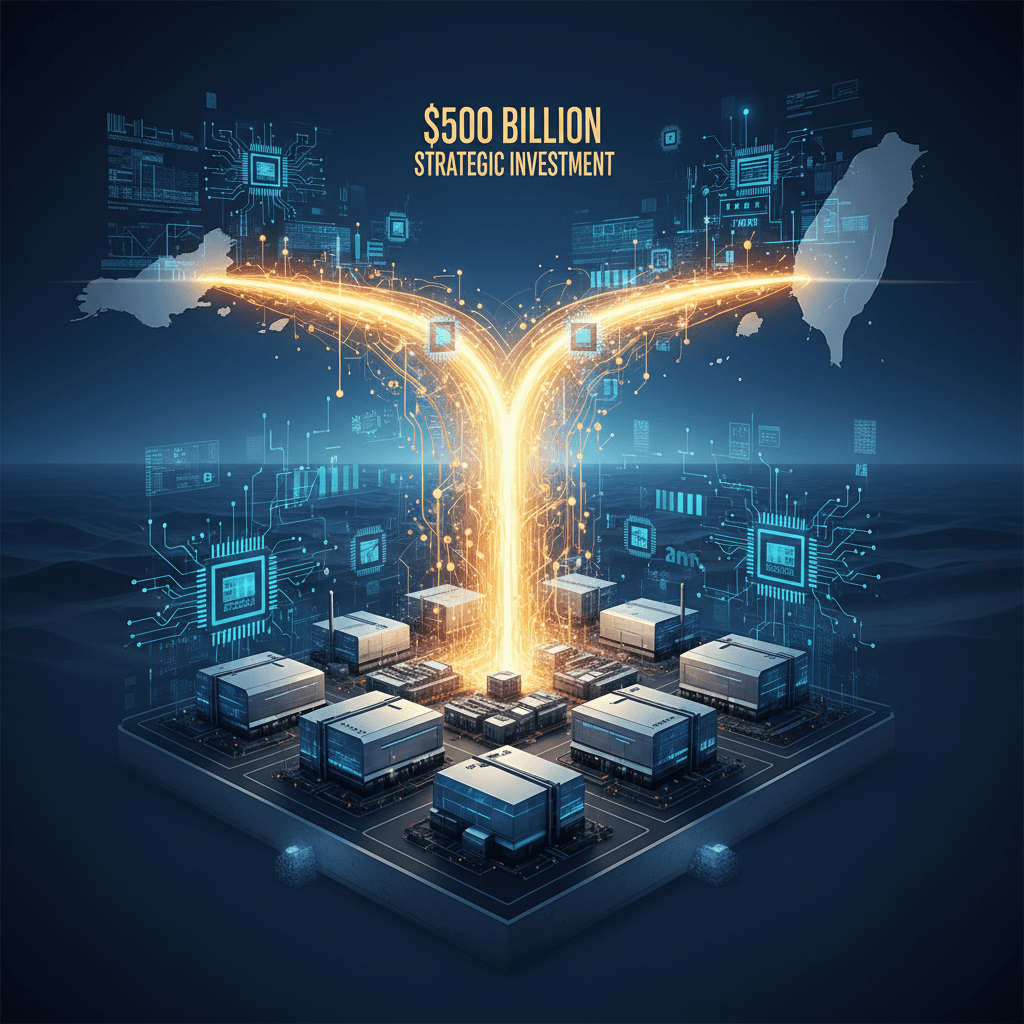
A monumental trade agreement between the United States and Taiwan has ushered in a new era of technological partnership, centered on a colossal $250 billion commitment from Taiwanese firms to invest in US semiconductor, artificial intelligence, and energy production capacity.[1][2][3] This massive influx of capital is the reciprocal centerpiece of a deal where Washington has agreed to cut reciprocal tariffs on Taiwanese goods from a planned rate of 20 percent down to 15 percent, aligning Taiwan with major US trading partners in the Asia-Pacific region, such as Japan and South Korea.[1][4][5][6] Beyond the direct investment, the Taiwanese government is supporting this industrial migration with an additional $250 billion in credit guarantees, effectively creating a combined $500 billion financing framework to accelerate the creation of a comprehensive chip supply chain on US soil.[4][3][7][6] The deal represents a fundamental restructuring of the global tech economy, moving critical advanced manufacturing closer to American demand centers and directly addressing geopolitical concentration risk.[2][8]
This strategic economic partnership is fundamentally a geopolitical play designed to reinforce US technological security and independence.[8] For years, the United States has sought to mitigate its reliance on East Asia, particularly Taiwan, for the fabrication of advanced microchips—a vulnerability that has become a critical national security concern.[8] The US Department of Commerce has explicitly stated that the agreement will establish an "economic partnership" intended to drive a "massive reshoring of America's semiconductor sector."[1][5] The Commerce Secretary has outlined a broader objective to bring as much as 40 percent of Taiwan’s entire semiconductor supply chain and production to the US, warning that firms that choose not to build domestic facilities could face crushing tariffs as high as 100 percent.[4][8][9] This structure links tariff benefits directly to US production, offering favorable treatment, including possible exemptions, to semiconductor producers that invest locally.[1][2][9]
The core beneficiaries of this shift are US-based companies driving the artificial intelligence boom, which require the most advanced chips for high-performance computing.[1][8][3] Taiwan Semiconductor Manufacturing Company, the world’s largest contract chipmaker and a critical supplier to AI leaders like Nvidia and Apple, is expected to spearhead the investment.[1][5][6] TSMC’s expansion is already extensive, with the company committing an additional $100 billion to its US operations, a figure that is expected to grow, potentially doubling the firm's initial plans.[8][10][7][9] This massive investment is already manifesting in the form of a "gigafab cluster" in Arizona, where TSMC has acquired hundreds of additional acres to build multiple new semiconductor facilities, including advanced packaging plants and an R&D center.[8][10][7][9] The goal is to domestically produce chips using cutting-edge nodes like 4-nanometre and 3-nanometre technology, which are essential for manufacturing the specialized AI accelerators, such as Nvidia’s Blackwell GPUs, that power the world’s largest data centers and machine learning models.[8][10]
The shift in manufacturing capacity provides several critical advantages for the US AI sector.[8] First and foremost is supply chain resilience, replacing a high-risk geopolitical environment with a domestically secured source of advanced chips.[11] Second, the proximity of fabrication to US design houses, such as those operated by Nvidia, AMD, and Qualcomm, promises to shorten innovation cycles, accelerate the process of customizing chips for next-generation AI tasks, and reduce the logistics risks that have plagued the industry during recent global disruptions.[10][11] The predictability offered by this deal, which removes a major policy overhang of tariff uncertainty, is already being welcomed by investors, with shares in companies tied to chips and AI rallying on the news.[11] The agreement also includes a sophisticated quota system, which allows investing companies to temporarily import up to 2.5 times their planned US production capacity tariff-free during construction, ensuring a bridge supply and minimizing the risk of immediate supply chain disruptions as new factories are being built.[12][8][13][9] Once the US facilities are operational, the tariff-free import quota drops to 1.5 times the actual domestic production, directly incentivizing increased stateside output.[12][9]
Beyond semiconductors, the $250 billion pledge explicitly includes investment in AI applications and energy, signaling a holistic approach to building a resilient, advanced technology ecosystem.[1][2][3] However, the implementation of this massive reshoring initiative is not without significant challenges. Building these cutting-edge fabs requires immense resources, including vast amounts of water and reliable, high-capacity electrical power, posing infrastructure and environmental hurdles for regions like Arizona. Furthermore, the US faces a persistent shortage of the highly specialized engineers, technicians, and skilled labor required to operate and maintain advanced semiconductor manufacturing facilities, necessitating parallel investment in workforce development and training programs. Despite these logistical complexities, the economic partnership fundamentally repositions the United States as a leading manufacturing hub for the technologies that will define the future of artificial intelligence, securing a domestic pipeline of the world's most critical components and shifting the technological balance of power.[8]