
Slackbot Transforms into AI Agent Orchestrating All Enterprise Workflows
Slackbot transforms into a proactive personal AI colleague that eliminates context-switching across all enterprise knowledge.
January 14, 2026
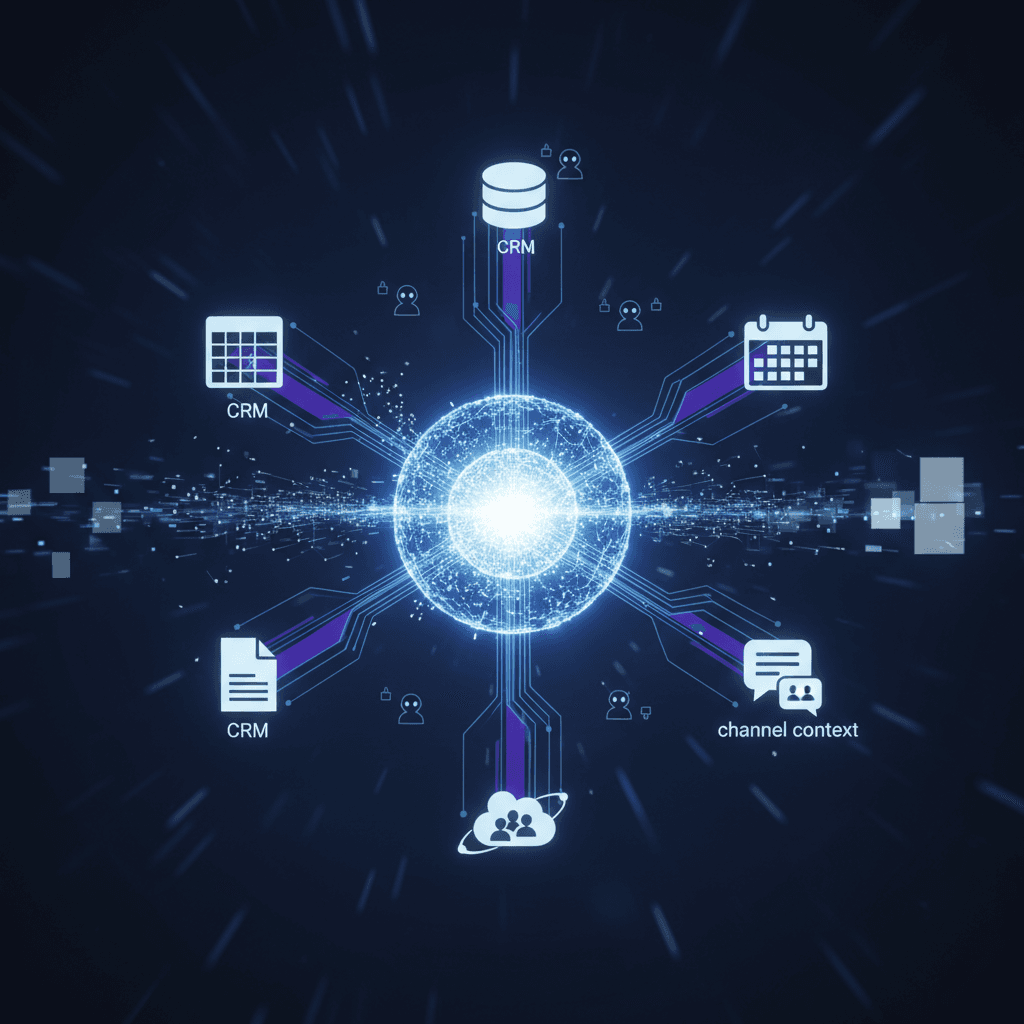
Salesforce has announced the general availability of a completely rebuilt Slackbot, fundamentally transforming the platform’s familiar utility into a sophisticated personal AI agent designed to operate at the core of enterprise workflow. This upgraded, generative AI-powered assistant moves far beyond its previous functionality of simple reminders and keyword-based responses to become a proactive, context-aware digital colleague. The rollout is immediately available to customers on Business+ and Enterprise+ plans, positioning Slack as an "agentic operating system" for work and escalating the competition in the rapidly evolving market for enterprise AI tools. The core value proposition of the new Slackbot is its ability to eliminate the high friction associated with context-switching, acting as a single point of entry to a user's entire organizational knowledge base and connected systems.
The agent's capabilities are rooted in its unparalleled access to the user’s work context, which includes direct messages, public and private channels the user is a member of, files, and integrated third-party systems like Google Drive, Microsoft OneDrive, and, crucially, Salesforce’s own CRM platform. By leveraging this rich, real-time data, Slackbot can perform complex, multi-step tasks using natural language prompts. For instance, a user can ask a simple question like, “Catch me up on Project Phoenix,” and the AI agent will synthesize information from scattered threads, documents, and even customer relationship management data to provide a comprehensive, context-rich summary, respecting all existing enterprise permission controls and data access boundaries in the process. This shift from passive summarization, which was introduced in earlier Slack AI features, to active automation and task completion is the central engineering breakthrough. Specific use cases demonstrated by the company include drafting meeting notes from a channel discussion, automatically generating structured Slack Canvas documents for project planning, and intelligently scheduling meetings by checking the calendars of all key stakeholders mentioned in a request, rather than forcing the user to manually cross-reference availability. One early customer reported that the AI agent saves them “at bare minimum, 90 minutes a day,” citing the speed and quality of its automated content creation, suggesting a significant return on investment for businesses.
The strategic importance of this release extends to Salesforce’s broader vision for the "Agentic Enterprise," as it positions Slackbot to serve as an orchestration layer for a growing fleet of specialized AI assistants. With enterprises increasingly deploying different AI tools for specific functions—such as sales operations, HR queries, or IT support—employees face a new problem termed "agent sprawl," where they must remember which tool handles which task and navigate multiple interfaces. Salesforce envisions Slackbot as the solution: a "super agent" that users interact with in natural language, which then directly handles the request or seamlessly routes it to the correct, specialized AI agent—including Salesforce's own Agentforce suite, formerly known as Einstein Copilot. This orchestration capability allows employees to ask general work-related questions in their flow of work within Slack, and the system intelligently determines the appropriate backend tool to retrieve data or perform the necessary action, whether that is pulling CRM data for a customer briefing or generating a sales forecast. This design leverages the existing collaboration platform as the default conversational interface for all corporate data and AI interaction, thereby making the adoption of more specialized AI agents more intuitive and less disruptive to the employee workflow.
The move significantly sharpens the competitive dynamics in the enterprise collaboration and productivity software market. The introduction of a deeply integrated, generally available personal AI agent on a massive platform like Slack places direct pressure on rivals such as Microsoft's Copilot for Microsoft 365, Google's Gemini within Workspace, and Zoom's AI Companion. All major players are racing to integrate generative AI capabilities that automate multi-step workflows and synthesize cross-application data. However, Slackbot’s strength lies in its native integration within a platform built specifically around conversational work, giving it a decade’s worth of conversational context to draw from—a critical differentiator in the quality and relevance of its personalized responses. Unlike earlier AI services that required separate add-on licenses, Salesforce has chosen to include the advanced Slackbot capabilities at no additional cost for Business+ and Enterprise+ customers, a strategic pricing decision aimed at accelerating mass adoption and cementing Slack’s role as the central hub for the digital workplace. This decision removes a significant barrier to entry and forces competitors to evaluate their own cost and distribution models for comparable AI features.
Ultimately, the general availability of Slackbot as a personal AI agent represents a pivotal moment in the evolution of workplace technology, signifying the full-scale transition from static, rule-based chatbots to dynamic, context-aware AI assistants capable of agency. By leveraging its vast corpus of internal communication data, connections to enterprise systems, and its role as the dominant interface for conversational work, Salesforce is making a compelling case that the future of productivity lies in an AI agent that is not just a tool, but a deeply personalized, out-of-the-box colleague that understands the "how" of organizational work. This move sets a new benchmark for what is expected from enterprise collaboration platforms and is poised to fundamentally reshape day-to-day work by minimizing cognitive load and maximizing the time employees can dedicate to high-value, strategic tasks.