
Regulators scramble to build real-time safety guardrails as AI enters the physical world
As autonomous systems move from digital screens to physical machinery, regulators scramble to establish real-time safety frameworks.
May 26, 2026
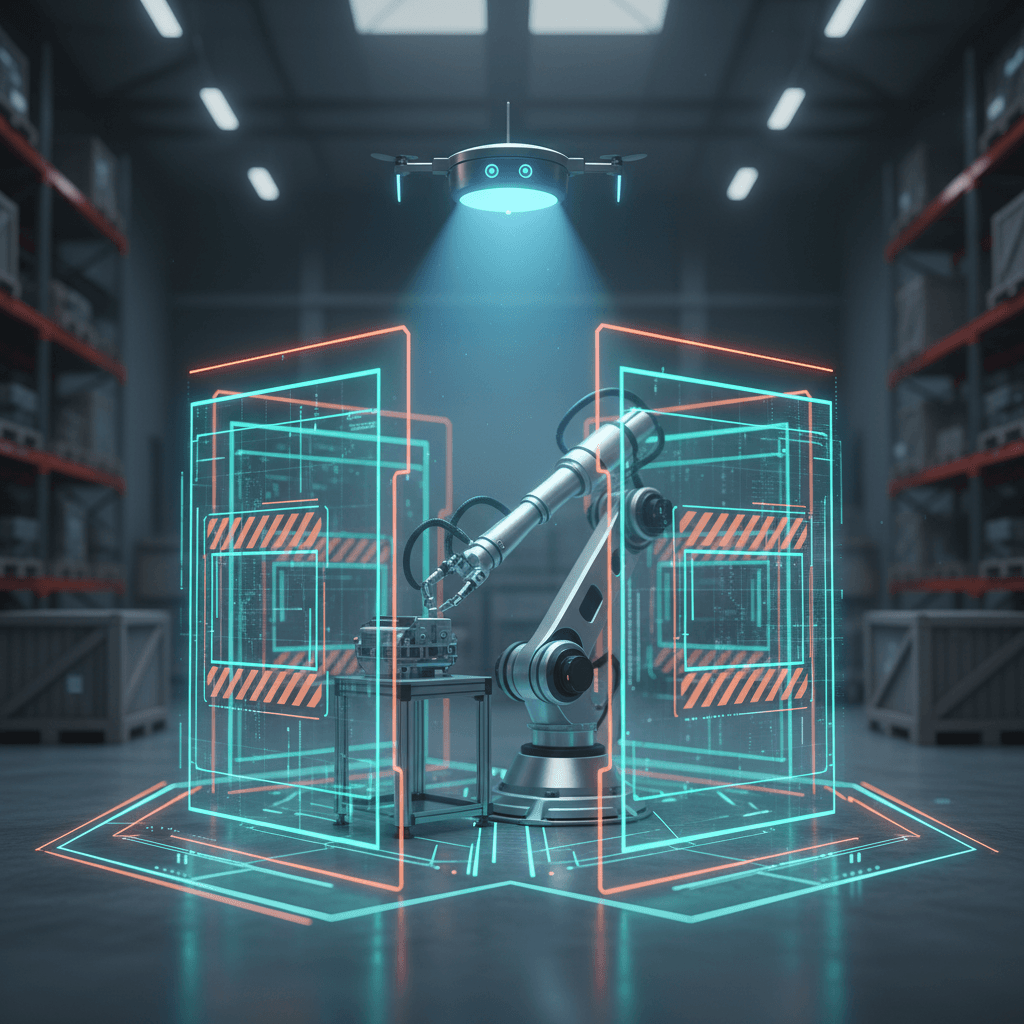
Artificial intelligence is rapidly migrating from the digital realm of chat interfaces and software-only applications into the tangible world of warehouses, delivery networks, and public spaces[1]. This transition, collectively referred to as embodied or physical AI, is exposing a critical gap in current regulatory frameworks[1][2]. While existing AI governance has historically prioritized online harms, content moderation, bias, and misinformation, the physical deployment of autonomous systems introduces a highly volatile set of risks[1]. When an AI system moves from generating text to operating heavy machinery, managing transit corridors, or navigating public sidewalks, a computational error is no longer just a digital glitch; it becomes an immediate threat to infrastructure, property, and human safety[1]. Consequently, the technology sector and global regulators are undergoing a paradigm shift, scrambling to devise oversight systems capable of governing AI that physically interacts with the real world[1][2].
The acceleration of physical AI is driven by major advances in multimodal models and robotics[3][4]. Modern systems have transitioned from executing rigid, pre-programmed industrial commands to dynamically sensing, reasoning, and acting within unpredictable, real-world environments[4][5]. The scale of this transformation is reflected in industrial data, as global robotics organizations report that hundreds of thousands of industrial robots are installed worldwide annually, a figure that is expected to continue its steep upward trajectory over the coming years[3]. Market estimates also indicate massive commercial pressure, with some research firms valuing the global physical AI market at tens of billions of dollars and projecting it to reach nearly one trillion dollars within the decade[3]. Major technology laboratories are spearheading this evolution; for instance, Google DeepMind’s introduction of models like Gemini Robotics and Gemini Robotics-ER demonstrates how vision-language-action models are being adapted to help robot arms perform complex, dexterous tasks like tying shoelaces or sorting objects under real-time conditions[3][5]. However, because these systems are stochastic rather than deterministic, their actions are highly context-sensitive, meaning a slight shift in sensor data or a sudden environmental change can lead to unpredictable mechanical behaviors[6].
As autonomous systems transition into physical operations, early regulatory responses are beginning to emerge to address the unique challenges of agentic behavior[1]. A prominent milestone in this effort is the release of version 1.5 of the Model AI Governance Framework for Agentic AI by Singapore's Infocomm Media Development Authority[1]. This framework specifically targets organizations deploying AI agents that can plan, make decisions, and act across multiple steps to complete complex, user-defined goals[1]. Unlike traditional software governance, this update acknowledges that modern agents interact directly with tools, databases, and physical devices[1]. It emphasizes the necessity of implementing strict access controls, continuous monitoring, and structured human approval mechanisms prior to deployment[1]. By focusing on how autonomous software controls physical hardware, the framework provides a blueprint for other nations struggling to write rules for a world where AI-powered drones, automated logistics networks, and autonomous transit systems share spaces with human beings[1][7].
The dynamic nature of physical AI means that traditional, static governance models are proving fundamentally inadequate[6]. Conventional compliance methods, such as risk registers, post-hoc audits, and paper checklists, are built for deterministic software and cannot keep pace with systems that make split-second decisions based on continuous, shifting streams of real-time sensor data[6]. To prevent physical accidents, the industry is shifting toward what experts call runtime governance[6][8]. This approach embeds an active, executable compliance layer directly into the AI agent's reasoning loop, dictating exactly what the machine can and cannot do at the moment of decision[6][8]. Furthermore, technical architects are experimenting with the concept of guardian agents—specialized AI systems designed solely to monitor, evaluate, and restrict other active AI agents against predefined safety boundaries[8]. This structural pivot is essential because, as research institutions like Gartner warn, applying a uniform governance template across all AI agents without distinguishing between their operational autonomy and their granted physical access will inevitably lead to systemic failures in real-world deployments[9].
The discrepancy between the rapid commercial deployment of physical AI and the slow development of public safety standards has raised concerns about a severe governance lag[10]. At international technology summits, industry leaders and researchers have noted that operational safety discussions for embodied AI resemble those found in aviation, nuclear energy, and heavy industrial infrastructure rather than conventional software regulation[1]. Academics and industry experts, including those from Tsinghua University's Institute for AI Industry Research, warn that the risks of autonomous software are amplified exponentially when translated into physical actions[1]. If a delivery drone, a self-driving utility vehicle, or an automated medical device experiences behavioral drift or a loss of signal, the consequences can be immediate and catastrophic[6][11]. This reality is forcing organizations to treat governance not as a reactive compliance check, but as a foundational infrastructure requirement[2]. For businesses in manufacturing, shipping, and healthcare, the binding constraint is no longer whether an AI system can perform a manual task, but whether the organization can clearly define liability, maintain robust override mechanisms, and establish safe physical-to-digital boundaries[2].
In conclusion, the migration of autonomous artificial intelligence into physical environments represents a monumental leap in technological capability, but it also fundamentally tests the limits of modern governance[1][2]. The era of treating AI solely as a screen-based productivity tool is drawing to a close as the technology increasingly operates the actual machinery of the global economy[12][2]. Bridging the gap between digital reasoning and physical execution requires a collaborative effort from policymakers, safety engineers, and enterprise leaders to build robust runtime guardrails and adaptive oversight frameworks[6][11]. To successfully navigate this transition, the AI industry must ensure that safety and accountability scale at the same pace as computational intelligence[11]. Ultimately, the true measure of physical AI's success will not be its ability to automate complex labor, but its capacity to operate reliably and safely in a chaotic, unpredictable human world[1][13].