
OpenAI consolidates core desktop tools into unified superapp to create an autonomous workspace
OpenAI consolidates ChatGPT, Codex, and Atlas into a unified superapp, transitioning toward autonomous agents for seamless professional productivity.
March 20, 2026
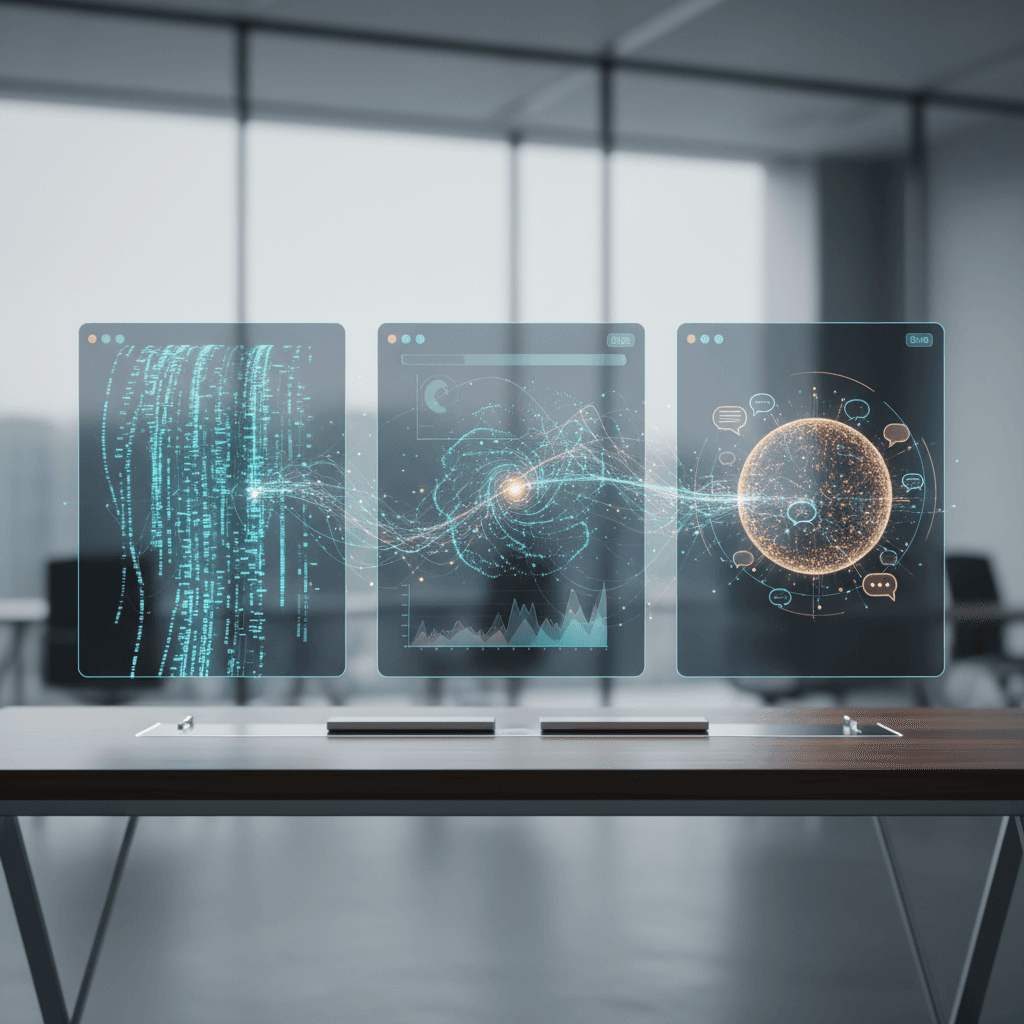
OpenAI is preparing a seismic shift in its product strategy by consolidating its core desktop offerings into a single, unified "superapp."[1][2][3][4][5][6][7][8] The plan involves merging the widely used ChatGPT interface with the Codex coding assistant and the Atlas AI-native browser, creating an integrated platform designed to handle complex, multi-step workflows without the friction of switching between separate applications.[9][2][1] This move represents a calculated retreat from a period of rapid product expansion that company leadership now admits left the organization overextended and its user experience fragmented.[2] By bringing these disparate tools under one roof, OpenAI aims to reclaim its position as the primary gateway for professional and creative productivity, moving beyond simple conversational interfaces toward a comprehensive system of autonomous agents.[5]
The strategic pivot comes after a year of relentless product launches that, while technologically impressive, created a disjointed ecosystem for many power users. Internal communications from top executives suggest that the company’s "product sprawl" became a liability, slowing development cycles and diluting the quality of individual tools.[2][10][3][9][4][7][5] Fidji Simo, OpenAI’s CEO of Applications, reportedly told staff in an internal meeting that fragmentation was hindering the company’s ability to meet its internal quality benchmarks.[2][4] Simo, who is spearheading the merger alongside President Greg Brockman, noted that the company had been spreading its resources across too many stacks and "side quests" at a time when competition was intensifying.[10][9] This consolidation is seen as a "doubling down" on proven successes rather than chasing new, experimental standalone features.[5]
Central to this new superapp is the integration of Atlas, the AI-first web browser OpenAI launched late last year. Built on the Chromium engine, Atlas was originally designed to bridge the gap between static AI chat and the live web, featuring a persistent sidebar and an "Agent Mode" that allows the AI to navigate websites and perform tasks like booking travel or extracting data from complex tables. By merging Atlas into the desktop superapp, OpenAI creates a closed-loop environment where the AI has a high-fidelity window into the user’s digital world. The resulting synergy would allow the assistant to remember context from a browser research session and immediately apply it to a coding project or a long-form document, effectively eliminating the need for manual copy-pasting and context switching.
The addition of Codex into the mix transforms the application from a research and writing tool into a proactive engine for technical development. Codex has evolved from a simple API for code completion into a sophisticated agentic system capable of navigating local file repositories, running terminal commands, and executing tests.[11] In the unified superapp, these capabilities will no longer be siloed in a separate developer environment.[2][1] Instead, they will be part of a broader "agentic" architecture where the AI can autonomously perform high-level tasks on a user’s computer, such as analyzing local datasets or writing and deploying software scripts.[8][10] This push toward agency—AI that acts rather than just talks—is the defining technical ambition of the project.
Industry analysts view this move as a direct response to the "wake-up call" provided by competitors, specifically Anthropic. Recent successes from rivals in the space of coding assistants and integrated productivity platforms have put pressure on OpenAI to simplify its offering for enterprise and professional users.[1] While OpenAI remains the most recognizable name in the industry, the fragmentation of its tools—ranging from the video generator Sora to various specialized GPTs—created an opening for competitors to offer more streamlined, "all-in-one" experiences. The superapp strategy is an attempt to close that gap and build a "sticky" ecosystem that becomes indispensable to the daily workflows of white-collar professionals.
This consolidation also signals a brewing conflict with OpenAI’s most significant partner, Microsoft.[1] For years, Microsoft has been integrating OpenAI’s models into its own Office suite and Windows operating system under the Copilot brand. By building its own unified desktop platform, OpenAI is essentially creating a competing productivity layer that could bypass Microsoft’s ecosystem entirely.[1] While the two companies remain deeply intertwined through massive infrastructure and licensing deals, the superapp move highlights OpenAI’s desire to own the primary user interface. If the superapp becomes the primary workspace for millions of developers and business users, it could disrupt the traditional dominance of the browser-plus-office-suite model that has defined computing for decades.
Beyond the technical integration, the move is also driven by broader corporate goals, including a renewed focus on the enterprise market and preparation for a potential initial public offering. Refining its product line into a single, high-quality professional tool allows OpenAI to demonstrate a clearer path to sustainable revenue through enterprise licensing and high-tier subscriptions.[1] Managing a single codebase for a desktop superapp is also expected to improve engineering efficiency, allowing the company to roll out updates to its underlying models—such as the recently debuted GPT-5.4—across all features simultaneously. This efficiency is critical as the cost of training and maintaining state-of-the-art models continues to rise, necessitating a more disciplined approach to product management.
Privacy and data governance will likely be the most significant hurdles for the new platform. A superapp that integrates a web browser, a code editor, and a conversational assistant possesses an unprecedented level of access to a user’s personal and professional data. OpenAI has introduced features like "Browser Memories" to manage how information is stored and utilized for context, but the prospect of a single entity controlling such a vast amount of interaction data is already drawing scrutiny.[12] The company will need to implement robust, transparent controls to satisfy the security requirements of large-scale corporate clients who are wary of their proprietary code or internal communications being used to train future iterations of AI models.
The implications for the broader AI industry are profound. As the "AI PC" era takes hold, with manufacturers embedding specialized chips to handle local AI processing, OpenAI’s superapp is positioned to be the primary software layer that takes advantage of this new hardware. This shift suggests that the future of AI is not just in the cloud, but in a hybrid model where a powerful desktop application manages local resources while tapping into massive cloud-based models for complex reasoning. By merging its core tools, OpenAI is making a bet that users want a single, intelligent operating layer that sits on top of their computer, capable of seeing what they see, reading what they read, and doing what they do.[1]
Ultimately, the transition to a desktop superapp marks the end of OpenAI’s experimental phase and the beginning of its era as a major software platform provider. The company is no longer content to provide the "shovels" for other people to build applications; it is building the entire digital workspace. If successful, this move could redefine how humans interact with computers, turning the operating system into a background utility and the AI superapp into the true interface of work. Whether OpenAI can successfully manage this consolidation without alienating niche users who preferred its standalone tools remains to be seen, but the strategic intent is clear: to own the desktop, one must first simplify it.
Sources
[1]
[2]
[4]
[7]
[9]
[11]
[12]