
OpenAI and Microsoft pivot AI focus: Utility must close capability gap.
The industry pivots from model power to user utility, battling the "capability overhang" with proactive AI agents.
January 6, 2026
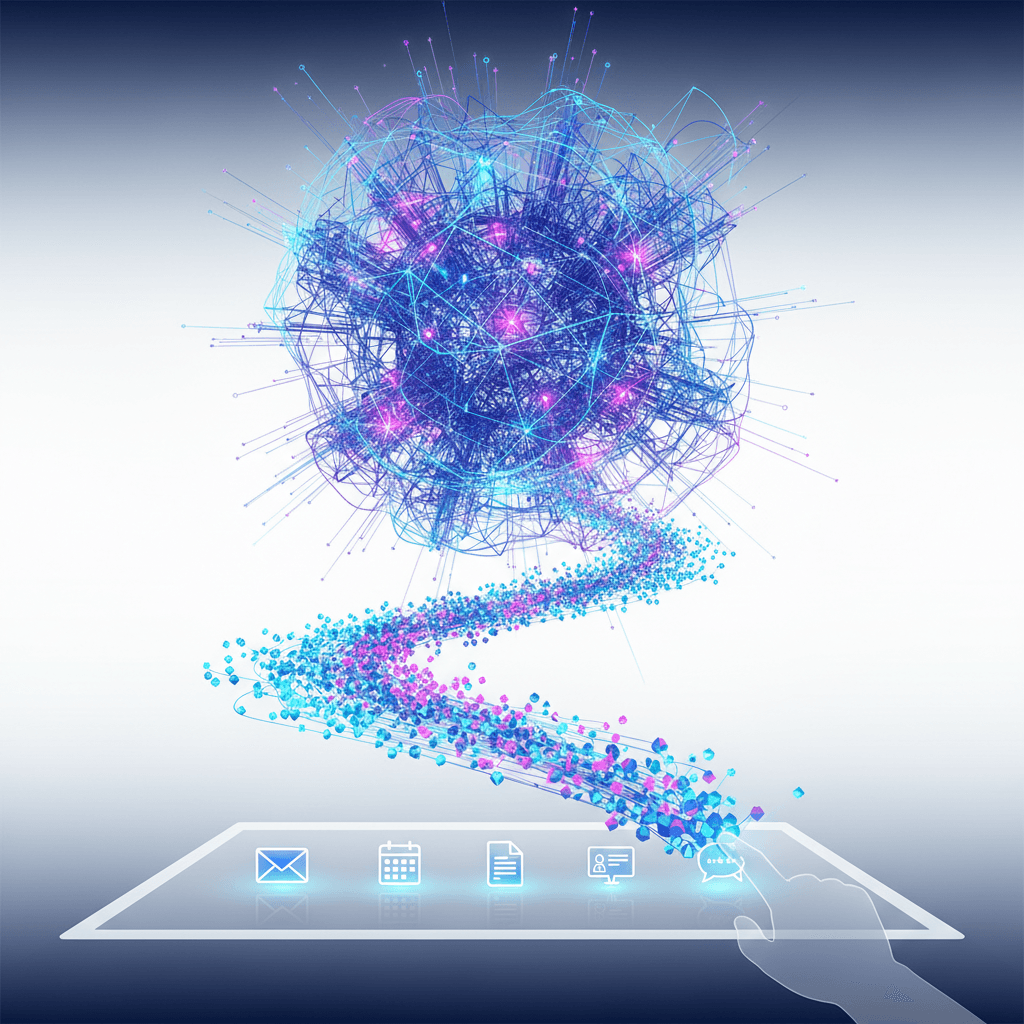
The artificial intelligence industry has coalesced around a new defining narrative for 2026, shifting the focus from the breakneck race to build more powerful foundation models to the much more pedestrian challenge of user adoption and utility. Leading the charge on this paradigm shift are key players like OpenAI and its major partner, Microsoft, which now argue that the true bottleneck limiting AI’s impact is no longer the models’ capability but the user’s ability to harness it. This sentiment reflects a growing recognition of the "capability overhang"—the gap between what frontier AI can theoretically accomplish and how people and businesses actually integrate it into their daily workflows.
OpenAI’s CEO of Applications, Fidji Simo, has been a central voice articulating this vision, emphasizing that the company's goal is to close the gap between AI capabilities and actual use. Simo stated that AI models are capable of far more than how most people experience them day-to-day, a message that echoes the views of Microsoft executives who have similarly pointed to the need for better product design and user education. This narrative suggests that the next phase of competition will not be won purely on benchmark scores but on who can most effectively translate raw intelligence into undeniably useful products. For OpenAI, this is manifest in the ambitious plan to evolve ChatGPT from a reactive chatbot into a proactive, intuitive "personal super-assistant."[1][2]
The transformation of ChatGPT into a super-assistant is the concrete articulation of this user-centric strategy. Simo envisions a tool that moves beyond simply answering questions or generating text. Instead, the super-assistant will be an agentic system designed to understand a user’s long-term goals, remember context over time, and proactively help them make progress across personal and professional tasks. This requires a significant shift from the text-in, text-out interface to a more intuitive product deeply connected to the services and people in a user’s life, all while maintaining privacy and security. The plan includes doubling down on multimodal investments, such as ImageGen and VideoGen, to make the assistant more dynamic, alongside developing collaboration features for multiplayer workflows in the business environment. For businesses, this vision extends to an automated workflow platform where AI agents, like an evolved form of Codex, serve as “automated teammates” for developers and other professionals.[3][1][2]
This strategic pivot is partly necessitated by the phenomenal success but limited depth of initial adoption. While ChatGPT boasts over 800 million weekly active users and a million business customers, Simo notes that this rapid adoption, outpacing the curves of the internet and mobile phones, has only been the first step. The true challenge lies in making that immense power translate into deep, indispensable value that justifies the high costs and infrastructure investment required to run these frontier models. For the industry, this is the "show me the money" year, where enterprises demand clear, hard return on investment (ROI) from their AI investments, moving beyond pilot programs that characterized the last two years. The focus is now shifting from raw model capability—which has seen a degree of commoditization with open-weight models rapidly catching up to proprietary ones—to the complex infrastructure of agent orchestration, persistent memory, tool integration, and domain-specific expertise.[1][2][4][5]
The move to agentic systems is central to overcoming the perceived user bottleneck. The current generation of AI interaction is often limited by a user's ability to prompt, task-switch, and manage multiple, disparate AI tools. OpenAI's product leadership acknowledges that even if model progress were to cease entirely, there is still a massive “product gap” to fill, transforming the current chatbot interface into a seamless, autonomous teammate. This future state sees users interacting with sophisticated agents that can decompose complex problems, create and execute plans, use a variety of tools, and verify their own work, thus minimizing the need for constant, manual human oversight. In this architecture, the model itself becomes a component within a larger, orchestrated system, where the value is captured not by the model trainer, but by the entity that masters the context, coordination, and user experience.[4][5][6]
Microsoft's strategy, particularly with its Copilot offerings, aligns perfectly with this user-centric model by integrating powerful AI agents directly into the familiar environments of its productivity suite. By embedding AI capabilities into tools like email, spreadsheets, and operating systems, Microsoft bypasses the need for the average user to learn complex prompting or navigate a separate interface, effectively lowering the barrier to deep utility. This integrated approach, which leverages Microsoft's vast distribution network, reinforces the idea that the winning strategy is not just about building better models, but about building better, more accessible products around them. The collective effort to push AI beyond the conversational chat box and into proactive, multi-step assistance signifies a maturation of the industry, pivoting from an intelligence-centric research phase to a utility-centric product phase. The ultimate implication is that the next frontier of AI competition will be fought on the battleground of user experience, seamless integration, and measurable, real-world productivity gains, making human factors the most critical variable in AI's mass-market revolution.[1][2]