
Arm Launches Physical AI Unit to Dominate Robotics and Autonomous Cars
Combining robotics and automotive efforts, Arm targets embodied AI to power autonomous systems and next-generation factory machines.
January 8, 2026
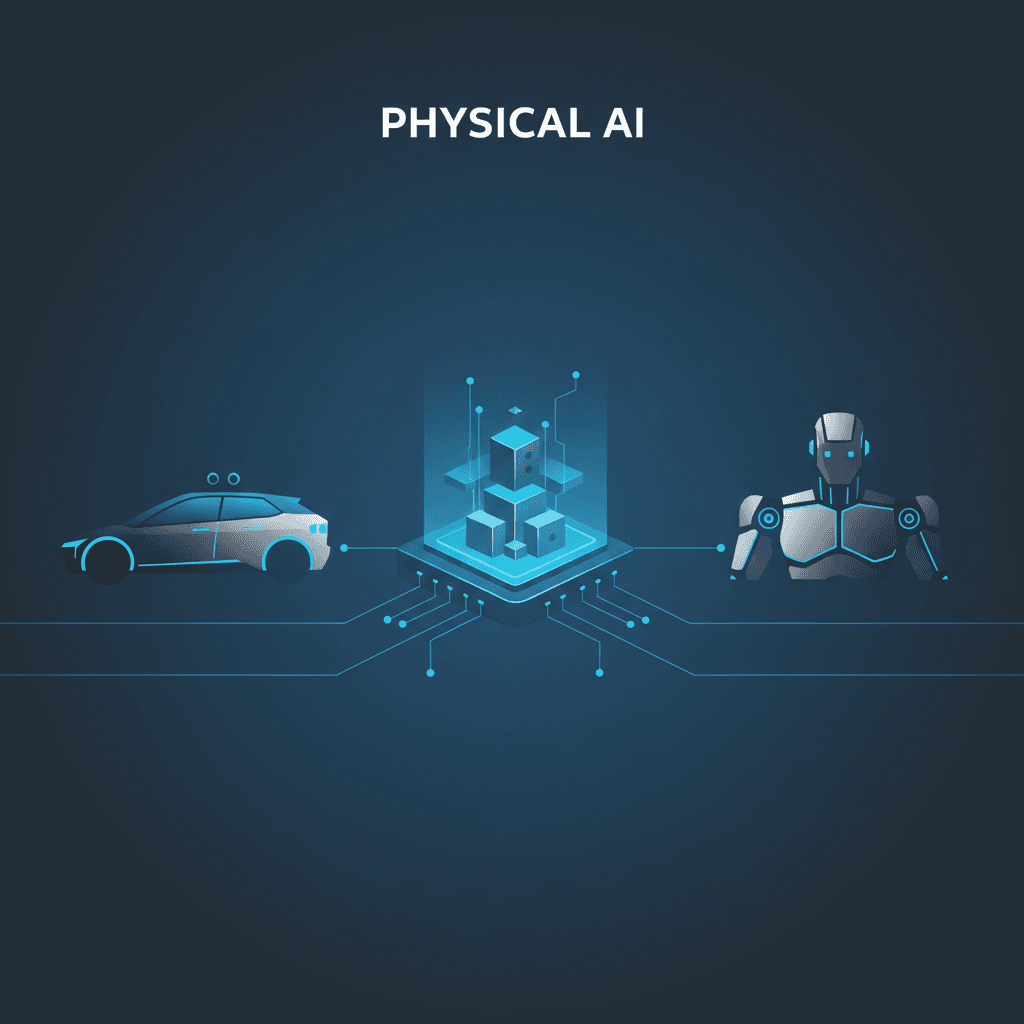
The global semiconductor landscape is witnessing a strategic reorientation as foundational intellectual property provider Arm Holdings establishes a new, dedicated business unit called "Physical AI," a move designed to accelerate its dominance in the burgeoning robotics and automotive sectors. The new division, announced by company executives at the Consumer Electronics Show, consolidates Arm's automotive efforts with a specialized focus on robotics, underscoring the company’s intent to move beyond its traditional strength in mobile devices and personal computing into the next frontier of artificial intelligence: intelligent, physical machines. The formation of this unit reorganizes Arm's core operations into three major lines: Cloud and AI, Edge, and the new Physical AI division, a structure intended to address distinct market needs and customer requirements with precision.[1][2][3][4]
The strategic decision to combine the robotics and automotive businesses stems from a profound technological overlap, as executives note that both sectors share stringent customer requirements for energy efficiency, safety, reliability, and similar sensor technologies.[5][1][6][3] This commonality is critical for the development of autonomous systems, where on-device intelligence and real-time processing are paramount. Arm, which licenses its chip architecture that powers the vast majority of the world's smartphones, is leveraging this core competency in power-efficient design to become the foundational technology for the next generation of autonomous vehicles and industrial, commercial, and humanoid robots. The company already plays a central role in the automotive supply chain, with its silicon powering an estimated over 65 percent of Advanced Driver-Assistance Systems (ADAS) and 85 percent of In-Vehicle Infotainment (IVI) systems.[1] By creating a unified unit, Arm aims to create a more scalable and integrated platform that can serve the varied needs of both carmakers and robotics developers simultaneously.[7]
The creation of the Physical AI division is also a direct response to a massive industry shift toward embodied AI, a trend that was highly visible at the technology conference where the announcement was made. The industry is seeing a surge in activity around humanoid and industrial robots capable of complex tasks, with companies demonstrating machines for everything from factory automation to commercial services.[8][7] Chief Executive Officer Rene Haas has positioned this area as a market with immense potential for long-term growth, predicting that advanced, AI-powered robots could replace most factory workers within the next decade.[4][9] This outlook is based on the concept of "Physical AI," which goes beyond current robotics technology—often optimized for single-purpose tasks—by allowing general-purpose machines to perceive, interpret, and adapt to new tasks on the fly, a capability that promises to fundamentally enhance labor and drive considerable economic growth.[10][3][11][9] Drew Henry, the Executive Vice President appointed to lead the new unit, echoed this sentiment, stating that these solutions could "fundamentally enhance labor, free up extra time," and have a significant impact on gross domestic product.[5][3][4][11] The company plans to significantly increase staffing dedicated specifically to robotics within the new division to accelerate development in this area.[10][6]
The establishment of Physical AI also represents a key part of Arm’s broader business strategy under Haas, who has been steering the company to expand revenue streams beyond mobile, including exploring the development of more complete chip designs and adjusting pricing for the latest technologies.[5][4][11] By dedicating a unit to this expansive market, Arm is positioning itself as an essential partner to a diverse ecosystem, one that includes dozens of global automakers and robotics firms such as the Hyundai Motor-owned Boston Dynamics.[7] This strategic move comes as major competitors are also intensifying their focus on physical AI, with companies like Nvidia launching new open-source models for autonomous vehicle training and competitors in the autonomous driving space making significant acquisitions in robotics.[5][7] While some analysts suggest the industry is still in a "GPT-3 moment" for physical AI, laying the groundwork for a future breakthrough, the concerted effort by industry giants like Arm and Nvidia highlights the accelerating convergence of AI, robotics, and industrial automation.[12] Arm's licensing-based model, which supports a wide range of hardware manufacturers without competing directly, is seen as an advantage in fostering this nascent, yet rapidly growing, ecosystem.[7]
In conclusion, Arm Holdings' new Physical AI unit is more than a simple corporate reorganization; it is a declaration of intent to capture a central role in the next wave of computing, where intelligent software merges with physical hardware. By strategically linking the automotive and robotics segments, the company is creating a singular platform to address the non-negotiable requirements of safety, reliability, and power efficiency that define autonomous systems. The initiative directly targets the immense market potential of embodied AI, moving the company into new territories of revenue growth and industry influence. This dedicated focus signals a profound shift in the semiconductor industry, positioning Arm's core IP as the likely backbone for the machines that will redefine industry, labor, and economic productivity for the foreseeable future.[6][3][9]