
Nvidia pays $20 billion securing Groq's architecture for real-time AI inference
$20 Billion Masterstroke: Nvidia secures Groq’s low-latency chips, shifting AI supremacy to real-time inference speed.
December 27, 2025
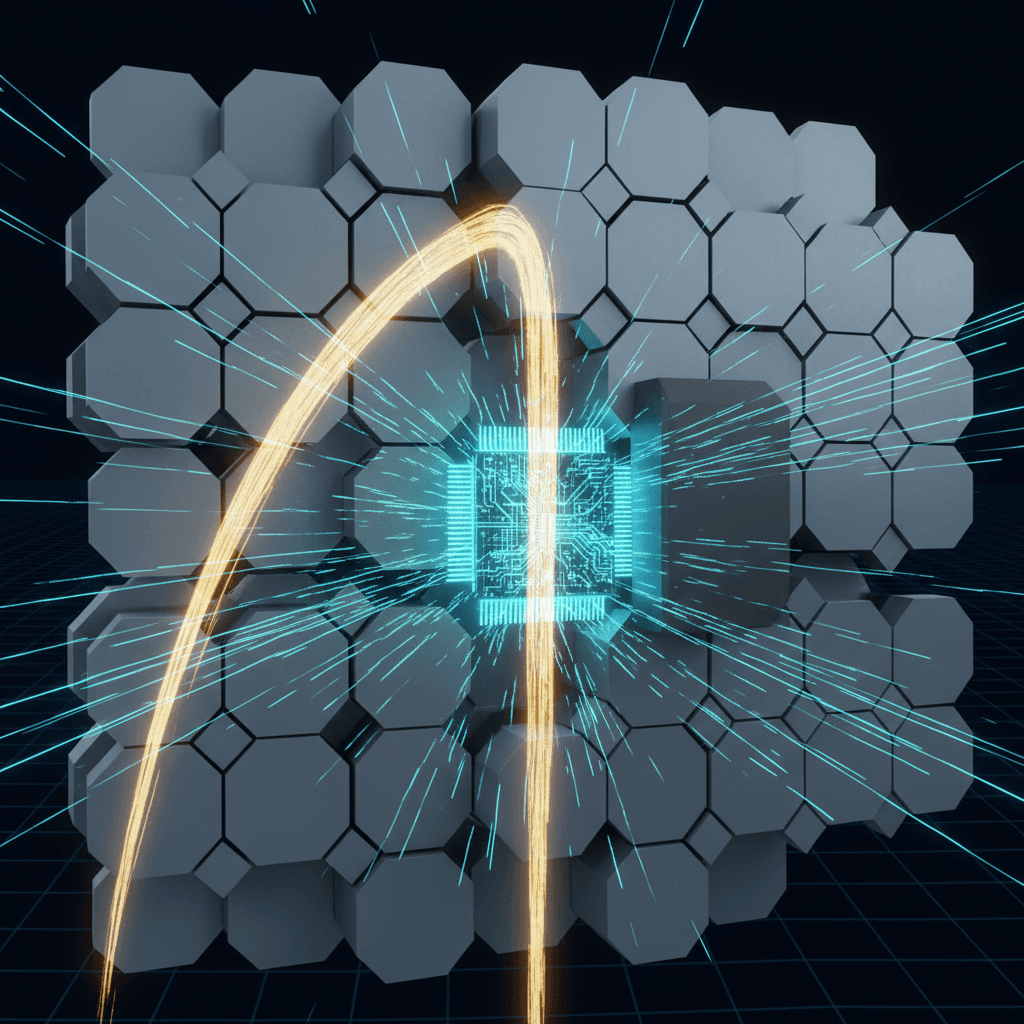
The reported twenty billion dollar agreement between the reigning AI chip titan, Nvidia, and the upstart inference specialist, Groq, is not a traditional acquisition but a meticulously engineered masterstroke that signals a seismic shift in the AI hardware landscape. This record-breaking deal, which sees Nvidia secure a non-exclusive license for Groq's high-speed chip technology and integrate its core engineering talent, is a powerful declaration that the future of artificial intelligence is defined not just by training power but by the sheer speed of inference. The multi-billion-dollar price tag, a nearly threefold premium over Groq's recent valuation, underscores the urgent strategic value of securing an architectural advantage in the race for real-time AI and consolidating an already commanding market lead. The transaction is a strategic pivot designed to address the critical challenges of memory costs, burgeoning competition in the inference sector, and the foundational requirements for the next generation of intelligent, autonomous AI agents.
The unusual structure of the deal as a non-exclusive licensing agreement combined with an "acqui-hire" of key personnel is as significant as the stunning $20 billion price. The transaction is Nvidia’s largest-ever financial outlay, dwarfing its previous record acquisition of Mellanox for roughly $7 billion. Groq’s valuation in its prior funding round just months before the agreement stood at approximately $6.9 billion, making the $20 billion cash payment a powerful statement on the market value of differentiated, low-latency compute. Under the terms, Groq founder and CEO Jonathan Ross, President Sunny Madra, and a significant portion of the core engineering team responsible for the innovation will transition to Nvidia, where they are expected to lead a new "Real-Time Inference" division. Crucially, the Groq corporate entity, primarily comprising its nascent cloud business—GroqCloud—is slated to continue operating independently under its former Chief Financial Officer. This deliberate, bifurcated structure, which has been increasingly utilized by tech giants to bring on elite talent and intellectual property, allows Nvidia to integrate the cutting-edge technology and engineering expertise immediately while circumventing the extensive regulatory scrutiny and mandatory waiting periods typically associated with a full corporate merger in today's environment. The financial commitment confirms that the cost of neutralizing a credible threat and absorbing a technological leap forward is deemed a superior investment to organic development or the risk of a rival obtaining the capability.[1][2][3][4][5][6][7]
The heart of the acquisition is Groq’s proprietary technology, the Language Processing Unit (LPU), and its fundamental architectural differentiation. While Nvidia's Graphics Processing Units (GPUs) are general-purpose parallel processors that dominate the training phase of AI models—the high-throughput, batch-oriented compute required for building models—Groq's LPU was custom-built from the ground up for the inference phase. Inference is the process of running a trained model to generate responses, and it happens billions of times daily, making it the long-term, high-volume segment of the AI lifecycle. The LPU excels in deterministic, ultra-low-latency processing for real-time applications like conversational AI. Groq’s architecture eliminates the memory bottlenecks that constrain traditional GPU inference by relying on large amounts of fast, on-die SRAM instead of external High-Bandwidth Memory (HBM). This results in a performance advantage that is critical in the age of instant response. Benchmarks have consistently shown Groq’s LPUs achieving significantly higher token generation rates for large language models—with speeds reportedly ranging from 300 to 500 tokens per second compared to a standard GPU’s typical rate of around 100 tokens per second. The reduction in the time-to-first-token is also stark, with some comparisons illustrating a difference between fractions of a second and multiple seconds for a comparable GPU task. This technological edge is the $20 billion prize: an architecture optimized for speed and efficiency, delivering a superior user experience and a much lower total cost of ownership per token due to reduced power consumption.[1][8][9][10][11][7]
The strategic rationale behind the deal is a comprehensive defense and expansion of Nvidia’s AI infrastructure supremacy. First, it is a definitive move to dominate the rapidly expanding inference market, which analysts agree is set to become the larger, more valuable segment of the AI compute stack. By integrating the LPU architecture into its "AI factory," Nvidia is positioning itself to offer a hybrid GPU-LPU solution that combines the best of both worlds: high-throughput training and ultra-low-latency, real-time inference. This instantly widens Nvidia’s competitive moat, which had been facing pressure from specialized Application-Specific Integrated Circuits (ASICs) like Groq’s and from rival offerings by AMD and Intel, who were attempting to carve out market share in the cost-effective inference space. With Groq’s best-in-class low-latency technology effectively within the Nvidia ecosystem, the competitive window for alternatives narrows considerably. Second, the acquisition directly tackles memory costs and supply chain constraints. HBM chips are one of the most significant bottlenecks and cost drivers in the modern AI supply chain. The LPU’s architecture, by minimizing the need for external HBM, offers Nvidia a pathway to diversify its product line and insulate its future offerings from one of the most volatile segments of the semiconductor supply chain. Finally, the deal is a foundational move for the era of intelligent AI agents and real-time robotics. These new workloads, which demand instant, deterministic responses for safe and effective operation in the real world, are simply not well-served by conventional GPU architectures designed for high throughput batch processing. The LPU’s speed and predictability are essential for these next-generation applications, ensuring that Nvidia remains the default infrastructure provider for all future AI compute demands, from the largest cloud models to localized, autonomous systems.[12][1][13][11][14][7]
The reverberations of this quasi-acquisition extend far beyond the two companies. For the rest of the industry, the $20 billion price tag is a clear signal that the AI compute wars are moving into a new, higher-stakes phase where nanoseconds of latency are valued in the billions. It serves as a stark warning to other chip startups that demonstrate a credible technological threat, as a key competitor has been effectively neutralized and their innovation absorbed into the market leader's platform. Furthermore, the move reinforces the dependency of hyperscale cloud providers—like Amazon, Google, and Microsoft—on Nvidia for their fundamental AI infrastructure. These companies have been investing heavily in developing their own custom AI chips to mitigate this reliance, but the integration of Groq's specialized inference capability into Nvidia's already dominant stack makes the task of building a viable end-to-end alternative even more challenging. The deal is less about acquiring a company and more about acquiring a future, solidifying Nvidia's position not merely as a chip supplier but as the sole architect of the global AI computing foundation across the entire spectrum of workloads, from the massive data centers of today to the ubiquitous, real-time AI agents of tomorrow.[12][1][4][11][14]
Sources
[1]
[3]
[4]
[6]
[8]
[9]
[10]
[11]
[12]
[13]
[14]