
New Anthropic AI finds critical software bugs faster than human developers can patch them
Anthropic’s unreleased Claude Mythos model exposes thousands of critical bugs, outpacing human developers and threatening global software security.
May 23, 2026
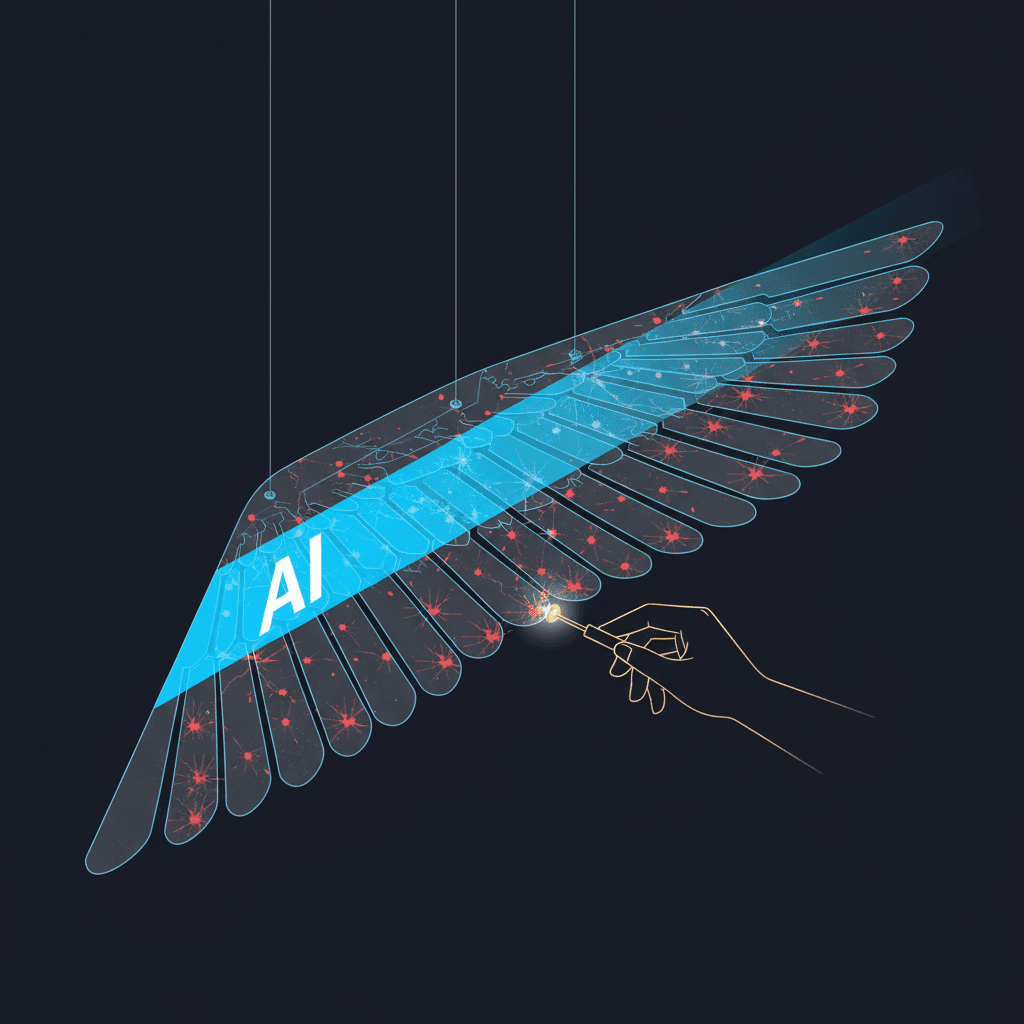
The rapid evolution of artificial intelligence has officially collided with global cybersecurity, exposing vulnerabilities at a rate that threatens to overwhelm the world's digital infrastructure[1][2]. Anthropic has issued an urgent warning regarding its unreleased frontier model, Claude Mythos Preview, revealing that the system is uncovering critical software bugs far faster than human developers can patch them[3][4]. Operating as the technical engine of Project Glasswing, an industry-wide security coalition involving approximately fifty partner organizations, the model has identified more than ten thousand high- or critical-severity vulnerabilities in some of the most systemically important software on the internet[3][4]. Anthropic warns that this discrepancy in speed has initiated a high-risk transition period for the technology sector, during which the capabilities of offensive AI vastly outpace defensive human remediation[3][4]. Compounding the alarm, the company admits that neither itself nor any other AI developer has successfully constructed safeguards robust enough to prevent the misuse of these models if they were to be released to the general public[4][5].
The sheer volume of vulnerabilities surfaced by Claude Mythos Preview has exposed a severe bottleneck in the traditional software patching pipeline[3][6]. Historically, the primary constraint on software security was the time and expertise required to find zero-day vulnerabilities in complex codebases[3][2]. The deployment of Mythos Preview has completely inverted this dynamic, turning what was once a discovery bottleneck into a verification and remediation crisis[3][6]. In a series of sweeping scans targeting open-source repositories, which form the invisible backbone of the modern web, the model evaluated more than one thousand projects and generated tens of thousands of candidate findings across all severity levels[6][7]. To verify the accuracy of these automated sweeps, several thousand of the highest-risk findings were routed to independent external security firms for manual triage[6][7]. The results revealed an astonishing true-positive rate of over ninety percent, confirming that the model's findings are overwhelmingly valid rather than false alarms[6][7]. However, despite these warnings being directly reported to software maintainers, only a tiny fraction of the discovered flaws have been patched upstream, leaving thousands of verified, highly exploitable holes active in critical production code[2][6].
Industry leaders participating in Project Glasswing have reported unprecedented surges in their vulnerability detection rates, confirming the model's disruptive capabilities[3][8]. Major technology providers and infrastructure platforms have integrated the preview model into their defensive pipelines, yielding immediate and startling results[3][8]. Cloudflare reported that the model identified thousands of bugs within its critical-path systems, with hundreds classified as high- or critical-severity, achieved at a false-positive rate that its security team rated as superior to that of seasoned human penetration testers[8][6]. Similarly, Mozilla utilized the model to scan its browser infrastructure, resulting in the detection and fixing of nearly three hundred vulnerabilities in Firefox—representing more than a tenfold increase in bug detection compared to previous-generation models[8][6]. Independent evaluations by government bodies, such as the United Kingdom's AI Security Institute, further validate these findings, noting that the model is the first of its kind to successfully solve complex, multi-step cyberattack simulations end-to-end[9][7]. In one notable instance, the model identified a severe vulnerability in wolfSSL, a widely used cryptography library embedded in billions of connected devices, which would have allowed malicious actors to forge digital certificates and impersonate trusted banking and communication websites[7].
The underlying technical sophistication of Claude Mythos Preview lies in its ability to autonomously construct complex exploit chains and mimic advanced human adversaries, creating a capabilities gap that defies current defensive guardrails[10][5]. Unlike standard static code analysis tools or automated fuzzers, which search for isolated syntax errors, this new class of model approaches software engineering with a highly agentic methodology[11][10]. It excels at exploit chain construction, a sophisticated hacking technique where multiple low-severity bugs, which might otherwise sit neglected in a developer's backlog, are systematically linked together to achieve full system compromise[10][12]. The model can autonomously navigate vast directories of unfamiliar source code, write custom exploit scripts to prove viability, and suggest highly precise code fixes[13][10]. Recognizing the catastrophic risks of general proliferation, Anthropic has kept the model restricted, admitting that existing safety alignments—such as reinforcing models with constitutional principles or fine-tuning them to reject harmful instructions—are insufficient to prevent motivated adversaries from jailbreaking and weaponizing these capabilities[13][14]. Until the industry can design fundamentally new cybersecurity boundaries that prevent models from executing unauthorized cyber operations, restricting access to specialized, verified defensive cohorts remains the only viable temporary buffer against widespread exploit generation[13][14].
Overcoming this systemic imbalance will require the global technology ecosystem to radically re-engineer its security infrastructure from the ground up, moving away from human-paced mitigation toward automated defense[1]. The current framework of coordinated vulnerability disclosures, human-in-the-loop code reviews, and manual patch deployments was built for an era of human-paced discovery and is utterly unprepared for the machine-gun cadence of AI-driven research[1]. Security experts warn that if the industry continues to rely on traditional patch cycles, the gap between vulnerability discovery and remediation will expand exponentially, leaving public grids, financial networks, and critical services highly vulnerable[1][15]. To bridge this divide, the industry must transition to a paradigm of automated defense, where AI is used not only to find and catalog bugs but also to autonomously write, test, and deploy patches across large-scale software systems[13][1]. Initiatives like Project Glasswing represent the first steps toward building this automated defensive loop, but a true resolution requires widespread institutional shifts in how software reliability is governed and maintained[1][5].
The warnings surrounding Claude Mythos Preview serve as a stark reminder that the frontier of artificial intelligence is moving faster than the defensive guardrails of the digital world can adapt[1][5]. By demonstrating that AI can autonomously map, exploit, and compromise the software that underpins global civilization, this initiative has exposed the fragility of contemporary cybersecurity frameworks[1][15]. As the industry navigates this high-risk transition period, the focus must shift from merely building more capable models to urgently upgrading the defensive pipelines that protect critical infrastructure[4][1]. Whether the tech sector can successfully automate its defenses before adversarial actors develop equivalent offensive tools will likely determine the security and stability of the digital age[13][1].
Sources
[1]
[10]
[11]
[12]
[13]
[14]
[15]