
Microsoft transforms Copilot into autonomous agents using multi-model verification to execute complex enterprise workflows
Microsoft’s agentic shift leverages Anthropic models for verification, turning Copilot into an autonomous system for executing complex enterprise workflows.
March 30, 2026
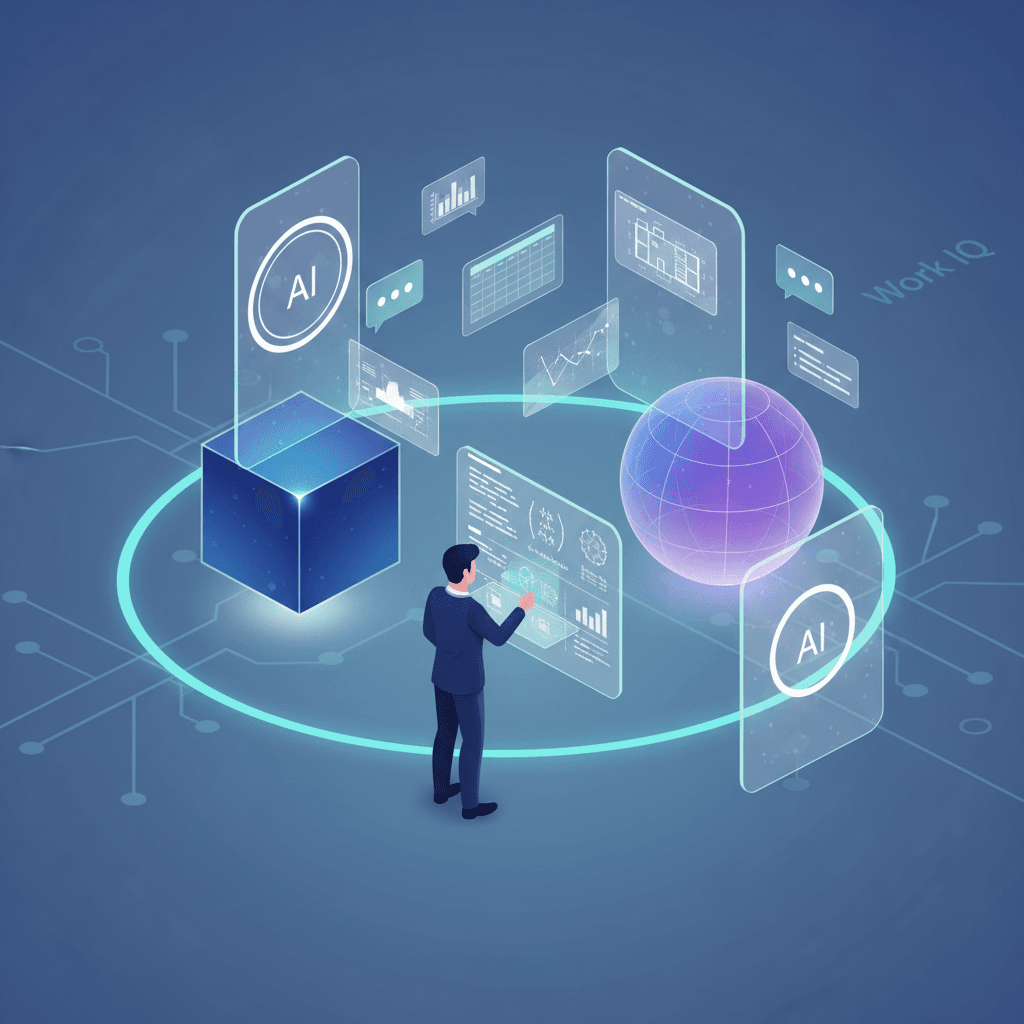
The recent expansion of Microsoft 365 Copilot into its more advanced Frontier program marks a significant evolution in the functional capabilities of enterprise artificial intelligence.[1] Central to this rollout is the debut of Copilot Cowork, a new agentic experience that shifts the role of the AI from a conversational assistant into an autonomous executor of complex, multi-step workflows.[2][3][4][5] While previous iterations of Copilot primarily focused on generative tasks such as drafting emails or summarizing documents, Cowork is designed to handle long-running processes in the background with minimal human intervention.[2][3] This shift toward agentic AI reflects a broader industry trend where the focus is moving from simple chat interfaces to sophisticated systems capable of planning, reasoning, and acting across a suite of interconnected professional applications.[6][4][2][7]
The fundamental architecture of Copilot Cowork allows it to act as an orchestrator across the entire Microsoft 365 ecosystem, including Outlook, Teams, Excel, SharePoint, and various proprietary databases. Instead of requiring a user to prompt for every individual action, the system allows a professional to describe a high-level outcome, such as performing a comprehensive monthly budget review or preparing an end-to-end meeting packet. Once a goal is established, Cowork generates a structured plan and begins executing the necessary steps independently.[3][8][2][9][5] For example, in a financial review scenario, the agent can pull data from multiple spreadsheets, identify discrepancies, cross-reference those anomalies with recent email correspondence, and then draft a summary report with proposed resolutions. Throughout this process, the system operates within a protected cloud sandbox, ensuring that the automation remains durable even if the user switches devices or goes offline.[8][10]
Central to the reliability of these autonomous agents is a new framework Microsoft calls Work IQ.[2] This framework serves as the conceptual grounding for the AI, allowing it to interpret the specific context, hierarchy, and data relationships unique to an individual organization. By drawing on signals from across an enterprise's digital footprint, the AI can make decisions that align with established business logic and security protocols.[2] To maintain human control over these independent agents, Microsoft has integrated a series of checkpoints and steering mechanisms.[8][3][11] Users can monitor the progress of a background task through a dedicated dashboard, intervene to redirect the agent if it misinterprets a goal, and provide final approval before any changes are formally applied to documents or sent to colleagues. This balance between autonomy and oversight is intended to address the primary hurdle for enterprise adoption of agents: the need for absolute trust in automated decision-making.
In a move that signals a departure from its historical exclusivity with OpenAI, Microsoft has also introduced a sophisticated multi-model verification system within its Researcher agent.[12] This feature, known as Critique, leverages a partnership with Anthropic to allow different AI models to check each other's work.[3] In this configuration, one model, typically a version of OpenAI’s GPT, leads the generation phase by researching a topic and producing an initial draft.[3] A second model, such as Anthropic’s Claude, then acts as an expert reviewer, auditing the output for factual accuracy, citation quality, and evidence-based reasoning. This bi-directional "checks and balances" approach is designed to significantly reduce the risk of hallucinations, which remain a persistent challenge for large language models in high-stakes professional environments.
The technical impact of this multi-model critique layer is measurable and substantial. Internal testing conducted by Microsoft, using the DRACO benchmark—an industry standard for measuring deep research quality—showed that this collaborative model architecture improved research scores by 13.8 percent compared to single-model systems. By separating the task of generation from the task of evaluation, Microsoft is effectively creating a digital peer-review process that mimics human academic and professional standards. Beyond the automated critique layer, a related feature called Model Council allows users to view side-by-side responses from different models or utilize a "judge model" to evaluate the diverging perspectives.[12][11] This transparency allows organizations to see where different AI architectures agree or disagree, providing a clearer path to verifying complex information.
The integration of Anthropic’s technology into the Microsoft 365 stack represents a strategic shift toward a multi-model advantage.[12] By hosting various models from different vendors within a single platform, Microsoft is positioning Copilot as an orchestration layer rather than a single-source tool.[11] This strategy allows the system to route specific tasks to the model best suited for the job, whether that is a model optimized for rapid code generation, one known for superior instruction-following, or one with a larger context window for analyzing massive document sets. This flexibility is expected to be a cornerstone of the newly announced Microsoft 365 E7 tier, a high-level enterprise subscription designed to bundle these advanced agentic capabilities, along with specialized security tools and identity management, into a single workspace solution.
Security remains a primary focus as these autonomous agents gain the ability to act on behalf of human users. The rollout includes a significant upgrade to Security Copilot in the form of an Agentic Secret Finder.[5] This tool is specifically designed to detect exposed credentials and sensitive data hidden within unstructured sources such as chat logs, screenshots, and document drafts.[5] As agents begin to "negotiate" and "transact" within digital ecosystems, the risk of them becoming "double agents"—unintentionally leaking data or being manipulated by malicious prompts—has necessitated a zero-trust approach to AI identity.[13] Each agent in the new system carries its own scoped permissions and auditable identity, ensuring that its access to company data is as strictly managed as that of a human employee.
The implications for the broader AI industry are profound, as this shift moves the competition away from the size of individual models toward the intelligence of the systems that manage them.[14][11] While competitors like Google and Salesforce are also racing to deploy autonomous agents, Microsoft’s deep integration into the daily software used by hundreds of millions of workers gives it a significant data advantage. The ability to link a research agent to a spreadsheet agent and then to a communication agent creates a cohesive "digital coworker" experience that could fundamentally redefine white-collar productivity. Industry analysts suggest that the next phase of the AI war will not be won by the company with the most creative chatbot, but by the one that can provide the most reliable, accountable, and autonomous execution of business processes.
Ultimately, the goal of these latest updates is to transform the AI from an instrument that answers questions into a partner that shares the workload.[4] By moving Copilot Cowork into the Frontier program and implementing multi-model verification, Microsoft is addressing the twin challenges of automation and accuracy.[15] For the end user, this means the ability to delegate the high-volume coordination and research tasks that often consume the majority of the workday, allowing human professionals to focus on higher-order strategy and creative problem-solving. As these agentic systems continue to mature and move toward general availability, they are likely to set a new standard for how enterprises interact with artificial intelligence, prioritizing verified outputs and background execution over simple conversational interaction.
Sources
[1]
[3]
[4]
[7]
[10]
[11]
[13]
[14]
[15]