
Microsoft sparks developer revolt by silently injecting AI co-author metadata into VS Code commits
Microsoft’s silent injection of AI metadata into Git commits sparks a fierce debate over developer autonomy and code ownership.
May 3, 2026
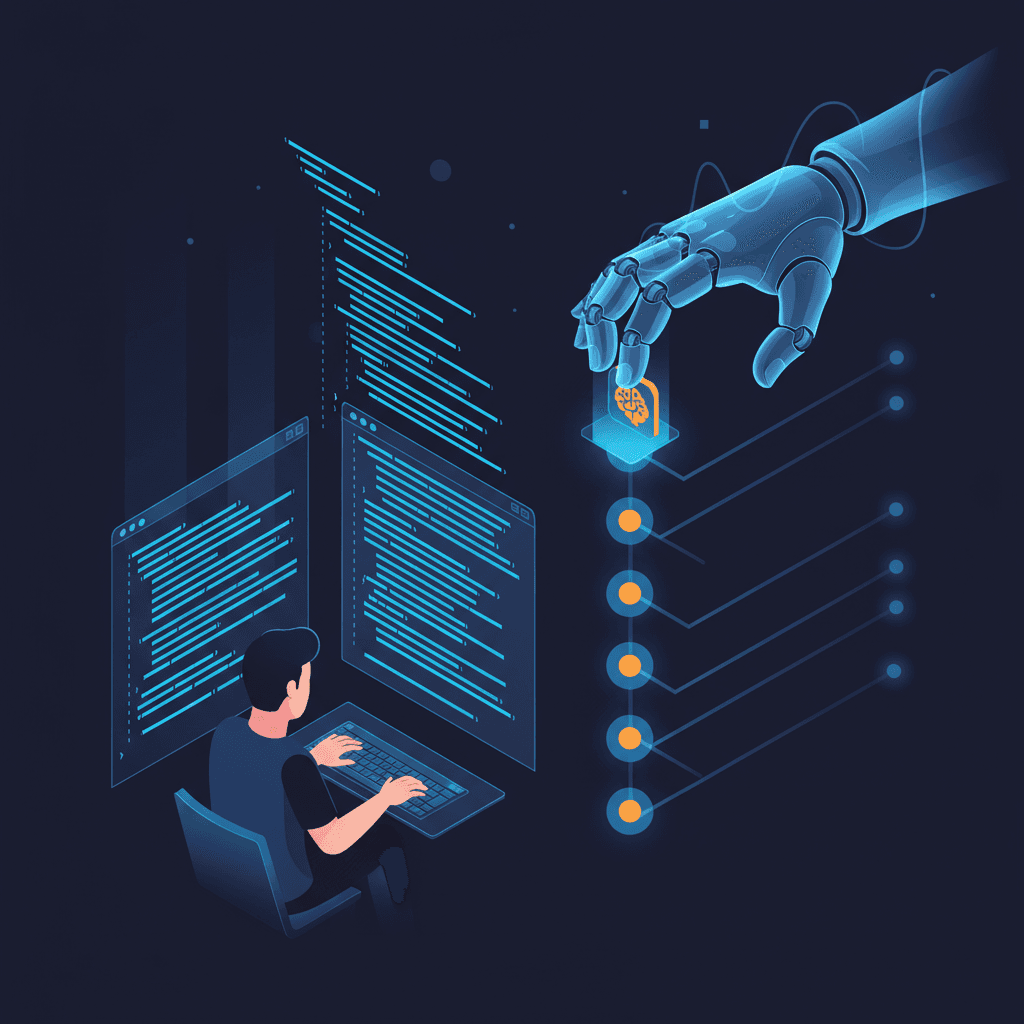
In a development that has sent ripples through the software engineering community, Microsoft has faced significant backlash after it was discovered that Visual Studio Code (VS Code) began silently injecting AI authorship metadata into Git commits.[1][2][3] The controversy centers on the "Co-Authored-by: Copilot" line, which started appearing in the commit history of developers worldwide following a recent update.[1][4] What has particularly incensed the user base is not merely the addition of the tag, but the discovery that it was being applied even to developers who had explicitly disabled all artificial intelligence features within the editor. The move has ignited a fierce debate over developer autonomy, the sanctity of version control history, and the legal ramifications of attributing machine-generated suggestions as formal co-authorship.[5][6]
The technical root of the issue lies in the release of VS Code version 1.118, which introduced a change to a specific setting known as "git.addAICoAuthor."[1] Previously, this feature was disabled by default, requiring users to opt-in if they wished to acknowledge the assistance of GitHub Copilot in their work.[1] However, in the latest version, Microsoft flipped this default to "all."[6] This change meant that any time the editor detected what it deemed to be AI-influenced code—or even when the user utilized Copilot to generate a commit message—the "Co-Authored-by" trailer was automatically appended to the Git metadata.[5][1][4] Crucially, the implementation appeared to ignore broader "off" switches for AI features. Developers who had set their preferences to disable Copilot entirely found that the metadata was still being surreptitiously added to their commits, often without their knowledge until the changes were pushed to public repositories.
This silent opt-in approach has created a "legal minefield," according to intellectual property experts. The timing of the feature's rollout is particularly notable, coming just weeks after the U.S. Supreme Court denied certiorari in the landmark case of Thaler v. Perlmutter.[1] This decision cemented a legal precedent that non-human entities cannot hold copyright under current law.[1] By forcing a non-human "co-author" into the permanent history of a codebase, Microsoft may have inadvertently complicated the copyright status of millions of lines of code. Open-source licenses, such as the MIT and GPL families, are built on the foundation of human authorship and the chain of title that follows. If a commit history explicitly lists an AI as a co-author, it could lead to future disputes regarding the validity of copyright claims or the ability of a corporation to assert ownership over its proprietary assets.[1] For many corporate legal departments, the presence of such metadata is not a minor cosmetic issue but a direct threat to intellectual property integrity.
The reaction from the developer community has been swift and overwhelmingly negative.[6][7] On GitHub, the primary platform for VS Code development, issue trackers were flooded with complaints, with some threads accumulating hundreds of downvotes before being locked by moderators. Developers have characterized the move as "vandalism" and "marketing fraud," with many expressing a profound sense of betrayal.[6] The primary grievance is that Git history is intended to be a permanent, immutable record of a project’s evolution. Once a commit is pushed with the Copilot attribution, removing it requires a "force push" or a rebase, both of which can disrupt collaborative workflows and break existing forks of a project.[1][6] Many users have voiced suspicions that the default-on setting was not a technical necessity but a strategic move to inflate "AI-assisted commit" metrics for shareholder reports, ensuring that every developer with the extension installed would contribute to Microsoft’s internal statistics regardless of whether they actually used the tool.[5]
Beyond the metrics, the incident highlights a growing friction between AI providers and the practitioners who use their tools.[8][2][9][6] The "Co-Authored-by" tag is a standard Git trailer used for acknowledging human collaborators, and its appropriation by a commercial AI product is seen by some as a dilution of a meaningful signal.[5][1][6] When a developer sees a co-author tag, it usually implies a person who can be contacted for questions, a peer who reviewed the logic, or a teammate who shared the workload.[6] By inserting an AI into this field, Microsoft has blurred the lines between a tool and a contributor.[2][1][5][6] Competitors in the space, such as Cursor and Anthropic’s Claude Code, have largely avoided this pitfall by making such attributions strictly opt-in or clearly distinguishing between human and machine contributions. Microsoft’s decision to move in the opposite direction has led to calls for users to migrate to alternative editors like Zed or Neovim, where users feel they have greater control over their environment.[6]
In response to the mounting pressure, internal contributors within the VS Code project have acknowledged that the rollout was flawed.[5] Discussions in public pull requests indicate that the feature was shipped with several unintended bugs. Specifically, engineering team members noted that the attribution should never have triggered when AI features were explicitly disabled, and it certainly should not have been applied to code changes where the AI played no part. There is also an acknowledgement that the default setting was changed before sufficient testing could ensure that the "Co-Authored-by" line was only added when substantial, verified AI generation occurred. A fix is reportedly in development for the upcoming 1.119 release, which is expected to address the bypass of the "AI off" settings and potentially revert the default-on behavior.[5]
However, for many in the industry, the damage to trust may be long-lasting. The episode serves as a cautionary tale for the AI industry at large, demonstrating that even the most popular tools can face a "revolt" if they overstep the boundaries of user consent. As AI becomes more deeply integrated into the "plumbing" of the software industry, the demand for transparency and auditability is only increasing.[8][6] Developers are not merely users of these tools; they are the architects of the systems that run them, and they are acutely aware of how metadata can be used—or misused—to shape narratives about productivity and authorship.[6] The "Co-Authored-by Copilot" controversy is a stark reminder that in the era of generative AI, the most valuable commodity is not the code itself, but the trust of the humans who write it.
Looking forward, the incident is likely to prompt a broader re-evaluation of how AI contributions are tracked in version control systems.[6] There is a clear need for a standardized, non-intrusive way to mark AI involvement that does not interfere with legal authorship or traditional collaboration signals.[6][7] Some have proposed new Git trailers specifically for machine-generated content, such as "Generated-by" or "AI-Assisted-by," which would provide the necessary provenance for security audits without claiming the status of a legal author. Until such standards are established and respected, the tension between automated convenience and developer autonomy will continue to be a defining challenge for the next generation of software development tools.[6] Microsoft’s attempt to "sneak" attribution into the shadows of the commit log has instead brought these critical questions into the bright light of public scrutiny.
Sources
[1]
[3]
[4]
[5]
[6]
[7]
[9]