
Lovable triples valuation to $6.6B, proving natural language replaces coding.
Lovable raises $330 million to unleash “vibe coding,” democratizing software development for the non-technical 99 percent.
December 18, 2025
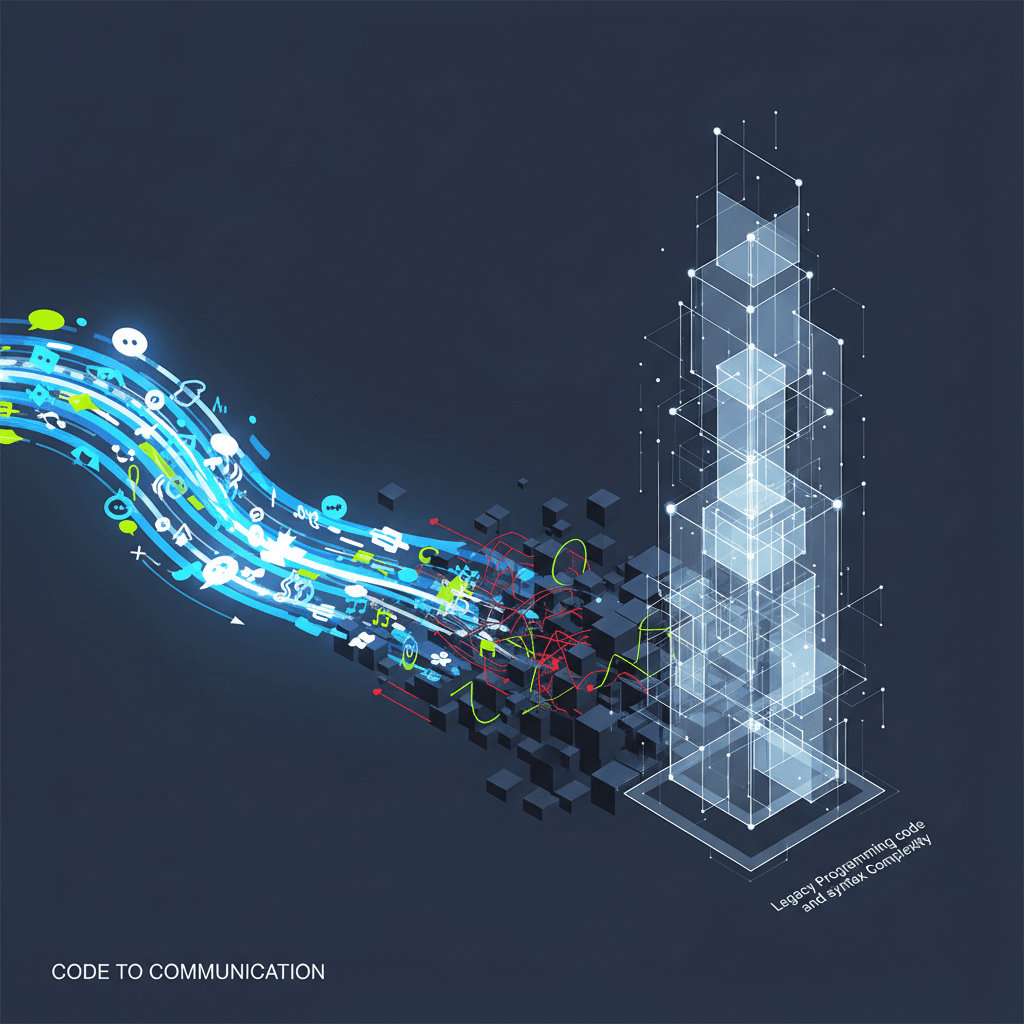
The European AI landscape has been redefined by the Swedish startup Lovable, which successfully closed a massive Series B financing round of $330 million, propelling the company’s valuation to a stunning $6.6 billion and formally declaring the arrival of the "Age of the Builder." This landmark financing event, led by CapitalG, the venture capital arm of Alphabet, and Menlo Ventures' Anthology fund, underscores a seismic shift in the future of software development, where natural language is fast replacing traditional code as the primary mechanism for creation. The investment round, which also saw participation from a coalition of strategic heavyweights including NVentures, Salesforce Ventures, Databricks Ventures, Atlassian Ventures, and T.Capital, represents one of the largest single raises for an AI-native software platform in the region.[1][2][3][4]
The core of Lovable’s success lies in its pioneering concept of "vibe coding," a platform that empowers users to build full-stack applications and websites simply by describing their desired outcome through text prompts. This approach abstracts away the complexities of specific programming languages, syntax, databases, and hosting, effectively democratizing the ability to create functional, production-ready software.[2][4][5] The platform’s unprecedented financial and user adoption metrics serve as the most compelling evidence of its market-defining power. In a growth trajectory that is rare even within the frenetic AI sector, the Stockholm-based company reached $100 million in Annual Recurring Revenue, or ARR, within just eight months of its first million. In the subsequent four months, this figure doubled, surging to more than $200 million ARR.[1][3][6] Beyond revenue, user data confirms a voracious appetite for the tool, with the platform facilitating the creation of over 100,000 new projects daily, culminating in a total of more than 25 million projects in its first year of operation. Furthermore, applications built by users on Lovable collectively garnered over 500 million visits in the last six months, a metric that speaks directly to the utility and scale of the software being generated.[3][7]
The $6.6 billion valuation marks a more than three-fold increase from the company’s Series A valuation of $1.8 billion just five months prior, an acceleration that highlights the intense investor conviction in the long-term viability of AI-driven application development.[1][6] The strategic alignment of investors is as noteworthy as the capital raised. The presence of CapitalG and NVentures, the venture arms of two of the most influential technology firms in the world, Alphabet and Nvidia, signals a joint belief that Lovable is integral to the next generation of computing infrastructure. The investment from enterprise-focused venture units like Salesforce, Databricks, Atlassian, and Deutsche Telekom's T.Capital further solidifies the platform’s perceived role as a critical tool for large organizations.[1][2][4] This consensus among industry giants validates the company’s thesis that the method of software construction is undergoing a fundamental and irreversible transformation.[7] Laela Sturdy, Managing Partner at CapitalG, articulated this sentiment, noting that the demand seen from Fortune 500 companies signals a clear shift in how software is ultimately built.[1]
Lovable’s leadership is now leveraging this substantial new capital to execute a strategy focused on deep entrenchment within the enterprise ecosystem and strengthening the full-stack creation pipeline. The funds are earmarked for three primary strategic areas: deepening integrations with essential third-party enterprise tools such as Notion, Jira, and Miro; expanding collaboration and governance features crucial for large team adoption; and fortifying the infrastructure necessary to take projects from a prototype phase all the way to secure, full-production deployment, including robust support for databases, payment systems, and hosting.[4][7][5] The practical impact of this "vibe coding" approach on corporate efficiency is already being demonstrated by major customers, including telecommunications giant Deutsche Telekom and financial technology firm Klarna. Zendesk, another high-profile customer, provided a stark example of the platform’s transformative speed, with one of its senior product directors noting that a process that once required six weeks—from initial concept to a working prototype—now takes a mere three hours using Lovable.[7]
This dramatic acceleration in development is central to Lovable's pronouncement of the "Age of the Builder." The company aims to empower what it calls the "99 percent" who have ideas but lack the technical background of a programmer.[5][8] The builder is no longer defined by their proficiency in C++ or Python, but by their ability to articulate a vision, opening up software creation to product managers, marketers, educators, and non-technical founders.[6][9] By integrating advanced, agentic AI capabilities, the platform is designed to reason across multiple steps, autonomously managing the complex workflow of searching files, inspecting logs, and querying databases. This approach not only increases speed for technical users but makes high-level, production-ready development accessible to the non-coder.[4][10][11]
While Lovable has undeniably positioned itself as a category leader in the AI-native software creation space, the hyper-growth funding round also illuminates the fierce competition in the emerging market. US-based rivals are also attracting massive investment, exemplified by a major competitor that recently secured $2.3 billion, highlighting the intense capital war being waged to dominate the future of code generation.[3][9] Despite this competitive environment, Lovable’s ability to more than triple its valuation in five months and demonstrate exceptional revenue velocity solidifies its status as a defining European success story. The company is now a prominent standard-bearer for a global movement that is fundamentally challenging the traditional code-first paradigm and ushering in an era where the primary skill for building is simply clear communication.[6][12][11]